












Why Cloud Computing Is Important in Modern IT
Cloud computing has become a core part of modern IT systems. It enables organizations to build, deploy, and manage applications more efficiently while reducing costs and improving flexibility.
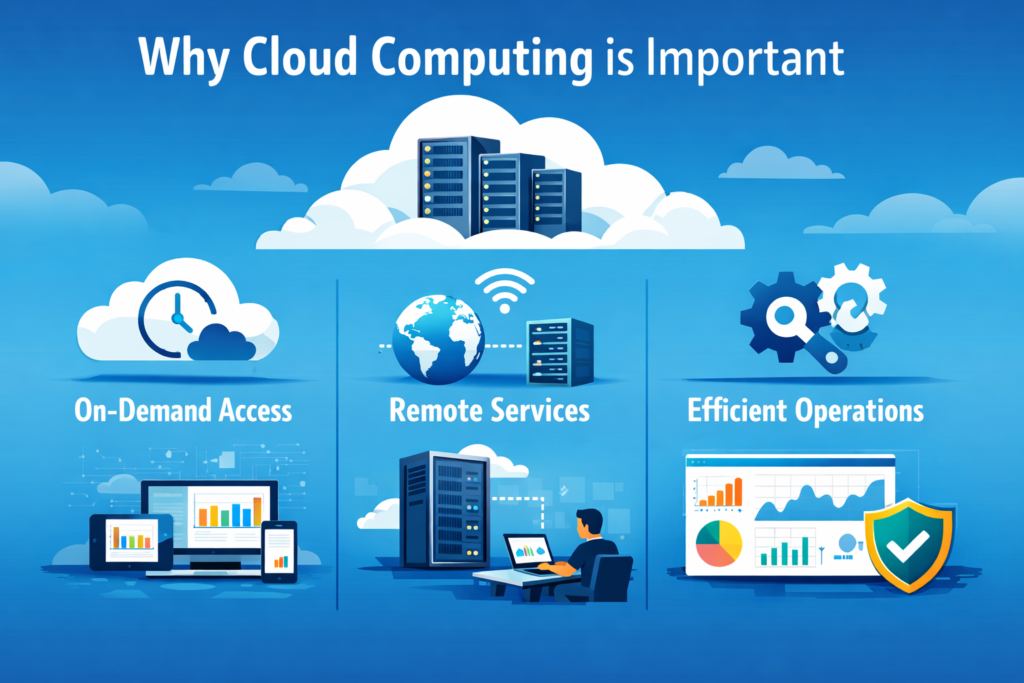
What Makes Cloud Computing Important?
Cloud computing is important because it changes how IT resources are used and managed.
- On-Demand Access: Resources are available instantly whenever required
- Remote Services: Eliminates the need for physical infrastructure
- Efficient Operations: Simplifies system management and maintenance
- Scalability: Adjust resources dynamically based on workload
- Cost Efficiency: Pay only for actual usage, reducing expenses
- High Availability: Ensures continuous service with minimal downtime
- Accessibility: Enables access from any device and location
- Automation: Reduces manual effort through automatic updates and management
Why Modern IT Relies on
Modern IT environments require speed, scalability, and flexibility, which cloud computing provides. Here are some key points
- Rapid Growth: Supports fast business expansion without infrastructure limits
- Digital Transformation: Enables shift to modern digital platforms and services
- Global Access: Delivers services to users across different regions
- Faster Innovation: Accelerates development and deployment of new solutions
- Data Backup and Recovery: Ensures data safety with reliable recovery systems
- Security Features: Provides advanced protection like encryption and monitoring
- Flexible Resource Management: Allows efficient allocation of computing resources
- Support for Modern Applications: Powers AI, big data, and IoT technologies
- Reduced Maintenance: Eliminates the need to manage physical hardware
- Improved Collaboration: Enhances teamwork through shared cloud platforms
- Performance Optimization: Uses distributed systems for better speed and efficiency
Key Reasons Cloud Computing is Important
These factors explain why cloud computing is essential in today’s IT world.
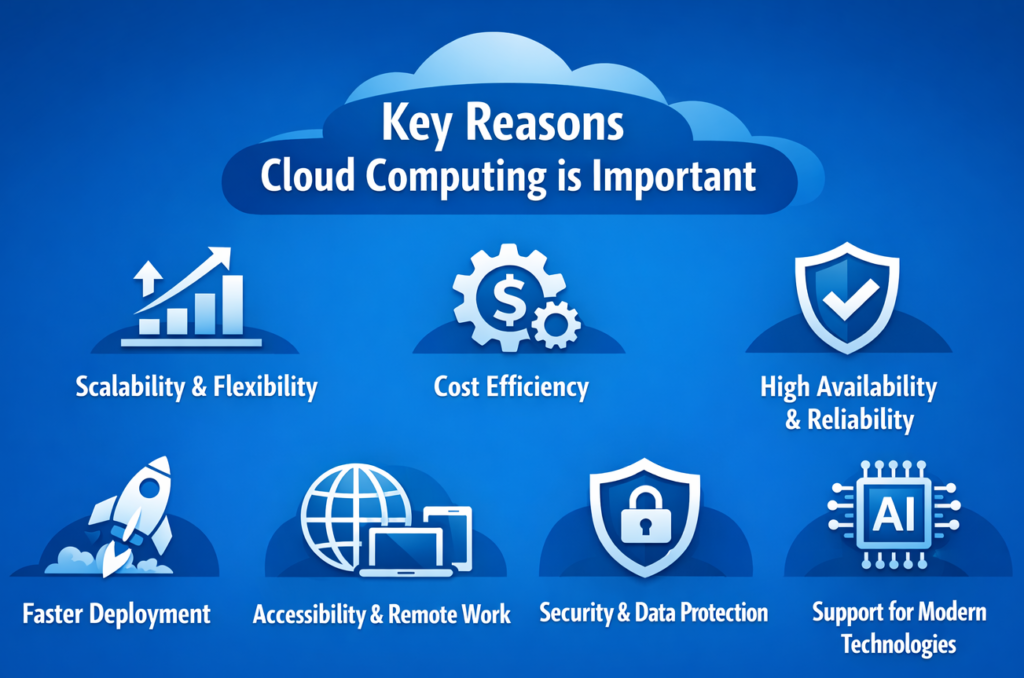
1. Scalability and Flexibility
Cloud computing allows organizations to easily adjust resources based on demand without investing in new hardware. This ensures systems can efficiently handle both growth and reduced workloads.
- Systems can scale up or down instantly
- No need to purchase additional hardware
- Efficient handling of changing workloads
2. Cost Efficiency
Cloud computing reduces the need for expensive infrastructure and maintenance. Businesses only pay for what they use, making it a cost-effective solution.
- No upfront infrastructure costs
- Pay-as-you-go pricing model
- Lower operational and maintenance expenses
3. High Availability and Reliability
Cloud platforms are designed to provide continuous service with minimal downtime through backup systems and redundancy.
- Built-in backup and disaster recovery
- Multiple servers ensure uptime
- Reliable and consistent service delivery
4. Faster Deployment
Cloud computing enables rapid deployment of applications, allowing developers to launch services quickly and efficiently.
- Applications can be deployed in minutes
- Reduces setup and configuration time
- Speeds up development cycles
5. Accessibility and Remote Work
Cloud services can be accessed from anywhere with an internet connection, supporting remote work and global collaboration.
- Access data and apps from any device
- Enables remote working environments
- Improves team collaboration
6. Security and Data Protection
Cloud providers implement advanced security measures to protect data and systems from cyber threats.
- Data encryption and secure access
- User authentication and monitoring
- Reduced risk of data breaches
7. Support for Modern Technologies
Cloud computing provides the infrastructure needed for advanced technologies like AI, big data, and IoT.
- Supports AI and machine learning applications
- Enables big data processing
- Powers IoT and modern digital solutions
Deep Concepts in Modern Cloud Importance
Understanding these concepts explains why cloud computing is essential in today’s IT world.
1. Digital Transformation
Digital transformation refers to the shift from traditional IT systems to modern cloud-based solutions. This transition helps organizations improve efficiency, automate processes, and drive innovation.
- Moves from physical infrastructure to cloud platforms
- Enhances business efficiency and agility
- Enables faster innovation and digital services
2. Cloud-Native Development
Cloud-native development involves designing and building applications specifically for cloud environments. These applications are optimized for scalability, flexibility, and performance.
- Applications are built for cloud from the start
- Uses microservices and container-based architecture
- Improves scalability and system performance
3. Global Infrastructure
Cloud providers operate data centers across multiple regions worldwide. This global infrastructure ensures fast access, high availability, and better performance for users everywhere.
- Data centers located around the world
- Reduces latency and improves speed
- Ensures reliable and continuous service availability
Real-World Example of Cloud Computing
A company shifts its IT systems from traditional infrastructure to cloud-based services. This transition allows better performance, flexibility, and cost savings.
- Stores data in cloud storage instead of local servers
- Uses cloud-based applications for daily operations
- Scales resources during high demand periods
- Supports remote employees with online access
By adopting cloud computing, the company improves efficiency, reduces costs, and enhances overall productivity.
- Reduces infrastructure and maintenance costs
- Improves system performance and availability
- Enables faster business operations
- Enhances collaboration and remote work capabilities
Advantages and Disadvantages for Modern IT in Cloud Computing
Cloud computing plays a major role in modern IT, offering many benefits while also introducing certain challenges.
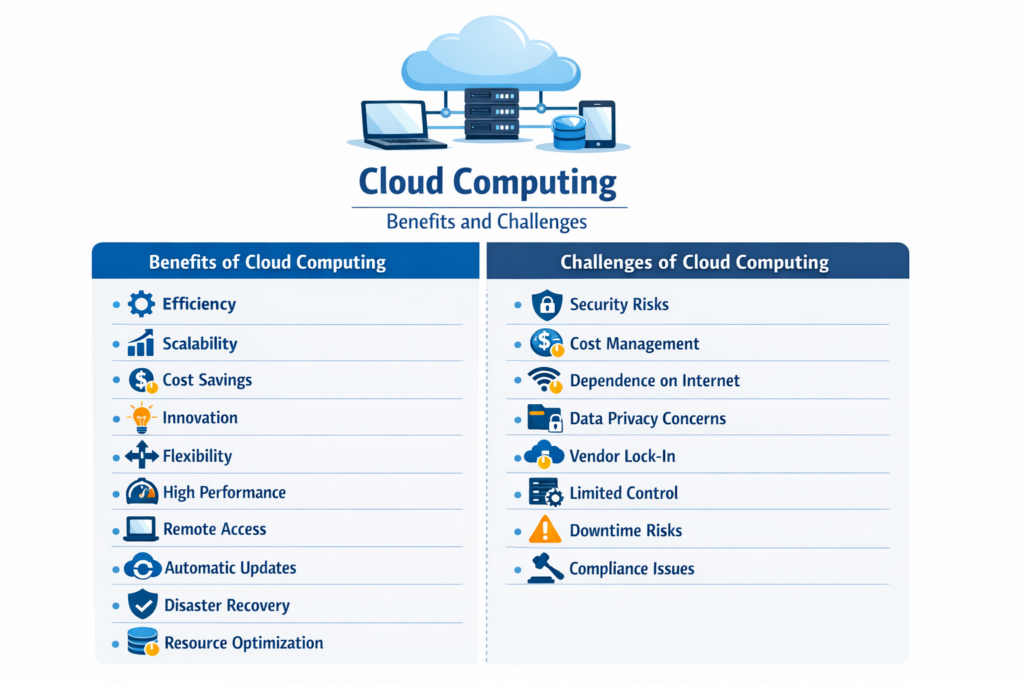
Cloud computing provides several advantages for IT systems.
- Efficiency: Simplifies system management and operations
- Scalability: Handles growth and changing workloads easily
- Cost Savings: Reduces infrastructure and maintenance costs
- Innovation: Supports the development of new technologies
- Flexibility: Adapts quickly to business needs
- High Performance: Uses powerful cloud infrastructure for better speed
- Remote Access: Enables access from anywhere
- Automatic Updates: Keeps systems updated without manual effort
- Disaster Recovery: Ensures data backup and quick recovery
- Resource Optimization: Efficient use of computing resources
Despite its importance, some challenges exist.
- Security Risks: Requires strong protection against cyber threats
- Cost Management: Needs monitoring to avoid unexpected expenses
- Dependence on Internet: Requires a stable and fast connection
- Data Privacy Concerns: Sensitive data must be properly secured
- Vendor Lock-In: Difficult to switch between cloud providers
- Limited Control: Less control over infrastructure compared to on-premise
- Downtime Risks: Service outages can affect operations
- Compliance Issues: Must meet legal and regulatory requirements
Conclusion
Cloud computing is important in modern IT because it provides scalability, cost efficiency, accessibility, and support for advanced technologies. It enables organizations to build flexible, efficient, and future-ready systems, making it a key part of today’s digital world.