








What Is Private Cloud? Explained Simply
Private cloud is a type of cloud deployment model where computing resources are used exclusively by a single organization. It provides higher security, control, and customization compared to public cloud, making it ideal for sensitive data and critical applications.
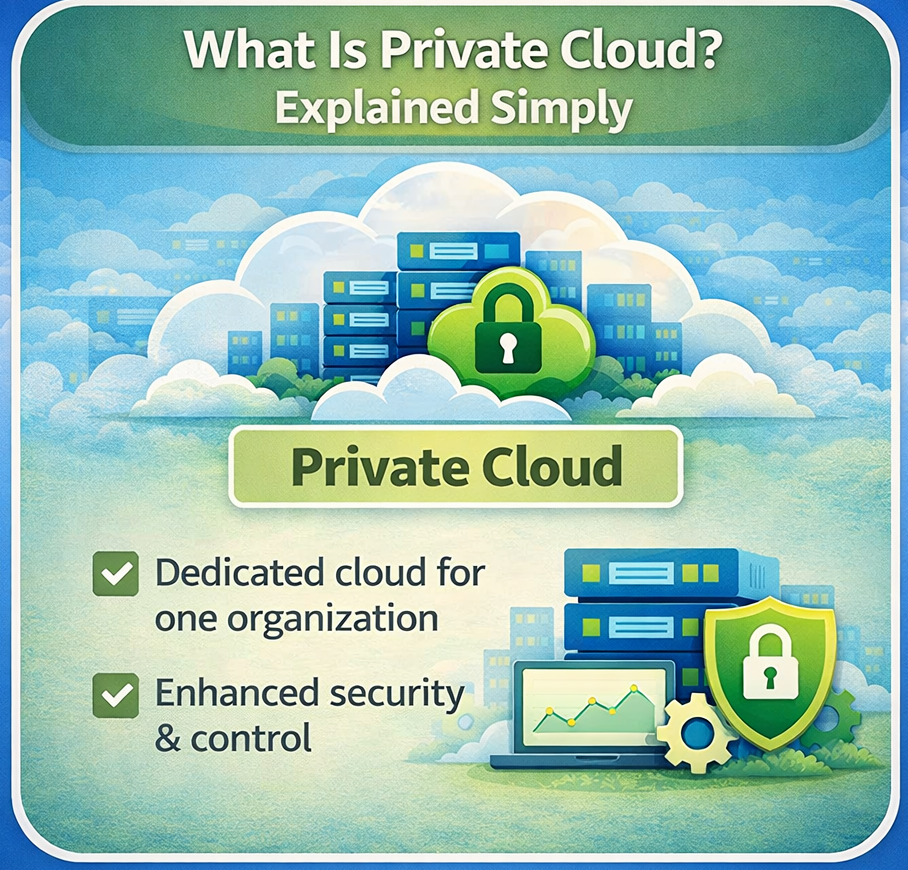
What Is Private Cloud in Simple Terms?
Private cloud is a cloud environment dedicated to a single organization, providing high security, full control, and exclusive access to resources.
Simple Explanation
Private cloud can be understood as a personal cloud environment designed for one organization only.
- Dedicated Resources: Infrastructure is used by only one organization, ensuring no sharing with others.
- Restricted Access: Only authorized users can access the system and data.
- Higher Security: Sensitive information is better protected in a controlled environment.
- Full Ownership: Organization has control over how systems are configured and managed.
Key Characteristics of Private Cloud
Private cloud includes features that make it ideal for secure and customized environments.
Main Characteristics
These characteristics define how private cloud operates.
- Single-Tenant Environment: Resources are dedicated and not shared with other users.
- Enhanced Security: Strong protection mechanisms for sensitive data and applications.
- Customization: Infrastructure can be tailored to meet specific business requirements.
- Full Control: Organization manages systems, policies, and configurations.
- High Compliance Support: Easier to meet regulatory and legal requirements.
How Private Cloud Works
Private cloud works by providing dedicated infrastructure either on-premises or through a third-party provider.
Step-by-Step Working
This process explains how private cloud operates in real-world environments.
- Environment Setup: Organization creates a private cloud infrastructure for exclusive use.
- Resource Allocation: Servers, storage, and applications are assigned internally.
- Access Control: Only authorized users are allowed to access systems.
- Secure Data Storage: Data is stored within the private environment for maximum security.
- System Management: IT teams monitor, manage, and maintain the infrastructure.
Examples of Private Cloud
Private cloud is widely used in industries that require high security, privacy, and compliance.
Real-Life Examples
These examples show how private cloud is used in real-world scenarios.
- Banking Systems: Banks store financial and transaction data securely in private cloud environments.
- Healthcare Systems: Hospitals manage patient records with strict privacy and compliance requirements.
- Government Organizations: Sensitive national data is stored in highly controlled private cloud systems.
- Large Enterprises: Companies use private cloud for internal business applications and secure operations.
Advantages of Private Cloud
Private cloud provides strong benefits for organizations that require security, control, and customized environments.
Key Benefits
These benefits make private cloud suitable for critical and sensitive workloads.
- High Security: Provides strong protection for sensitive data through isolated infrastructure and strict access control.
- Full Control: Organizations manage infrastructure, policies, and configurations according to their needs.
- Customization: Systems can be tailored to support specific applications and business requirements.
- Reliable Performance: Dedicated resources ensure consistent speed and performance without interference.
- Better Compliance: Easier to meet regulatory and legal requirements due to controlled environment.
Disadvantages of Private Cloud
Despite its benefits, private cloud also has limitations that organizations must consider.
Limitations
These limitations impact cost, scalability, and management.
- High Cost: Requires significant investment in infrastructure, hardware, and maintenance.
- Limited Scalability: Scaling resources is slower compared to public cloud environments.
- Management Complexity: Requires skilled IT professionals to manage and maintain systems.
- Maintenance Responsibility: Organization is responsible for updates, security, and system monitoring.
When to Use Private Cloud
Private cloud is best suited for organizations that require high security, control, and compliance.
Best Use Cases
These scenarios highlight when private cloud is the right choice.
- Handling Sensitive Data: Ideal for financial institutions, healthcare systems, and government organizations.
- Regulatory Compliance: Suitable for industries with strict legal and compliance requirements.
- Custom Applications: Best for applications that need specific configurations and environments.
- Mission-Critical Systems: Used for applications that require high reliability and consistent performance.
Real-World Scenario
Private cloud is widely used in environments where security, control, and data privacy are critical requirements.
Example: Banking System
This example shows how private cloud supports secure and regulated operations in the banking industry.
- Stores Customer Data: Financial records and transaction data are stored in a secure, dedicated environment.
- Controls Access: Only authorized employees can access systems through strict authentication and access control policies.
- Ensures Compliance: Meets financial regulations and data protection laws to maintain trust and legal compliance.
- Secure Transactions: Banking operations are processed in a protected environment to prevent fraud and unauthorized access.
- Continuous Monitoring: Systems are monitored to detect and prevent security threats in real time.
Why Private Cloud Is Important
Private cloud plays a crucial role for organizations that require high security, full control, and regulatory compliance.
Key Reasons
These reasons explain why private cloud is essential in modern IT environments.
- Data Protection: Ensures confidentiality and security of sensitive business and customer information.
- Custom Control: Allows organizations to design and manage infrastructure according to their specific needs.
- Compliance Support: Helps meet industry regulations and legal requirements effectively.
- Reliable Performance: Dedicated resources ensure stable and consistent system performance.
- Operational Security: Reduces risks associated with shared environments by providing isolated infrastructure.
Top 5 FAQs (Interview & Exam Focused)
1. What is private cloud?
Private cloud is a cloud environment dedicated to a single organization.
It provides exclusive access, higher security, and full control over resources.
2. How is private cloud different from public cloud?
Private cloud is used by one organization, while public cloud is shared among multiple users.
Private cloud offers more security and control compared to public cloud.
3. Why is private cloud more secure?
Because resources are not shared and access is restricted to authorized users.
Organizations have full control over security policies and data management.
4. Who should use private cloud?
Private cloud is ideal for banks, healthcare, and government organizations.
It is best for handling sensitive and confidential data.
5. What is an example of private cloud?
A bank storing customer financial data in its own secure cloud system.
Hospitals managing patient records in a controlled environment are also examples.
Conclusion
Private cloud is a secure, dedicated, and highly controlled cloud deployment model designed for organizations that require strong data protection and customization. It provides an isolated environment where resources are not shared, ensuring better security and privacy.
With features like full control over infrastructure, customizable configurations, and reliable performance, private cloud is ideal for handling sensitive and mission-critical data. It also supports compliance with strict regulatory requirements, making it suitable for industries like banking, healthcare, and government.
Understanding private cloud helps organizations and students choose the right deployment model for building secure, reliable, and performance-driven computing systems.