










Disadvantages of Cloud Computing Explained
Cloud computing offers many benefits, but it also has some disadvantages that users and organizations should understand. Knowing these drawbacks helps in making better decisions and managing risks effectively.
What are the Disadvantages of Cloud Computing?
Cloud computing disadvantages refer to the limitations and challenges users may face when relying on cloud services instead of traditional systems.
- Dependency on Internet: Requires a stable and fast internet connection for access.
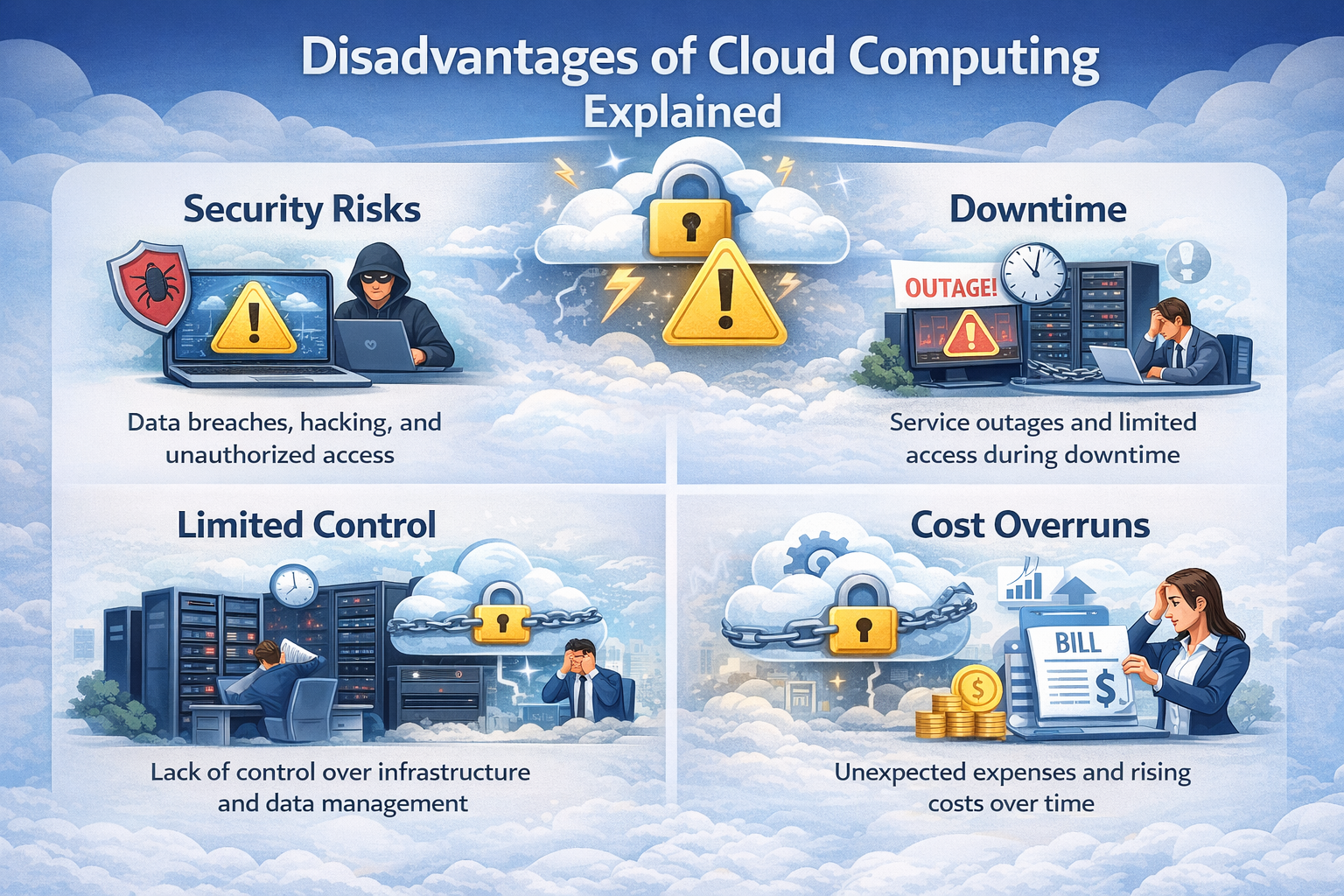
- Limited Control: Users have less control over infrastructure and configurations.
- Security Concerns: Data is stored on remote servers, which may raise privacy risks.
- Downtime Risks: Services may become unavailable due to provider issues.
- Vendor Dependency: Switching providers can be difficult and time-consuming.
Why Understanding Disadvantages is Important
Understanding cloud computing disadvantages helps organizations plan effectively and avoid potential risks.
- Better Decision Making: Helps in selecting the most suitable cloud model based on needs.
- Risk Management: Prepares organizations to handle security, downtime, and performance issues.
- Cost Control: Prevents unexpected expenses by understanding pricing and usage limits.
- Strategic Planning: Enables better architecture and deployment decisions.
- Performance Optimization: Helps in identifying and mitigating system limitations.
Common Disadvantages of Cloud Computing
These are the major drawbacks of using cloud computing that organizations should consider before adoption.
1. Internet Dependency
Cloud services rely completely on internet connectivity for access and operations.
Key Points
These points explain how internet dependency affects cloud usage.
- No Internet, No Access: Without internet, users cannot access applications or data.
- Performance Impact: Slow or unstable internet reduces system performance.
- Connectivity Issues: Network failures can interrupt business operations.
2. Security and Privacy Risks
Data stored in the cloud may be vulnerable if proper security measures are not applied.
Key Points
These points highlight risks related to data protection.
- Data Breaches: Risk of hacking or unauthorized access.
- Sensitive Data Exposure: Confidential information may be at risk.
- Shared Environment Risks: Multi-tenant systems may increase exposure if not secured properly.
3. Limited Control
Users have limited control over infrastructure and system configurations in cloud environments.
Key Points
These points explain limitations in control and customization.
- Provider Managed Systems: Infrastructure is controlled by the cloud provider.
- Limited Customization: Users cannot fully modify systems based on specific needs.
- Restricted Access: Deep-level configurations may not be accessible.
4. Downtime
Cloud services may experience outages that affect availability and operations.
Key Points
These points explain downtime-related challenges.
- Service Interruptions: Outages can disrupt applications and services.
- Business Impact: Downtime affects productivity and user experience.
- Provider Dependency: Availability depends on provider reliability.
5. Vendor Lock-In
Switching from one cloud provider to another can be difficult and complex.
Key Points
These points explain challenges of vendor dependency.
- Complex Migration: Moving data and applications takes time and effort.
- High Switching Cost: Migration may involve additional expenses.
- Platform Dependency: Systems become dependent on specific provider tools.
6. Hidden Costs
Cloud pricing models can sometimes lead to unexpected expenses.
Key Points
These points explain cost-related challenges.
- Unexpected Charges: Extra costs for data transfer, storage, or usage spikes.
- Complex Pricing Models: Difficult to estimate total cost accurately.
- Poor Cost Management: Inefficient usage can increase expenses.
7. Performance Issues
Cloud performance may vary depending on network conditions and shared resources.
Key Points
These points highlight performance-related limitations.
- Latency Issues: Delays may occur due to distance from data centers.
- Shared Resources: Performance may be affected by other users.
- Inconsistent Speed: High demand can reduce system efficiency.
8. Compliance and Legal Issues
Organizations must follow strict regulations when storing and managing data in the cloud.
Key Points
These points explain legal and compliance challenges.
- Data Location Laws: Data may need to be stored in specific regions.
- Regulatory Requirements: Must comply with industry standards and laws.
- Limited Control Over Policies: Users rely on provider compliance measures.
How to Minimize These Disadvantages
Cloud computing challenges can be reduced by applying proper strategies, planning, and best practices.
Key Strategies
These strategies help organizations manage risks and improve cloud efficiency.
- Use Reliable Internet Connections: Ensure high-speed and backup internet to avoid connectivity issues.
- Choose Trusted Cloud Providers: Select providers with strong security, uptime guarantees, and good reputation.
- Implement Strong Security Measures: Use encryption, access control, and monitoring tools to protect data.
- Monitor Usage and Costs: Track resource usage to avoid unexpected charges and optimize expenses.
- Use Multi-Cloud Strategies: Distribute workloads across providers to reduce dependency and improve reliability.
- Backup Data Regularly: Maintain regular backups to prevent data loss and ensure quick recovery.
- Plan for Downtime: Use failover systems and redundancy to handle service interruptions.
Real-World Example
This example shows how cloud dependency can impact business operations.
- Internet Failure: A company’s internet connection goes down unexpectedly.
- System Inaccessibility: Employees cannot access cloud-based applications and data.
- Work Disruption: Daily operations stop temporarily, affecting productivity.
- Lesson Learned: Highlights the importance of reliable internet and backup systems.
Conclusion
Cloud computing offers powerful benefits but also comes with challenges such as security risks, downtime, limited control, and internet dependency. However, these disadvantages can be effectively managed through proper planning, strong security practices, and smart strategies like multi-cloud and regular backups. By addressing these issues proactively, organizations can fully leverage cloud computing to build efficient, secure, and scalable systems.