









Types of Cloud Computing (Overview Guide)
Cloud computing can be categorized into different types based on how services are delivered and how infrastructure is deployed. Understanding these types helps in choosing the right cloud solution for different needs.
What are the Types of Cloud Computing?
Types of cloud computing refer to different ways cloud services are structured, delivered, and used based on user needs. These types help organizations choose the right approach for performance, cost, scalability, and control.
- Service-Based Types: IaaS, PaaS, SaaS
- Deployment-Based Types: Public Cloud, Private Cloud, Hybrid Cloud
- Usage-Based Approaches: Multi-cloud and Serverless Computing
Why Understanding Cloud Types is Important
Understanding cloud types helps in selecting the most suitable model for different use cases and business needs. Here are some key points.
- Better Planning: Helps choose the right cloud solution based on requirements.
- Cost Optimization: Avoids unnecessary expenses by selecting efficient models.
- Performance Improvement: Ensures better system performance using the right architecture.
- Scalability Support: Allows systems to grow easily with future demand.
- Resource Efficiency: Ensures proper utilization of computing resources.
Types Based on Service Models
These cloud types define how services are delivered and how much control users have over the system.
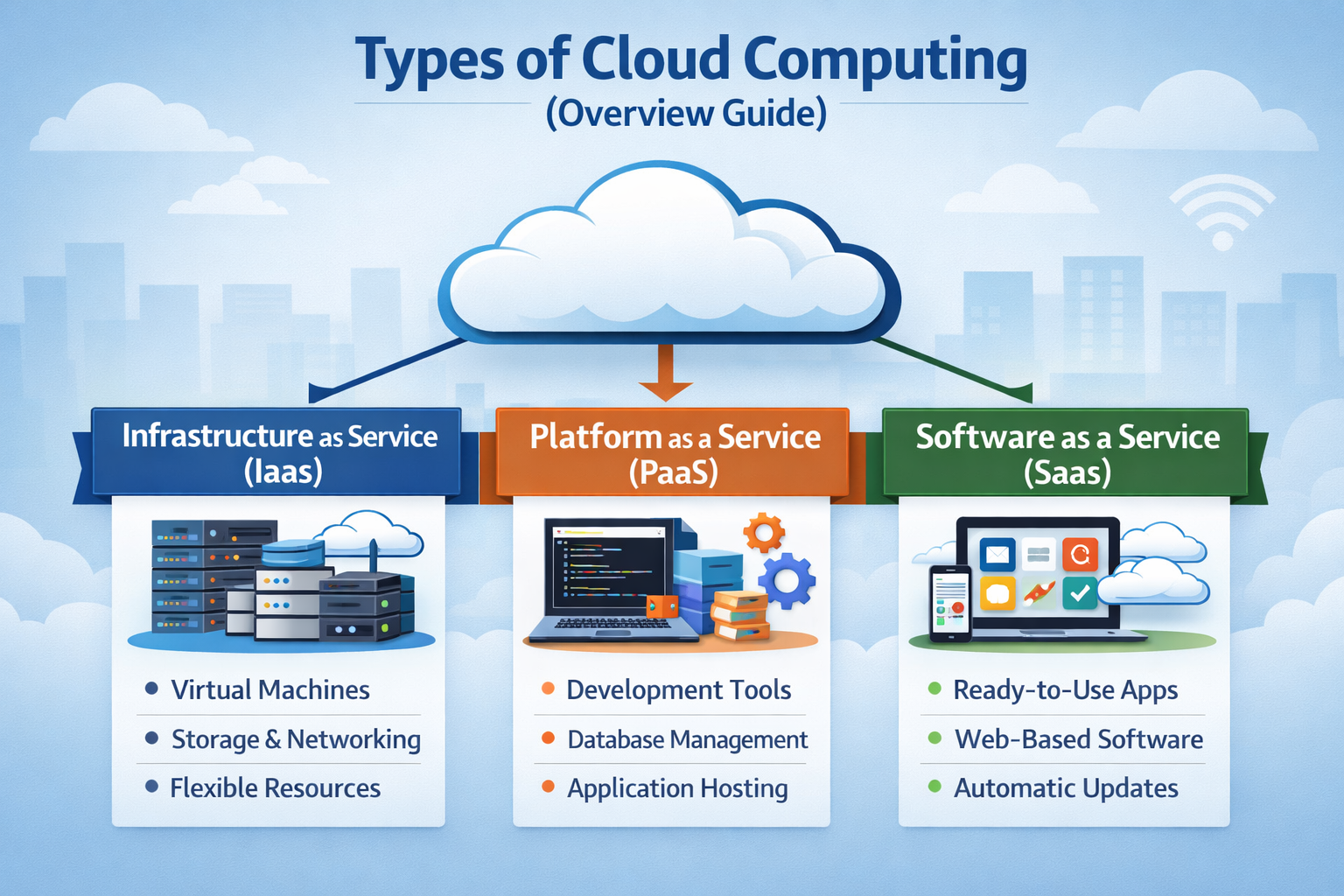
1. Infrastructure as a Service (IaaS)
IaaS provides fundamental computing resources such as virtual machines, storage, and networking. It offers maximum control to users over the infrastructure. Here are some key points of IaaS.
- High Control and Flexibility: Users can configure servers, storage, and networking as needed.
- User Manages OS and Applications: Users are responsible for operating systems, applications, and configurations.
- Scalable Infrastructure: Resources can be scaled up or down easily based on demand.
- Cost Efficiency: Pay only for the infrastructure used without buying hardware.
- Use Cases: Suitable for custom applications, large systems, and IT infrastructure management.
2. Platform as a Service (PaaS)
PaaS provides a complete development and deployment environment for building applications. It removes the complexity of managing infrastructure. Here are some key points of PaaS.
- Focus on Development: Developers can focus on coding without worrying about servers or hardware.
- Faster Deployment: Applications can be built, tested, and deployed quickly.
- Managed Infrastructure: Cloud provider handles servers, storage, and networking.
- Built-In Tools: Provides frameworks, libraries, and tools for development.
- Use Cases: Ideal for web applications, APIs, and rapid development projects.
3. Software as a Service (SaaS)
SaaS delivers ready-to-use software applications over the internet. Users can access these applications through browsers without installation. Here are some key points of SaaS.
- Easy to Use: Applications are user-friendly and require no technical setup.
- No Maintenance Required: Cloud provider manages updates, security, and infrastructure.
- Access Anywhere: Available on any device with internet connectivity.
- Subscription-Based Model: Users pay based on usage or subscription plans.
- Use Cases: Suitable for email services, collaboration tools, and business applications.
Additional Cloud Approaches
Beyond service models, cloud computing also includes modern usage approaches.
Multi-Cloud
- Multiple Providers: Uses services from more than one cloud provider.
- Risk Reduction: Avoids dependency on a single provider.
- Performance Optimization: Selects best services from different providers.
Serverless Computing
- No Server Management: Developers do not manage infrastructure.
- Event-Driven Execution: Code runs only when triggered.
- Automatic Scaling: Resources adjust automatically based on demand.
- Cost Efficiency: Pay only for execution time.
Types Based on Deployment Models
These types define how cloud environments are set up, managed, and accessed based on business needs such as security, cost, and scalability.
1. Public Cloud
Public cloud is a shared environment where resources are managed by third-party providers and delivered over the internet. It is suitable for applications that require flexibility and cost efficiency. Here are some key points of public cloud.
- Cost-Effective: No need to invest in hardware or infrastructure, reducing overall expenses.
- Highly Scalable: Resources can be increased or decreased easily based on demand.
- Shared Environment: Multiple users share the same infrastructure efficiently.
- Easy Access: Services are available from anywhere using the internet.
- Low Maintenance: Cloud provider handles updates, security, and system management.
2. Private Cloud
Private cloud is dedicated to a single organization and offers a high level of control and security. It is ideal for businesses handling sensitive data. Here are some key points of private cloud.
- High Security: Data is stored in a dedicated environment with strict access control.
- Customizable Environment: Infrastructure can be tailored to meet specific business needs.
- Full Control: Organizations manage systems, applications, and configurations.
- Better Compliance: Supports regulatory requirements in industries like healthcare and finance.
- Stable Performance: Dedicated resources ensure consistent and reliable performance.
3. Hybrid Cloud
Hybrid cloud combines both public and private cloud environments, allowing organizations to use the benefits of both models. It provides flexibility and optimized resource usage. Here are some key points of hybrid cloud.
- Balanced Approach: Combines security of private cloud with scalability of public cloud.
- Improved Flexibility: Workloads can move between environments based on needs.
- Cost Optimization: Uses public cloud for non-sensitive tasks to reduce costs.
- Scalable Expansion: Public cloud handles additional demand during peak usage.
- Enhanced Control: Sensitive data remains in private cloud while other operations run in public cloud.
Additional Types of Cloud Computing
These modern approaches extend traditional cloud models and improve flexibility, performance, and reliability.
4. Multi-Cloud
Multi-cloud involves using services from multiple cloud providers instead of relying on a single vendor. Here are some key points of multi-cloud.
- Vendor Independence: Avoids reliance on one provider, reducing risk.
- Improved Reliability: If one provider fails, services can continue using another provider.
- Performance Optimization: Choose the best services from different providers for better results.
- Flexibility: Organizations can customize their cloud strategy using multiple platforms.
- Cost Management: Select cost-effective services from different providers.
5. Serverless Computing
Serverless computing allows developers to run code without managing servers. The cloud provider automatically handles infrastructure and scaling. Here are some key points of serverless computing.
- Pay Only for Usage: Users are charged only when code is executed.
- Automatic Scaling: Resources scale automatically based on demand.
- No Server Management: Developers focus only on code, not infrastructure.
- Faster Development: Reduces setup time and speeds up deployment.
- Event-Driven Execution: Code runs only when triggered by events.
Real-World Example
In real-world environments, organizations often use a combination of different cloud types to achieve better performance, flexibility, and efficiency. Here are some key points of this combined approach.
- IaaS for Infrastructure: Used to manage virtual machines, storage, and networking with full control over systems.
- PaaS for Development: Provides a platform for developers to build, test, and deploy applications quickly.
- SaaS for Business Tools: Used for ready-to-use applications such as email, collaboration tools, and office software.
- Hybrid Cloud for Deployment: Combines public and private cloud environments to balance scalability and security.
- Optimized Workload Distribution: Each cloud type is used for the most suitable task, improving efficiency.
- Enhanced Flexibility: Organizations can adapt quickly by using different cloud models together.
Benefits of Understanding Cloud Types
Understanding cloud types provides several advantages that help organizations make better decisions and optimize their systems. Here are some key points.
- Better Decision Making: Helps select the right cloud model based on business needs and technical requirements.
- Cost Efficiency: Optimizes resource usage and reduces unnecessary expenses.
- Scalability: Supports system growth and handles increasing workloads effectively.
- Improved Performance: Ensures the use of appropriate solutions for better speed and reliability.
- Flexibility: Allows switching or combining cloud models based on changing needs.
- Risk Management: Reduces dependency on a single model or provider.
Conclusion
Cloud computing includes multiple types based on services, deployment models, and usage approaches, each designed to solve different challenges. By understanding these types, organizations can design systems that are efficient, scalable, secure, and cost-effective. In real-world scenarios, combining different cloud models helps achieve better performance, flexibility, and resource optimization, making cloud computing an essential technology for modern applications and digital transformation.