












Real World Applications of Cloud Computing
Cloud computing is widely used in everyday life across different industries. It enables organizations to store data, run applications, and deliver services efficiently over the internet.
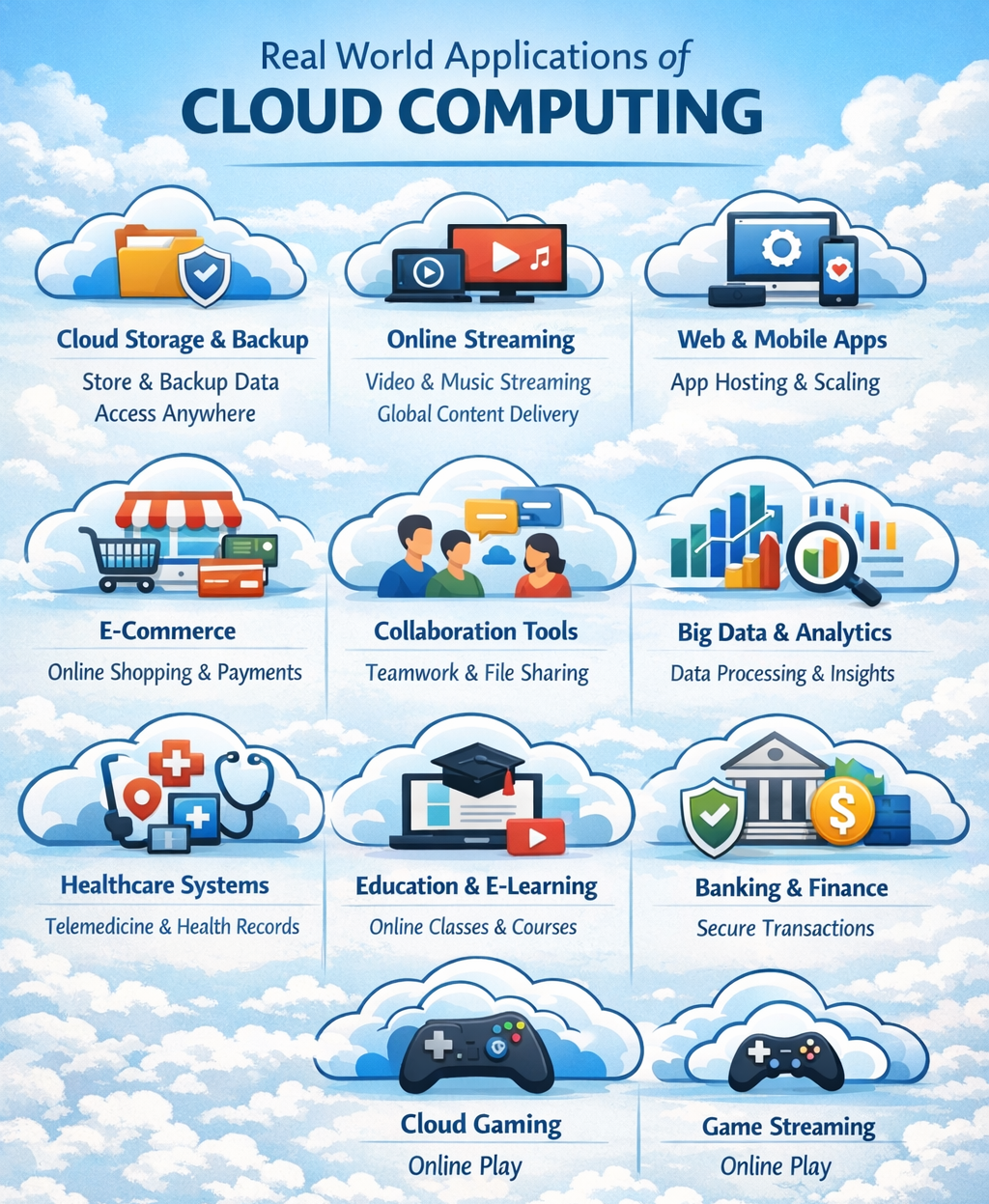
What are Real World Applications of Cloud Computing?
Real-world applications refer to how cloud computing is used in practical scenarios to solve problems and improve services.
- Everyday Usage: Used in apps, websites, and services we use daily
- Business Solutions: Helps companies manage operations efficiently
- Scalable Systems: Supports growth and high demand
Why Cloud Computing is Used in Real World
Cloud computing provides flexibility, scalability, and cost savings, making it ideal for real-world use.
- Cost Efficiency: No need for physical infrastructure
- Accessibility: Access services from anywhere
- Scalability: Handle increasing users easily
- Reliability: Systems remain available most of the time
Common Real World Applications
These are some of the most important real-world uses of cloud computing.
1. Cloud Storage and Backup
Cloud storage allows users to store and access data online instead of local devices. It also provides backup and recovery solutions.
- Data Storage: Store files, images, and videos securely
- Backup: Recover data in case of loss
- Access Anywhere: Use data from any device
2. Online Streaming Services
Streaming platforms use cloud to deliver content to millions of users worldwide. Content is stored and distributed using cloud infrastructure. You can also turn a video into a shareable link for easier online sharing.
- Video Streaming: Movies and TV shows
- Music Streaming: Online audio services
- Global Delivery: Fast content access
3. Web and Mobile Applications
Most modern applications run on cloud infrastructure. Cloud ensures high performance and scalability.
- App Hosting: Run websites and mobile apps
- Backend Services: Handle data and logic
- Auto Scaling: Manage traffic automatically
4. E-commerce Platforms
Online shopping websites rely heavily on cloud computing. It helps manage products, users, and transactions.
- Product Management: Store and display items
- Payment Processing: Secure transactions
- Scalability: Handle large traffic during sales
5. Online Collaboration Tools
Cloud enables teams to work together in real time from different locations. It improves productivity and communication.
- Document Sharing: Edit and share files
- Team Communication: Messaging and meetings
- Real-Time Collaboration: Work together instantly
6. Big Data and Analytics
Cloud helps process and analyze large datasets quickly. Businesses use it for decision-making and insights.
- Data Processing: Handle large data volumes
- Analytics: Generate insights
- Machine Learning: Predict trends
7. Healthcare Systems
Cloud computing improves healthcare services by managing patient data and enabling remote access.
- Electronic Records: Store patient information
- Telemedicine: Online doctor consultations
- Data Sharing: Share reports securely
8. Education and E-Learning
Cloud supports online learning platforms and digital classrooms. It makes education accessible globally.
- Online Classes: Virtual learning environments
- Content Storage: Store study materials
- Collaboration: Students and teachers interact
9. Banking and Finance
Cloud computing is used for secure financial operations and transactions. It helps improve speed and reliability.
- Online Banking: Access accounts anytime
- Fraud Detection: Monitor suspicious activity
- Data Security: Protect financial data
10. Gaming Applications
Cloud gaming allows users to play games without high-end hardware. Games run on cloud servers.
- Game Streaming: Play without downloading
- Multiplayer Support: Connect players globally
- High Performance: Smooth gameplay
Benefits of Real-World Applications
Cloud applications provide several advantages that improve efficiency, accessibility, and innovation across industries.
- Efficiency: Enables faster processing and smoother operations for applications and services.
- Cost Savings: Eliminates the need for expensive hardware and reduces maintenance costs.
- Flexibility: Allows users to work from anywhere using internet-connected devices.
- Innovation: Supports modern technologies like AI, big data, and IoT.
Challenges in Real-World Usage
Some challenges must be managed properly to ensure secure and effective cloud usage.
- Security Risks: Protecting sensitive data from unauthorized access and cyber threats.
- Internet Dependency: Requires a stable and reliable internet connection.
- Cost Management: Monitoring resource usage to avoid unexpected expenses.
- Data Privacy: Ensuring proper handling and protection of personal and confidential information.
Conclusion
Cloud computing is widely used in real-world applications across industries such as healthcare, education, finance, and entertainment. It provides scalable, efficient, and accessible solutions that support modern digital transformation, making it a key technology in today’s connected world.