












IoT in Smart Cities and Transportation
IoT in Smart Cities and Transportation explains how connected devices, sensors, and intelligent systems are used to improve urban infrastructure, traffic management, and public services. IoT enables cities to become smarter, more efficient, and sustainable.
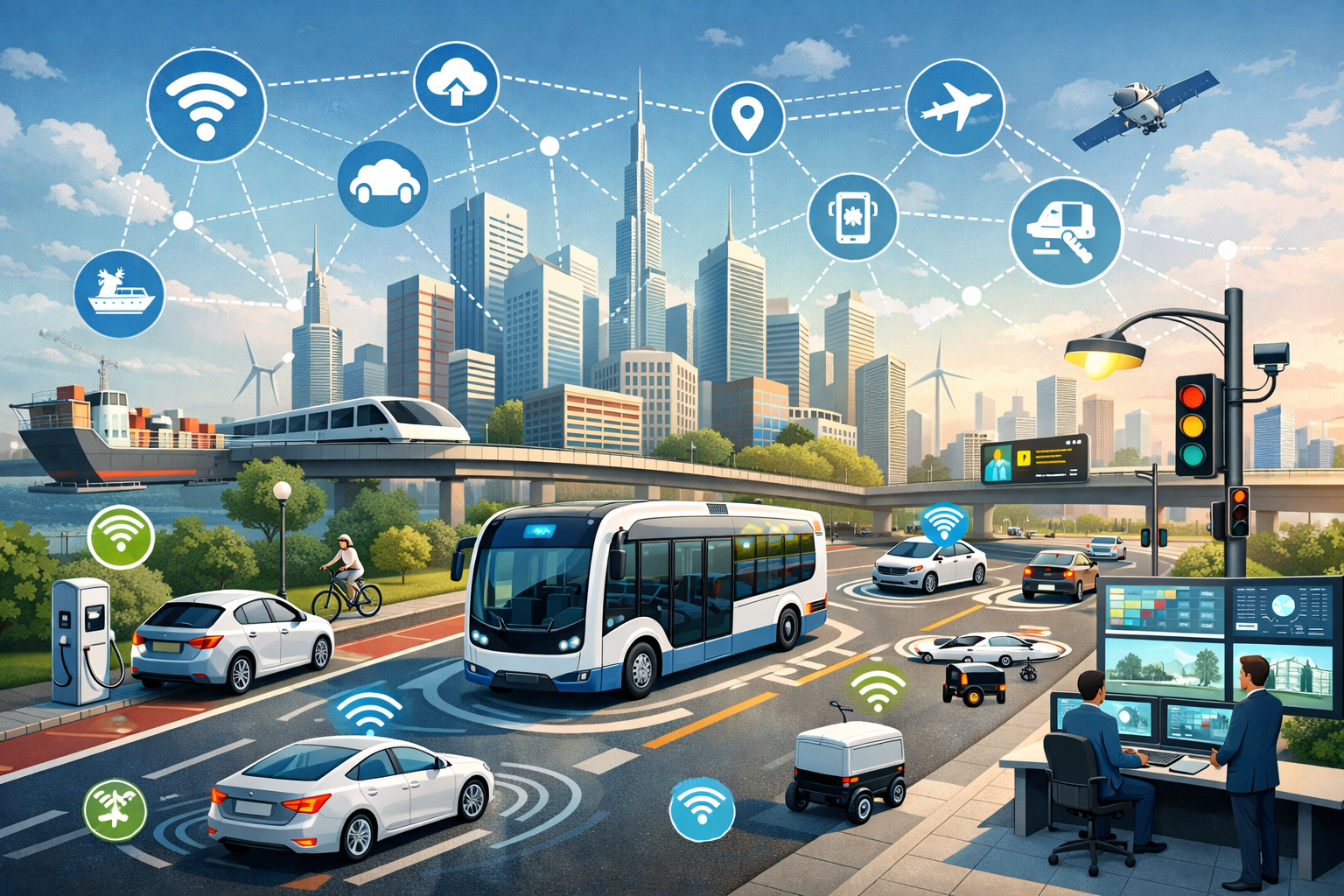
A smart city uses IoT technology to collect and analyze data from various sources such as roads, vehicles, buildings, and utilities. This data helps improve city operations, reduce costs, and enhance the quality of life for citizens.
Role of IoT in Smart Cities
IoT plays a central role in transforming traditional cities into smart, connected, and efficient environments. By using sensors, data analytics, and real-time monitoring, IoT helps improve urban infrastructure, resource management, and public services.
1. Smart Infrastructure Management
IoT enables continuous monitoring and efficient management of city infrastructure.
- Real-Time Monitoring: Tracks the condition of roads, bridges, and buildings
- Maintenance Alerts: Detects faults, damage, or wear early
- Resource Optimization: Improves planning and use of materials and services
Example: Sensors detect cracks in bridges and send alerts for timely repair.
2. Smart Energy Management
IoT helps optimize energy production, distribution, and consumption in cities.
- Smart Grids: Automatically manage electricity distribution based on demand
- Energy Monitoring: Tracks usage patterns to reduce waste
- Efficiency Improvement: Minimizes unnecessary energy consumption
Example: Street lights automatically adjust brightness based on traffic and time.
3. Waste Management Systems
IoT improves waste collection and disposal processes for cleaner cities.
- Smart Bins: Monitor waste levels in real time
- Optimized Routes: Plan efficient waste collection routes to save fuel
- Pollution Reduction: Prevent overflow and maintain cleanliness
Example: Waste bins notify authorities when they are full, ensuring timely collection.
4. Water Management
IoT supports efficient management and conservation of water resources.
- Leak Detection: Identifies pipeline leaks and prevents water loss
- Usage Monitoring: Tracks water consumption patterns
- Smart Irrigation: Optimizes water use in parks and agriculture
Example: Sensors detect water leakage and automatically alert maintenance teams.
IoT in Transportation Systems
IoT significantly improves transportation systems by making them smarter, safer, and more efficient. By using sensors, connectivity, and real-time data, cities can optimize traffic flow, reduce delays, and enhance the overall travel experience.
1. Intelligent Traffic Management
IoT enables real-time monitoring and control of traffic conditions to reduce congestion and improve road efficiency.
- Traffic Sensors: Detect vehicle movement, speed, and congestion levels
- Adaptive Traffic Signals: Automatically adjust signal timing based on traffic flow
- Reduced Congestion: Improves traffic movement and reduces waiting time
Example: Traffic lights automatically change timing during peak hours to manage heavy traffic.
2. Smart Parking Systems
IoT simplifies parking by helping drivers quickly find available spaces.
- Parking Sensors: Detect whether a parking spot is occupied or free
- Mobile Applications: Provide real-time information about available parking
- Time Saving: Reduces time spent searching for parking and lowers congestion
Example: A mobile app shows nearby available parking spaces in real time.
3. Connected Vehicles
IoT connects vehicles with each other and with infrastructure for better communication and safety.
- Vehicle-to-Vehicle (V2V): Vehicles share information such as speed and location
- Vehicle-to-Infrastructure (V2I): Vehicles communicate with traffic signals and road systems
- Enhanced Safety: Helps prevent accidents and improves driving awareness
Example: Cars receive alerts about accidents or road hazards ahead.
4. Public Transportation Optimization
IoT improves the efficiency, reliability, and convenience of public transportation systems.
- Real-Time Tracking: Monitor buses, trains, and transit vehicles
- Route Optimization: Adjust routes and schedules based on demand
- Passenger Information: Provide live updates on arrival and departure times
Example: Passengers use mobile apps to track bus arrival times and plan their journeys.
Benefits of IoT in Smart Cities and Transportation
IoT provides significant advantages in urban environments by improving efficiency, safety, sustainability, and overall quality of life. It enables cities to operate smarter by using real-time data and intelligent systems.
1. Improved Efficiency
IoT optimizes the use of resources and enhances the performance of city operations.
- Resource Optimization: Efficient use of energy, water, and infrastructure
- Operational Performance: Streamlines processes such as traffic control and waste management
- Automation: Reduces manual work through smart systems
This leads to faster and more effective city services.
2. Enhanced Safety
IoT improves safety for citizens by enabling real-time monitoring and quick response.
- Accident Reduction: Smart traffic systems help prevent collisions
- Emergency Response: Faster response from emergency services using real-time data
- Public Safety Monitoring: Surveillance and alert systems improve security
This creates a safer urban environment.
3. Cost Savings
IoT helps reduce operational and maintenance costs in city management.
- Reduced Maintenance Costs: Predictive maintenance prevents expensive failures
- Energy Efficiency: Smart systems reduce unnecessary energy consumption
- Optimized Operations: Efficient resource usage lowers overall expenses
This makes city operations more economical and sustainable.
4. Better Quality of Life
IoT enhances daily life by providing convenient and efficient services.
- Smart Services: Easy access to transportation, utilities, and public services
- Convenience: Automated systems reduce effort for citizens
- Improved Living Standards: Better infrastructure and services
This improves comfort and satisfaction for residents.
5. Environmental Sustainability
IoT supports eco-friendly and sustainable urban development.
- Pollution Reduction: Smart systems help control emissions
- Waste Management: Efficient waste collection and recycling
- Resource Conservation: Optimizes use of natural resources
This helps build cleaner and greener cities.
Challenges in Smart Cities IoT Implementation
Despite its many advantages, implementing IoT in smart cities comes with several challenges that affect performance, security, and scalability. Understanding these challenges helps in designing more effective and reliable urban systems.
1. Data Security and Privacy
Smart cities generate and handle large amounts of sensitive citizen data, making security a major concern.
- Cyber Attack Risks: IoT systems can be targeted by hackers
- Data Privacy Issues: Personal and sensitive information may be exposed
- Need for Protection: Strong encryption, authentication, and access control are required
Ensuring data security is essential to maintain trust and system reliability.
2. High Infrastructure Cost
Building a smart city requires significant investment in technology and infrastructure.
- Deployment Cost: Installing sensors, devices, and communication networks is expensive
- Maintenance Cost: Regular updates, repairs, and monitoring add to long-term expenses
- Scalability Cost: Expanding systems increases overall cost
Cost management is a key factor in successful smart city implementation.
3. Integration Complexity
Smart cities involve multiple systems and technologies that must work together seamlessly.
- System Integration: Combining different platforms, devices, and applications
- Compatibility Issues: Devices from different vendors may not integrate easily
- Data Management Complexity: Handling and processing large-scale data
A well-planned architecture is required to reduce complexity.
4. Network Dependence
IoT systems rely heavily on network connectivity for real-time communication.
- Connectivity Requirement: Continuous internet access is essential
- Low-Coverage Areas: Poor connectivity affects system performance
- Latency Issues: Delays in communication can impact real-time operations
Reliable and high-speed connectivity is critical for smooth operation.
Future of IoT in Smart Cities and Transportation
The future of IoT in smart cities and transportation is focused on innovation, automation, and sustainability. With advancements in AI, connectivity, and intelligent systems, urban environments will become more efficient, safe, and responsive.
1. Autonomous Transportation
Autonomous transportation will transform how people and goods move within cities.
- Self-Driving Vehicles: Cars, buses, and delivery vehicles will operate without human drivers
- Smart Traffic Systems: Traffic signals and road systems will automatically adjust based on real-time conditions
- Accident Reduction: Improved safety through intelligent navigation and collision avoidance
This will lead to safer roads and more efficient transportation systems.
2. AI Integration
Artificial Intelligence will play a key role in enhancing IoT capabilities in smart cities.
- Intelligent Decision-Making: Systems will analyze data and make automatic decisions
- Predictive Analytics: Forecast traffic, energy demand, and environmental conditions
- Automation: Reduce human intervention in city operations
AI integration will make city systems smarter and more adaptive.
3. Green and Sustainable Cities
IoT will support environmentally friendly and sustainable urban development.
- Energy Efficiency: Smart systems will optimize electricity and resource usage
- Reduced Emissions: Lower pollution through efficient transportation and energy management
- Smart Resource Management: Optimize water, waste, and energy usage
This will help create cleaner and more sustainable cities.
4. Advanced Connectivity
Future connectivity technologies will enhance communication between devices and systems.
- 5G and Beyond: High-speed, low-latency communication networks
- Reliable Communication: Stable and continuous connectivity across the city
- Massive Device Support: Ability to connect billions of IoT devices
Advanced connectivity will enable real-time communication and faster system responses.
Conclusion
IoT in Smart Cities and Transportation is transforming urban life by improving efficiency, safety, and sustainability. By integrating smart technologies into infrastructure and transportation systems, cities can provide better services and enhance the quality of life. Despite challenges, continuous advancements in IoT and related technologies will drive the development of smarter and more connected cities in the future.
IoT in Smart Cities and Transportation – SEO Optimized Subtopics
Explore IoT in Smart Cities and Transportation to understand how connected devices improve urban infrastructure, traffic management, and public services. Learn how real-time data, smart sensors, and automation enhance mobility, safety, and efficiency in modern cities.
- IoT in Smart Cities Explained for Beginners
- How IoT is Transforming Smart City Infrastructure
- Smart Transportation Systems Using IoT Technology
- IoT Applications in Traffic Management Systems
- Smart Parking Systems Using IoT Sensors
- IoT in Public Transportation (Buses, Trains, Metro)
- Intelligent Traffic Signals Using IoT
- Real-Time Vehicle Tracking Using IoT Systems
- IoT-Based Fleet Management Systems Explained
- Connected Vehicles and IoT in Automotive Industry
- IoT in Road Safety and Accident Prevention
- Smart Waste Management Systems Using IoT
- IoT in Smart Street Lighting Systems
- IoT for Environmental Monitoring in Smart Cities
- Role of 5G in Smart Cities and IoT Transportation
- IoT Data Analytics in Smart City Management
- Challenges in Smart City IoT Implementation
- Security and Privacy in Smart City IoT Systems
- Real World Examples of Smart Cities Using IoT
- Future of IoT in Smart Cities and Transportation