












Cloud Computing in IoT
Cloud computing plays a critical role in the Internet of Things (IoT) by providing scalable storage, powerful processing, and remote access to connected devices and data. It enables IoT systems to handle large volumes of data efficiently while supporting real-time monitoring, automation, and intelligent decision-making.
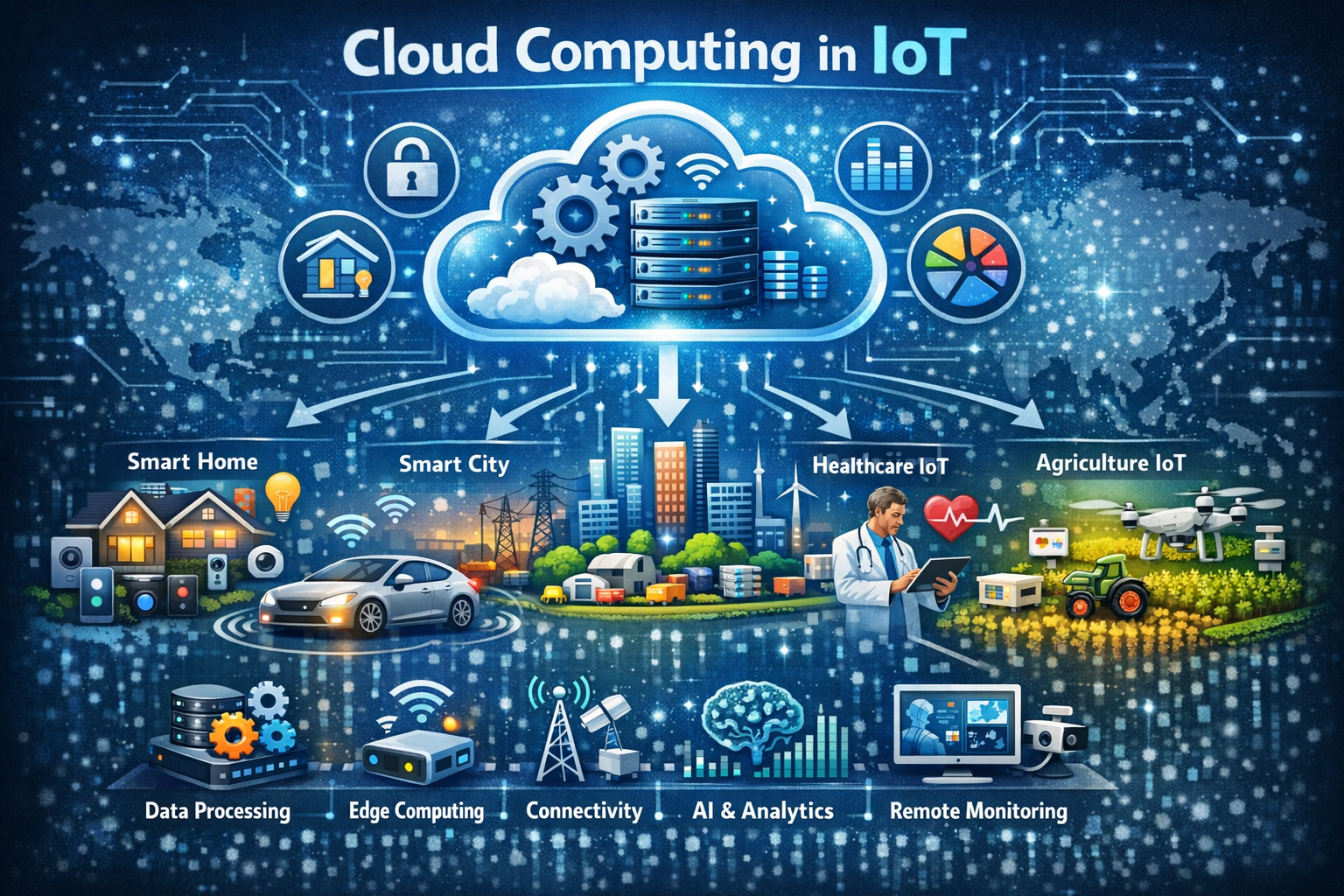
Cloud computing in IoT refers to the use of cloud platforms to store, process, and manage data generated by IoT devices. Instead of relying on local systems, data is sent to the cloud where it is analyzed and used to control devices and generate insights.
How Cloud Computing Works in IoT
Cloud computing connects IoT devices to centralized systems where data is collected, processed, and analyzed to enable intelligent actions and automation. It acts as the brain of IoT systems by transforming raw data into useful insights and controlling devices remotely.
1. Data Collection
IoT devices such as sensors and smart devices collect data from the physical environment, including temperature, humidity, motion, light, and location. This data serves as the input for the entire IoT system and is continuously generated in real time.
2. Data Transmission
The collected data is transmitted to the cloud using communication technologies such as Wi-Fi, cellular networks (4G/5G), or LPWAN. Secure communication protocols ensure that data is transferred safely and efficiently without unauthorized access.
3. Data Storage
Cloud platforms store massive amounts of IoT data in scalable storage systems such as databases and data lakes. This allows long-term data retention, easy retrieval, and support for both structured and unstructured data.
4. Data Processing and Analysis
Cloud systems process and analyze the incoming data using advanced analytics tools, algorithms, and sometimes artificial intelligence. This step converts raw data into meaningful information, helping identify patterns, trends, and anomalies.
5. Decision Making and Action
Based on the analysis, the cloud system makes decisions and sends commands back to IoT devices. This enables automation, such as turning on a device, adjusting settings, or triggering alerts without human intervention.
6. User Access and Monitoring
Users interact with IoT systems through web or mobile applications connected to the cloud. They can monitor device status, view analytics dashboards, control devices remotely, and receive real-time notifications and alerts.
Key Features of Cloud Computing in IoT
Cloud computing provides essential features that enhance the performance, scalability, and reliability of IoT systems.
1. Scalability
Cloud platforms can handle a growing number of connected devices and increasing data volumes without performance degradation. Resources such as storage and processing power can be scaled dynamically based on system demand.
2. High Storage Capacity
Cloud systems offer virtually unlimited storage, allowing organizations to store large volumes of IoT data, including logs, sensor readings, and historical records for analysis and future use.
3. Remote Accessibility
Cloud computing enables users to access IoT systems from anywhere in the world using internet-connected devices. This supports global monitoring, remote control, and real-time management of devices.
4. Real-Time Processing
Cloud platforms support real-time data processing, enabling instant analysis and quick responses. This is crucial for applications like smart homes, healthcare monitoring, and industrial automation.
5. Security and Data Protection
Cloud platforms provide advanced security features such as encryption, authentication, identity management, and access control. These measures ensure that IoT data and devices remain protected from unauthorized access and cyber threats.
Benefits of Cloud Computing in IoT
Cloud computing brings several advantages that make IoT systems more efficient, flexible, and cost-effective by providing scalable infrastructure, real-time processing, and advanced analytics capabilities.
1. Cost Efficiency
Cloud computing reduces the need for expensive physical infrastructure, hardware maintenance, and on-site servers. Organizations can use a pay-as-you-go model, which means they only pay for the resources they consume. This helps startups and enterprises manage budgets effectively while scaling their IoT solutions without heavy upfront investment.
2. Improved Performance
Cloud platforms use high-performance servers and distributed computing systems to process large volumes of IoT data بسرعة and efficiently. This improves system responsiveness, ensures faster data processing, and supports real-time applications such as smart monitoring and automation.
3. Flexibility and Scalability
Cloud computing allows organizations to easily scale their IoT systems up or down based on demand. Whether adding new devices or handling increased data traffic, cloud resources can be adjusted dynamically without requiring major infrastructure changes.
4. Data-Driven Insights
Cloud platforms provide powerful analytics tools that transform raw IoT data into meaningful insights. These insights help organizations make informed decisions, optimize operations, and enable automation in applications such as smart cities, healthcare, and industrial systems.
5. Easy Integration
Cloud computing enables seamless integration with advanced technologies like artificial intelligence, machine learning, and big data analytics. It also supports integration with third-party applications and services, making IoT systems more intelligent and connected.
Challenges of Cloud Computing in IoT
Despite its benefits, cloud computing in IoT introduces several challenges related to performance, security, and data management.
1. Latency Issues
Since data must travel from IoT devices to cloud servers and back, delays can occur in time-sensitive applications. This can affect systems that require instant responses, such as autonomous vehicles or industrial automation.
2. Security Risks
IoT systems connected to the cloud are exposed to potential cyber threats such as hacking, data breaches, and unauthorized access. Ensuring strong encryption, authentication, and secure communication protocols is essential to protect data and devices.
3. Data Privacy Concerns
Sensitive data collected from IoT devices, such as personal or medical information, must be handled carefully. Organizations need to ensure compliance with data protection regulations and implement strict privacy policies.
4. Network Dependency
Cloud-based IoT systems rely heavily on stable internet connectivity. Any network failure or poor connectivity can disrupt communication between devices and the cloud, affecting system performance and reliability.
5. High Data Transfer Costs
IoT systems generate large volumes of data that need to be transferred to the cloud for processing and storage. This can lead to increased bandwidth usage and higher operational costs, especially in large-scale deployments.
Real-World Example of Cloud Computing in IoT
Cloud computing is widely used in real-world IoT applications to enable smart systems and automation.
1. Smart Home System
In a smart home environment, devices such as thermostats, security cameras, and smart lights continuously send data to the cloud. The cloud processes this data and allows users to control devices remotely through mobile applications, enabling automation and energy efficiency.
2. Industrial IoT (IIoT)
In industrial environments, machines and sensors send performance data to cloud platforms. The cloud analyzes this data to detect patterns, predict equipment failures, and optimize production processes, improving efficiency and reducing downtime.
3. Healthcare Monitoring
Wearable devices and medical sensors collect patient health data such as heart rate and activity levels. This data is stored and analyzed in the cloud, allowing doctors to monitor patients remotely, detect health issues early, and provide timely treatment.
Conclusion
Cloud computing is a fundamental component of IoT that enables scalable data storage, powerful processing, and remote device management. It transforms raw IoT data into valuable insights and supports intelligent automation. By combining cloud computing with IoT, organizations can build efficient, flexible, and data-driven systems for modern applications.
Cloud Computing in IoT – Subtopics
Explore Cloud Computing in IoT to understand how cloud platforms store, process, and manage large volumes of data from connected devices. Learn how cloud services enable scalability, real-time analytics, and remote access for efficient and flexible IoT systems. The subtopocs of cloud computing in IoT are listed below
- Cloud Computing in IoT Explained for Beginners
- Role of Cloud in Internet of Things (IoT)
- How Cloud Computing Supports IoT Systems
- IoT Cloud Architecture Explained Step by Step
- Cloud Storage for IoT Data Management
- Cloud Data Processing in IoT Applications
- IoT Cloud Platforms (AWS IoT, Azure IoT, Google Cloud IoT)
- Edge vs Cloud Computing in IoT Comparison
- Real-Time IoT Data Processing in Cloud
- Scalable Cloud Solutions for IoT Systems
- Cloud Integration in IoT Applications Explained
- IoT Device Management Using Cloud Platforms
- Security in Cloud-Based IoT Systems
- Benefits of Cloud Computing in IoT
- Challenges of Cloud Computing in IoT Systems
- Big Data and Cloud Computing in IoT
- Serverless Computing in IoT Applications
- Multi-Cloud and Hybrid Cloud in IoT Systems
- Real World Examples of Cloud Computing in IoT
- Future Trends of Cloud Computing in IoT