












IoT System Design and Project Development
IoT System Design and Project Development explain how to plan, design, and build real-world Internet of Things solutions. This topic helps students understand how ideas are converted into working IoT systems using proper architecture, components, and development steps.
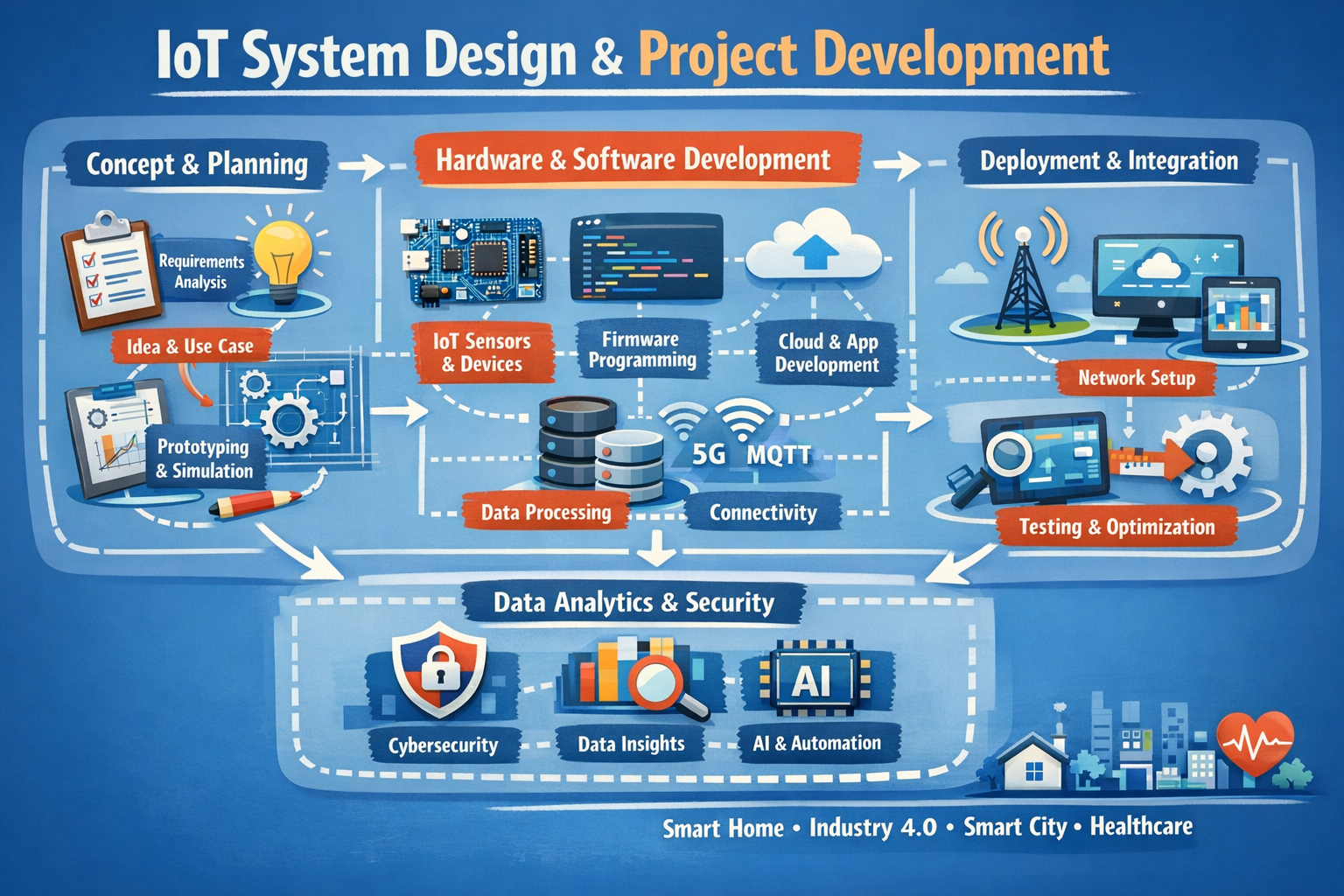
IoT system design is the process of creating a structured solution that connects devices, collects data, processes it, and performs actions. A well-designed IoT system ensures reliability, scalability, and efficient performance.
Key Phases of IoT System Design
Designing an IoT system involves multiple phases, from idea creation to deployment and maintenance.
1. Problem Identification and Requirement Analysis
The first step is to clearly define the problem and understand system requirements.
- Define Objective: Identify what problem the IoT system will solve
- User Requirements: Understand user needs and expectations
- Scope Definition: Decide features and limitations
Example: Designing a smart irrigation system to reduce water usage.
2. System Architecture Design
This phase defines how different components of the IoT system will interact.
- Layered Architecture: Device, network, processing, and application layers
- Data Flow Design: How data moves from sensors to users
- Component Selection: Choose suitable hardware and software
Example: Sensors send data to the cloud, where it is processed and displayed in an app.
3. Hardware Selection
Choosing the right hardware is critical for system performance.
- Sensors: Temperature, humidity, motion, etc.
- Microcontrollers: Arduino, ESP8266, Raspberry Pi
- Actuators: Motors, relays, switches
Example: Soil moisture sensor used in a smart farming system.
4. Connectivity Design
Connectivity ensures communication between devices and systems.
- Network Type: Wi-Fi, Bluetooth, Zigbee, cellular
- Communication Protocols: MQTT, HTTP
- Range and Power Considerations: Based on application needs
Example: Using Wi-Fi to connect home automation devices.
5. Data Processing and Storage
Data must be processed and stored efficiently.
- Edge Processing: Quick decisions near the device
- Cloud Processing: Large-scale analysis and storage
- Database Management: Store structured data
Example: Cloud platform analyzes temperature trends over time.
6. User Interface Design
The system should provide an easy way for users to interact.
- Mobile Applications: Control and monitor devices
- Web Dashboards: Visual representation of data
- Alerts: Notifications for important events
Example: A mobile app shows soil moisture level and controls irrigation.
7. Security Design
Security is essential to protect IoT systems.
- Authentication: Verify users and devices
- Encryption: Protect data during transmission
- Access Control: Limit unauthorized access
Example: Secure login for accessing IoT devices.
8. Testing and Validation
Testing ensures the system works correctly and efficiently.
- Functional Testing: Verify system features
- Performance Testing: Check speed and reliability
- Security Testing: Identify vulnerabilities
Example: Testing if sensors correctly trigger actions.
9. Deployment and Maintenance
After testing, the system is deployed for real-world use.
- System Deployment: Install devices and configure network
- Monitoring: Track system performance
- Updates and Maintenance: Fix issues and improve features
Example: Updating software to improve system performance.
IoT Project Development Lifecycle
IoT project development follows a structured lifecycle to ensure successful implementation, scalability, and long-term performance. Each phase plays a critical role in transforming an idea into a fully functional IoT solution.
1. Planning Phase
The planning phase defines the foundation of the entire IoT project. It focuses on understanding the problem, setting clear objectives, and preparing resources.
- Goal Definition: Clearly identify the purpose of the IoT system and the problem it will solve
- Requirement Analysis: Understand user needs, system features, and expected outcomes
- Resource Identification: Determine hardware, software, budget, and team requirements
- Timeline Creation: Plan project milestones and deadlines for each stage
This phase ensures the project starts with a clear direction and avoids confusion later.
2. Design Phase
The design phase creates the blueprint of the IoT system by defining how components will interact.
- System Architecture Design: Define layers such as devices, network, processing, and application
- Hardware Selection: Choose sensors, microcontrollers, and actuators based on project needs
- Software Selection: Decide platforms, programming languages, and tools
- Data Flow Planning: Define how data will move from devices to cloud and users
- Connectivity Design: Select communication technologies like Wi-Fi, Bluetooth, or cellular
A well-designed system ensures efficiency, scalability, and smooth integration.
3. Development Phase
In this phase, the actual IoT system is built by combining hardware and software components.
- Hardware Setup: Assemble sensors, devices, and controllers
- Software Development: Write code for data collection, processing, and control
- Application Development: Create mobile or web interfaces for users
- System Integration: Connect all components to work as a unified system
This phase turns the design into a working prototype or product.
4. Testing Phase
The testing phase ensures the system works correctly and meets all requirements.
- Functional Testing: Verify that all features perform as expected
- Performance Testing: Evaluate system speed, response time, and reliability
- Security Testing: Identify vulnerabilities and ensure data protection
- Bug Fixing: Detect and resolve errors in hardware and software
Proper testing improves system quality and reduces risks after deployment.
5. Deployment Phase
Deployment is the stage where the IoT system is implemented in a real-world environment.
- System Installation: Deploy devices and configure networks
- Live Monitoring: Track system performance in real time
- User Training: Guide users on how to operate the system
- Initial Optimization: Adjust settings for better performance
This phase ensures the system is ready for actual use and delivers expected results.
6. Maintenance Phase
Maintenance ensures the long-term success and reliability of the IoT system.
- System Updates: Improve features and fix issues through updates
- Security Improvements: Protect against new threats and vulnerabilities
- Performance Monitoring: Continuously track system efficiency
- Failure Management: Detect and resolve system failures quickly
Regular maintenance keeps the IoT system efficient, secure, and up-to-date.
The IoT project lifecycle is a continuous process where each phase is connected. From planning to maintenance, every step contributes to building a reliable and scalable IoT system. Following this structured approach helps developers create efficient solutions and ensures long-term success in real-world applications.
Best Practices for IoT System Design
Following best practices in IoT system design ensures that solutions are efficient, secure, scalable, and reliable. These practices help developers build systems that perform well in real-world environments and support future growth.
1. Scalability
Scalability ensures that the IoT system can handle growth in devices, users, and data without performance issues.
- Flexible Architecture: Design systems that support adding new devices easily
- Cloud Integration: Use cloud platforms to handle increasing data loads
- Modular Design: Build components that can be expanded or upgraded
A scalable system can grow from a small setup to a large network without major redesign.
2. Security First Approach
Security should be considered from the beginning of the design process to protect devices and data.
- Device Authentication: Ensure only authorized devices can connect
- Data Encryption: Protect data during transmission and storage
- Access Control: Limit system access to authorized users
Strong security prevents data breaches and unauthorized control of devices.
3. Energy Efficiency
Energy efficiency is important, especially for battery-powered IoT devices.
- Low Power Devices: Use energy-efficient sensors and controllers
- Sleep Modes: Reduce power usage when devices are idle
- Efficient Communication: Minimize unnecessary data transmission
Efficient energy usage increases device lifespan and reduces operational costs.
4. Reliable Connectivity
Reliable connectivity ensures smooth communication between devices and systems.
- Stable Networks: Choose appropriate communication technology
- Redundancy: Use backup communication paths
- Low Latency: Ensure fast data transmission for real-time applications
Reliable connectivity improves system performance and user experience.
5. Data Management
Efficient data management is essential for handling large volumes of IoT data.
- Data Filtering: Remove unnecessary or duplicate data
- Storage Optimization: Use cloud or edge storage effectively
- Data Analytics: Convert data into meaningful insights
Proper data management helps in better decision-making and system optimization.
Example: Smart Home IoT System Design
Let us understand IoT system design with a simple and practical example.
1. Problem
The goal is to control home appliances remotely and improve convenience for users.
2. Solution
The IoT system is designed using multiple interconnected components:
- Sensors: Detect temperature, motion, or light conditions
- Connectivity: Devices connect through Wi-Fi for communication
- Cloud Processing: Data is processed and stored in the cloud
- Mobile Application: Users can monitor and control devices remotely
This integrated solution enables automation and remote access.
3. Outcome
- Users can control lights, fans, and appliances from anywhere
- The system improves convenience and energy efficiency
- Real-time monitoring enhances user control and safety
Importance of IoT System Design
Understanding IoT system design is essential for building effective and reliable solutions.
- Structured Development: Provides a clear and organized approach
- Improved Performance: Ensures efficient system operation
- Better User Experience: Makes systems easy to use and manage
- Future Expansion: Supports adding new features and devices
Conclusion
IoT System Design and Project Development provide a complete roadmap for building smart and connected systems. By following best practices such as scalability, security, energy efficiency, reliable connectivity, and effective data management, developers can create robust IoT solutions. This structured approach ensures long-term success and prepares learners for real-world IoT applications and careers.
IoT System Design and Project Development – Subtopics
Explore IoT System Design and Project Development with practical approaches, architecture planning, and real-world implementation strategies for smart systems. Understand key concepts like device integration, data processing, and project building to develop efficient and scalable IoT solutions.
- IoT System Design Process Step by Step
- How to Design an IoT System Architecture
- Key Components of IoT System Design Explained
- IoT Project Development Lifecycle Explained
- How to Build an IoT Project from Scratch
- IoT Hardware Selection Guide for Beginners
- Choosing Sensors and Actuators for IoT Projects
- IoT Communication Protocols Selection Guide
- Cloud Integration in IoT System Design
- Edge Computing in IoT Project Development
- IoT Data Flow and System Workflow Design
- IoT Platform Selection and Implementation Guide
- IoT System Testing and Debugging Techniques
- IoT Security Implementation in System Design
- Scalable IoT System Design Best Practices
- Low Cost IoT Project Development Ideas
- IoT Project Documentation and Reporting Guide
- Common Challenges in IoT System Design and Solutions
- Real World IoT Project Design Examples
- End to End IoT System Development Guide