











IoT Architecture and Core Components
IoT Architecture and Core Components explain how Internet of Things systems are structured and how different parts work together to collect, process, and act on data. Understanding this architecture helps students clearly see how IoT operates in real-world applications.
Introduction to IoT Architecture
IoT architecture is the structured framework that defines how devices, networks, and systems interact to deliver smart services. It ensures efficient data flow from physical devices to digital platforms and enables automation and decision-making.
Basic Layers of IoT Architecture
IoT architecture is commonly divided into multiple layers, each responsible for a specific function. These layers work together to create a complete IoT system.
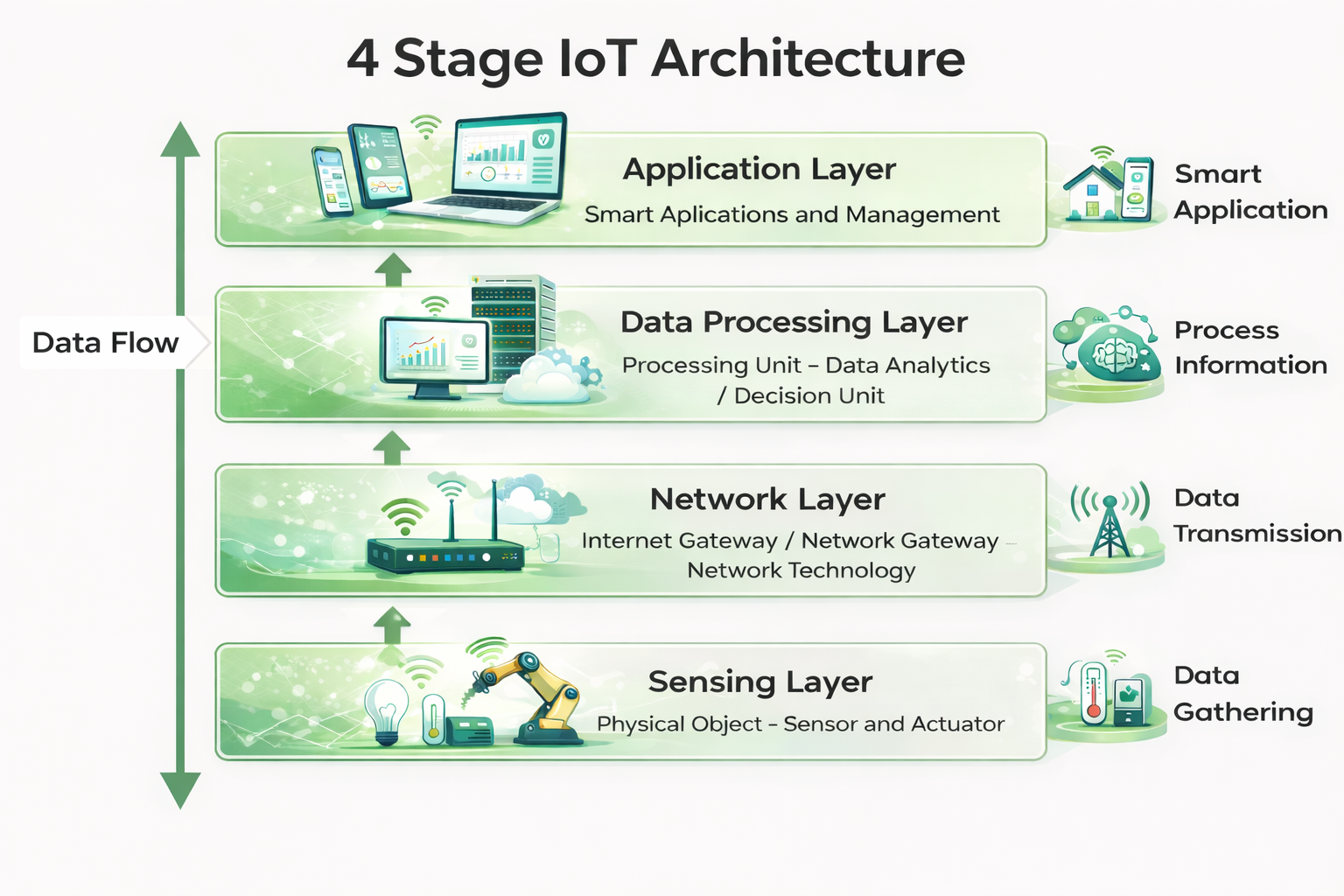
1. Perception Layer (Device Layer)
The perception layer is the physical layer where data is collected from the real world using sensors and devices.
- Data Collection: Sensors capture environmental data such as temperature, humidity, motion, and light
- Device Interaction: Physical objects are connected to the system
- Real-Time Input: Provides continuous data from the environment
Example: A temperature sensor detects room temperature.
2. Network Layer (Communication Layer)
The network layer is responsible for transmitting data from devices to other parts of the system.
- Data Transmission: Sends data from sensors to servers or cloud platforms
- Connectivity Technologies: Uses Wi-Fi, Bluetooth, Zigbee, or cellular networks
- Secure Communication: Ensures safe data transfer
Example: Sensor data is sent to the cloud through Wi-Fi.
3. Processing Layer (Middleware Layer)
The processing layer handles data storage, analysis, and decision-making.
- Data Processing: Converts raw data into meaningful information
- Cloud Integration: Stores and processes large data sets
- Analytics: Applies logic and algorithms for insights
Example: The system analyzes temperature data to decide whether cooling is needed.
4. Application Layer
The application layer provides services to users based on processed data.
- User Interface: Displays information through apps or dashboards
- Smart Services: Enables automation and control
- Decision Support: Helps users make informed decisions
Example: A mobile app shows room temperature and controls an air conditioner.
5. Business Layer (Optional Advanced Layer)
The business layer manages the overall IoT system, including analytics, reporting, and business decisions.
- Data Visualization: Creates reports and dashboards
- System Management: Monitors performance and usage
- Business Insights: Supports strategic decisions
Example: A company analyzes IoT data to improve energy efficiency.
Core Components of IoT System
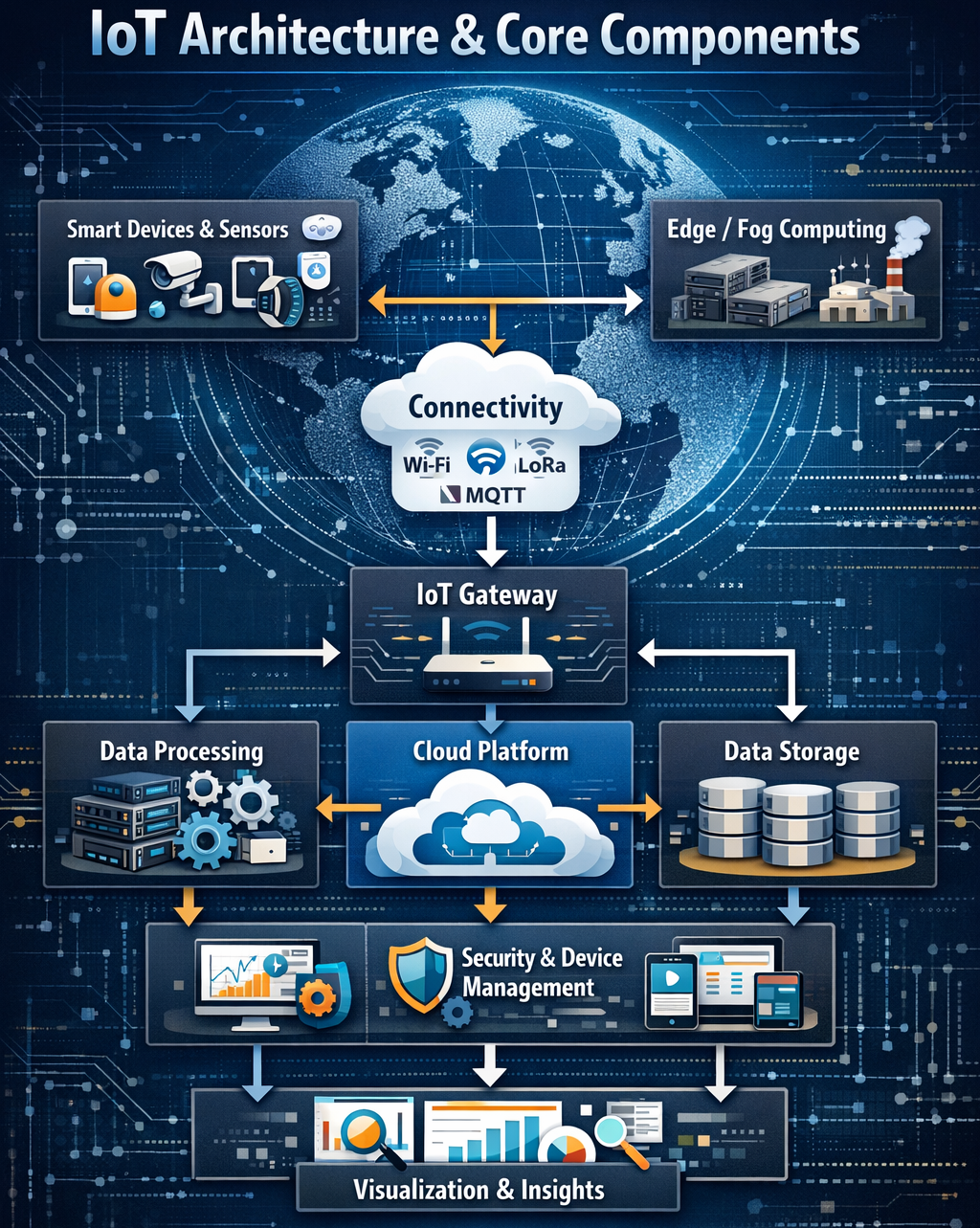
IoT systems consist of several essential components that work together within the architecture.
1. Sensors and Devices
Sensors and devices are the foundation of IoT systems.
- Sensors: Collect data from the environment
- Actuators: Perform actions based on commands
- Smart Devices: Combine sensing and processing capabilities
Example: A motion sensor detects movement and triggers a light.
2. Connectivity
Connectivity enables communication between devices and systems.
- Wireless Networks: Wi-Fi, Bluetooth, cellular
- Protocols: MQTT, HTTP, CoAP
- Data Transfer: Reliable communication between components
Example: A smart device sends data to the cloud using Wi-Fi.
3. Data Processing
Data processing transforms raw data into useful insights.
- Edge Processing: Processes data near the device
- Cloud Processing: Handles large-scale analysis
- Real-Time Decisions: Enables immediate responses
Example: A system processes sensor data to detect abnormal conditions.
4. Cloud Platform
The cloud platform stores and manages IoT data and applications.
- Data Storage: Saves large amounts of data
- Scalability: Supports growing data needs
- Service Management: Hosts applications and services
Example: Cloud servers store and analyze data from multiple devices.
5. User Interface
The user interface allows users to interact with the IoT system.
- Dashboards: Display data visually
- Mobile Apps: Provide remote control
- Alerts and Notifications: Inform users of important events
Example: A smartphone app shows device status and allows control.
How IoT Architecture Works (Step by Step)
IoT architecture follows a structured process to deliver smart functionality.
1. Data Collection
Sensors gather data from the environment.
2. Data Transmission
Data is sent through network connections.
3. Data Processing
Systems analyze and interpret the data.
4. Decision Making
The system determines the required action.
5. Action Execution
Actuators perform the action.
6. User Interaction
Results are displayed to the user.
Example: A smart thermostat collects temperature data, processes it, and adjusts room temperature automatically.
Importance of IoT Architecture
Understanding IoT architecture is essential for building efficient and scalable systems.
- Efficient Design: Helps in organizing system components
- Scalability: Supports growth of devices and data
- Security: Ensures safe communication and data protection
- Performance Optimization: Improves system efficiency
Conclusion
IoT Architecture and Core Components provide a clear structure for how connected systems operate. By combining sensors, connectivity, data processing, and user interfaces, IoT creates intelligent systems that improve efficiency and automation. Understanding this architecture is key to developing and managing modern IoT solutions.