









Real-World Applications of IoT
Real-World Applications of IoT demonstrate how connected devices and smart systems are used in everyday life and across industries. IoT enables automation, real-time monitoring, and data-driven decision-making, making systems more efficient and intelligent.
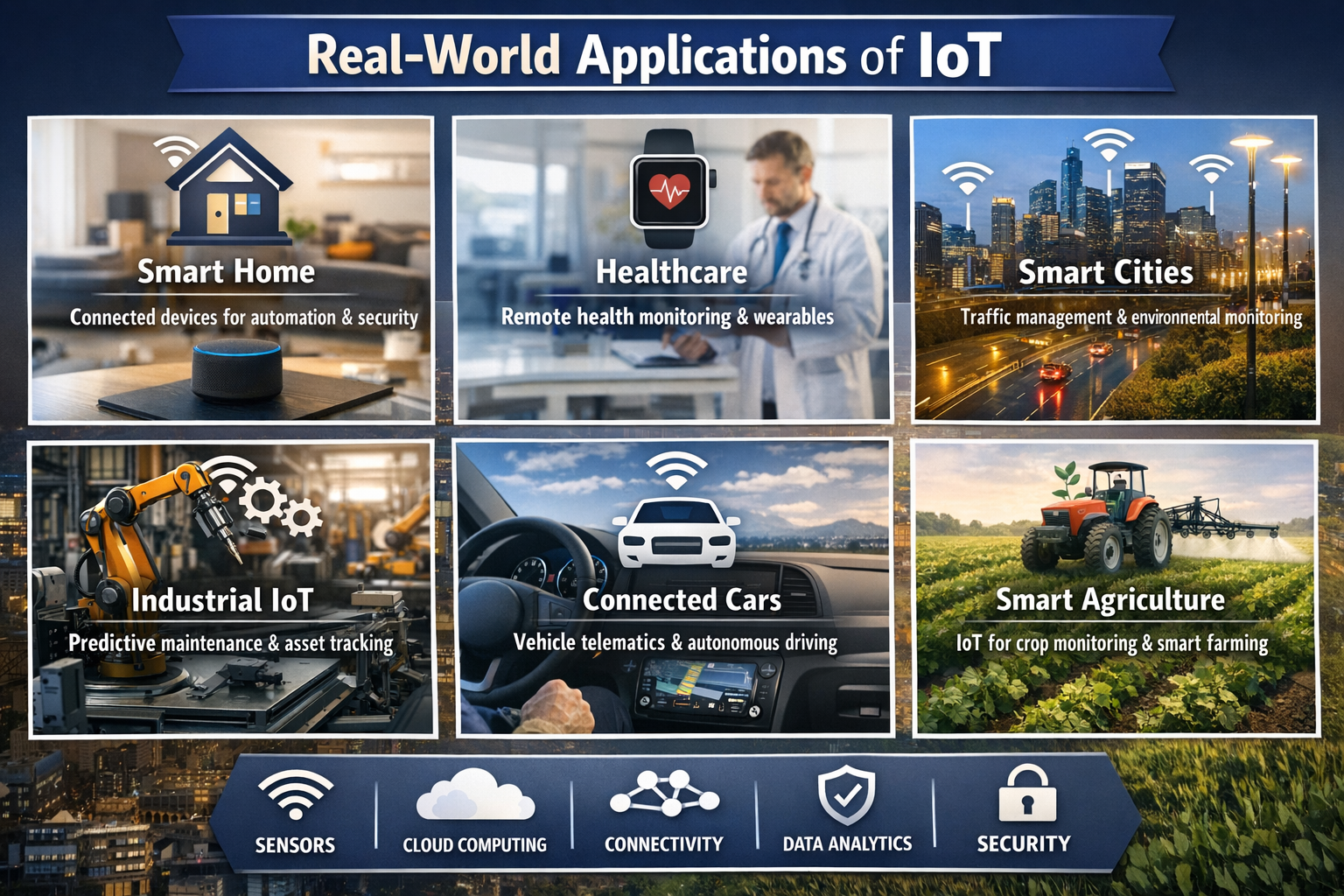
IoT is widely used in various fields such as homes, healthcare, agriculture, industries, and cities. It connects devices, collects data, and enables smart actions that improve efficiency and user experience.
Major Real-World Applications of IoT
IoT applications are transforming multiple sectors by providing smart solutions, automation, and real-time data insights. These applications improve efficiency, reduce costs, and enhance user experience across industries.
1. Smart Homes
IoT is widely used in homes to automate daily activities and improve comfort and security.
- Smart Lighting: Lights automatically adjust based on presence or time
- Smart Thermostats: Control temperature efficiently and save energy
- Home Security Systems: Cameras and sensors monitor safety
Example: A smart home system automatically turns off lights and appliances when no one is present.
2. Healthcare Systems
IoT enhances healthcare by enabling remote monitoring and intelligent medical devices.
- Wearable Devices: Track health parameters like heart rate and temperature
- Remote Monitoring: Doctors can monitor patients from anywhere
- Smart Equipment: Connected devices improve diagnosis and treatment
Example: A wearable device sends real-time health data to doctors for continuous monitoring.
3. Smart Cities
IoT helps cities become more efficient, sustainable, and responsive.
- Traffic Management: Smart signals reduce congestion
- Waste Management: Smart bins optimize collection routes
- Energy Management: Smart grids improve electricity usage
Example: Traffic lights adjust automatically based on real-time traffic conditions.
4. Agriculture (Smart Farming)
IoT enables precision farming and efficient use of resources.
- Soil Sensors: Monitor moisture levels and nutrients
- Smart Irrigation: Automates watering based on soil conditions
- Crop Monitoring: Tracks environmental factors like temperature and humidity
Example: Farmers receive alerts when crops need water, improving yield and reducing waste.
5. Industrial IoT (IIoT)
IoT improves industrial operations through automation and predictive monitoring.
- Predictive Maintenance: Detect machine issues before failure
- Automated Production: Smart machines increase efficiency
- Quality Control: AI systems identify defects in products
Example: Sensors alert maintenance teams before equipment failure occurs.
6. Transportation and Logistics
IoT enhances transportation systems and supply chain management.
- Vehicle Tracking: Monitor location and performance of vehicles
- Fleet Management: Optimize routes and fuel usage
- Smart Traffic Systems: Reduce congestion and improve flow
Example: Delivery companies track shipments in real time for better logistics management.
7. Retail and E-Commerce
IoT improves customer experience and inventory management in retail.
- Smart Shelves: Track product availability automatically
- Customer Analytics: Analyze shopping behavior and preferences
- Automated Checkout: Enables faster and seamless payments
Example: Stores use sensors to monitor stock levels and restock items efficiently.
8. Energy Management
IoT optimizes energy usage across homes, industries, and cities.
- Smart Meters: Monitor electricity consumption in real time
- Energy Optimization: Reduce waste and improve efficiency
- Renewable Integration: Manage solar and wind energy systems
Example: Smart meters help users track and control their electricity usage.
Benefits of IoT Applications
IoT applications provide significant advantages across industries by enabling automation, real-time monitoring, and intelligent decision-making. These benefits improve efficiency, reduce costs, and enhance user experience.
1. Automation
IoT automates routine tasks and reduces the need for manual intervention.
- Reduced Manual Effort: Devices perform tasks automatically
- Improved Efficiency: Faster and more accurate operations
- Time Saving: Minimizes human involvement in repetitive tasks
Automation increases productivity and system reliability.
2. Real-Time Monitoring
IoT enables continuous tracking of systems and environments.
- Continuous Data Tracking: Monitor devices and conditions 24/7
- Instant Alerts: Immediate notification of issues or changes
- Quick Response: Enables fast corrective actions
This improves system performance and responsiveness.
3. Cost Efficiency
IoT helps optimize resources and reduce unnecessary expenses.
- Resource Optimization: Efficient use of energy, time, and materials
- Reduced Operational Costs: Minimizes waste and manual labor
- Predictive Maintenance: Prevents costly failures
Cost efficiency makes IoT solutions more sustainable.
4. Improved Decision Making
IoT supports better decisions using real-time and historical data.
- Data-Driven Insights: Accurate information for decision-making
- Better Planning: Improves strategy and operations
- Predictive Analysis: Anticipates future trends and risks
This leads to smarter and more effective decisions.
5. Enhanced User Experience
IoT improves convenience and personalization for users.
- Personalized Services: Systems adapt to user preferences
- Increased Convenience: Easy access and control of devices
- Improved Interaction: Better user-system communication
This enhances overall satisfaction and usability.
Challenges in IoT Applications
Despite its advantages, IoT applications face several challenges that must be addressed for successful implementation.
1. Security Risks
IoT systems are vulnerable to cyber threats and data breaches.
- Data Breaches: Sensitive information can be exposed
- Cyber Attacks: Devices can be targeted by hackers
- Security Measures Needed: Strong encryption and authentication required
Security is essential to protect data and maintain trust.
2. High Cost
Implementing IoT solutions can be expensive.
- Device Cost: Sensors and smart devices
- Infrastructure Cost: Networks, cloud services, and storage
- Maintenance Cost: Ongoing updates and system management
Cost can be a barrier for widespread adoption.
3. Connectivity Issues
IoT systems depend heavily on reliable network connectivity.
- Network Dependence: Requires stable internet connection
- Latency Issues: Delays affect real-time performance
- Coverage Limitations: Problems in remote areas
Reliable connectivity is critical for smooth operation.
4. Data Management
IoT generates large volumes of data that must be handled efficiently.
- Big Data Handling: Continuous data generation from devices
- Storage Challenges: Requires scalable storage solutions
- Processing Complexity: Real-time data analysis is demanding
Effective data management is key to system success.
Conclusion
Real-World Applications of IoT demonstrate how IoT is transforming industries and everyday life. From smart homes to industrial automation, IoT enables efficient, intelligent, and connected systems. Although challenges such as security, cost, connectivity, and data management exist, continuous advancements in technology are helping overcome these issues. IoT will continue to grow and play a major role in shaping the future of modern technology.
Real-World Applications of IoT – Subtopics
Explore Real-World Applications of IoT to understand how connected devices are used in daily life and industries to improve efficiency, automation, and decision-making. Learn how IoT transforms sectors like healthcare, agriculture, transportation, and smart homes through real-time data and intelligent systems. Subtopics of Real-World Applications of IoT are listed below:
- Real World Applications of IoT Explained
- IoT Applications in Daily Life Examples
- Smart Home Applications Using IoT Devices
- IoT in Healthcare Real World Use Cases
- IoT in Agriculture and Smart Farming Applications
- IoT in Smart Cities and Urban Development
- IoT in Transportation and Logistics Industry
- IoT in Industrial Automation and Manufacturing
- IoT in Retail Industry and Smart Shopping
- IoT in Energy Management and Smart Grids
- IoT in Environmental Monitoring Systems
- IoT in Wearable Devices and Fitness Tracking
- IoT in Security and Surveillance Systems
- IoT in Supply Chain and Inventory Management
- IoT in Smart Education Systems and eLearning
- IoT in Banking and Financial Services
- IoT in Hospitality and Tourism Industry
- IoT in Disaster Management and Emergency Response
- IoT in Connected Vehicles and Automotive Systems
- Future Applications of IoT in Real World