











Artificial Intelligence (AI) and IoT Integration
Artificial Intelligence (AI) and IoT Integration combine smart algorithms with connected devices to create intelligent systems capable of learning, predicting, and automating tasks. This integration is often called AIoT (Artificial Intelligence of Things) and represents the next evolution of IoT technology.
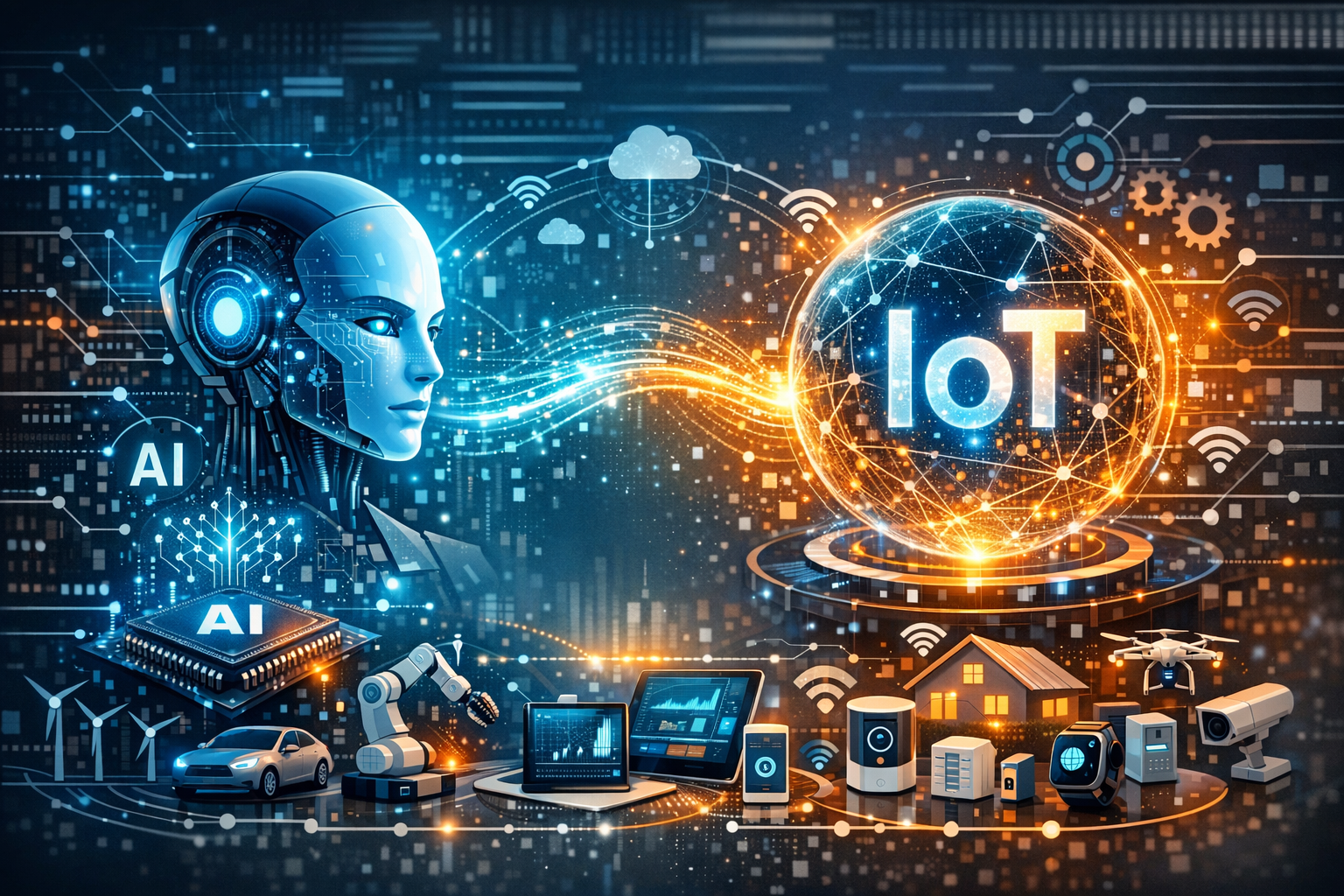
AI and IoT work together by combining data collection and intelligent analysis. IoT devices collect massive amounts of real-time data, while AI processes this data to generate insights, predictions, and automated actions without human intervention.
What is AIoT (Artificial Intelligence of Things)
AIoT (Artificial Intelligence of Things) is the integration of Artificial Intelligence with Internet of Things to create intelligent, self-learning, and automated systems. It combines real-time data collection from IoT devices with advanced AI analysis to enable smart decision-making without human intervention.
1. Key Concept of AIoT
AIoT works by connecting data, intelligence, and automation into a single system that continuously improves over time.
- Data Collection: IoT devices gather real-world data continuously from sensors
- Data Analysis: AI models process and interpret the collected data
- Smart Decisions: Systems automatically respond based on insights
- Continuous Learning: AI improves performance using new data and patterns
Example: A smart thermostat learns user habits and automatically adjusts temperature for comfort and energy efficiency.
How AI and IoT Work Together (Step by Step)
AI and IoT integration follows a structured workflow where data flows from devices to intelligent systems and back as actions.
1. Data Collection
IoT devices collect real-time data from the physical environment using sensors.
- Temperature, humidity, motion, and location data
- Continuous monitoring of environmental conditions
This step ensures accurate and up-to-date information is available for processing.
2. Data Transmission
The collected data is transmitted to processing systems through communication networks.
- Sent via Wi-Fi, Bluetooth, or cellular networks
- Uses secure protocols to protect data
Reliable transmission ensures data reaches the processing system without loss or delay.
3. Data Processing
Data is prepared and organized for AI analysis using edge or cloud computing.
- Data filtering removes noise and unnecessary information
- Data formatting prepares it for machine learning models
Processing makes raw data usable and meaningful.
4. AI-Based Analysis
Artificial Intelligence analyzes the processed data to extract insights.
- Machine learning identifies patterns and trends
- Predictive analytics forecasts future outcomes
This step converts data into intelligence.
5. Decision Making
Based on AI analysis, the system decides what action should be taken.
- Automated responses are triggered
- Smart recommendations are generated
Decisions are made quickly without human involvement.
6. Action Execution
IoT devices perform actions using actuators or control systems.
- Turn devices ON or OFF
- Adjust system settings automatically
This step connects digital decisions to physical actions.
7. Continuous Learning
AI systems continuously improve by learning from new data.
- Self-learning models update over time
- Accuracy and performance increase with usage
This makes the system smarter and more efficient over time.
Benefits of AI and IoT Integration
AI enhances IoT by transforming simple connected devices into intelligent systems that can learn, predict, and act automatically. This integration improves efficiency, performance, and user experience across multiple applications.
1. Smart Automation
Smart automation allows IoT systems to perform tasks without human intervention by using AI-based decision-making.
- Automatic Operations: Devices operate independently based on real-time data
- Reduced Manual Effort: Minimizes human involvement in routine tasks
- Faster Response: Immediate actions improve system efficiency
Example: Smart lights automatically turn on when motion is detected.
2. Predictive Maintenance
AI helps IoT systems predict failures before they happen, reducing risks and costs.
- Early Fault Detection: Identifies issues before breakdown occurs
- Reduced Downtime: Prevents unexpected system failures
- Cost Savings: Minimizes repair and maintenance expenses
Example: Machines alert maintenance teams before a component fails.
3. Real-Time Decision Making
AI enables IoT systems to analyze data instantly and respond without delay.
- Instant Analysis: Processes data in real time
- Quick Response: Immediate actions improve performance
- Dynamic Adaptation: Systems adjust based on current conditions
Example: Traffic systems adjust signals based on real-time traffic flow.
4. Improved Efficiency
AI optimizes IoT operations by using resources effectively.
- Resource Optimization: Efficient use of energy, time, and data
- Increased Productivity: Improves system output and performance
- Operational Efficiency: Reduces waste and unnecessary processes
Example: Smart grids optimize electricity usage based on demand.
5. Enhanced User Experience
AIoT provides personalized and intelligent services to users.
- Personalization: Systems adapt to user preferences
- Smart Recommendations: Suggest actions based on behavior
- User-Friendly Interaction: Simplifies control and monitoring
Example: Smart assistants recommend settings based on user habits.
Applications of AI and IoT (AIoT)
AIoT is widely used across different industries to create intelligent and automated systems.
1. Smart Homes
AIoT enables intelligent home automation and energy management.
- Smart Lighting: Automatic control based on presence and time
- Temperature Control: Adaptive heating and cooling systems
- Voice Automation: Control devices using voice assistants
Example: A smart home adjusts lighting and temperature based on user behavior.
2. Healthcare
AIoT improves healthcare by enabling continuous monitoring and early detection.
- Remote Monitoring: Track patient health in real time
- Early Diagnosis: Detect diseases using AI analysis
- Smart Devices: Wearables monitor vital signs
Example: A wearable device alerts doctors if abnormal health patterns are detected.
3. Smart Cities
AIoT supports efficient urban management and sustainability.
- Traffic Management: Optimize traffic flow and reduce congestion
- Waste Management: Smart bins monitor and optimize collection
- Energy Systems: Efficient distribution of electricity
Example: Smart traffic lights reduce congestion during peak hours.
4. Industrial IoT (IIoT)
AIoT enhances industrial operations through automation and intelligence.
- Predictive Maintenance: Prevent machine failures
- Automation: Improve production efficiency
- Quality Control: Detect defects using AI
Example: AI-powered systems monitor machines and optimize production lines.
5. Agriculture
AIoT helps farmers improve productivity and resource management.
- Smart Irrigation: Water crops based on soil conditions
- Crop Monitoring: Analyze plant health using sensors
- Weather-Based Decisions: Adjust farming activities based on predictions
Example: A smart irrigation system waters crops only when needed, saving water.
Challenges in AI and IoT Integration
Despite its powerful benefits, AIoT (Artificial Intelligence of Things) faces several challenges that can impact performance, security, and implementation. Understanding these challenges helps in designing more reliable and secure systems.
1. Data Security and Privacy
Security is one of the biggest concerns in AIoT due to the large amount of sensitive data being transmitted and processed.
- Cyber Attack Risks: Connected devices are vulnerable to hacking and unauthorized access
- Data Privacy Issues: Personal and sensitive data can be exposed
- Need for Protection: Strong encryption, authentication, and access control are required
Proper security measures are essential to maintain trust and system integrity.
2. High Cost
Implementing AIoT systems can be expensive, especially for large-scale deployments.
- Infrastructure Cost: Requires sensors, devices, cloud services, and AI tools
- Development Cost: Skilled professionals and advanced technologies increase expenses
- Maintenance Cost: Ongoing updates, monitoring, and repairs add to the cost
Cost management is important for making AIoT solutions practical and scalable.
3. Complex Integration
AIoT involves combining multiple technologies, which makes system integration challenging.
- Multi-Technology Environment: Integration of hardware, software, AI models, and networks
- Compatibility Issues: Different platforms and protocols may not work seamlessly together
- Skill Requirement: Requires expertise in multiple domains
A well-planned architecture helps reduce integration complexity.
4. Data Management
AIoT systems generate massive amounts of data that must be handled efficiently.
- Big Data Handling: Continuous data streams from multiple devices
- Storage Challenges: Requires scalable storage solutions
- Processing Complexity: Data must be processed quickly for real-time decisions
Efficient data management ensures better performance and accurate insights.
Future of AI and IoT Integration
The future of AIoT is focused on creating smarter, faster, and more secure systems that can operate with minimal human involvement.
1. Autonomous Systems
AIoT is moving towards fully automated systems that can operate independently.
- Self-Driving Vehicles: Vehicles that navigate without human control
- Automated Industries: Smart factories with minimal human intervention
These systems improve efficiency and reduce human errors.
2. Edge AI
Edge AI brings intelligence closer to IoT devices by processing data locally.
- On-Device Processing: AI runs directly on devices instead of the cloud
- Low Latency: Faster decision-making with minimal delay
- Reduced Data Transfer: Less reliance on cloud connectivity
Edge AI enables real-time responses in critical applications.
3. Advanced Security
Future AIoT systems will focus on stronger and smarter security mechanisms.
- AI-Based Threat Detection: Identify and respond to attacks automatically
- Improved Encryption: Stronger data protection techniques
- Adaptive Security Systems: Systems that evolve with new threats
Security will be a key factor in the growth of AIoT.
4. Human-Machine Collaboration
AIoT will enhance interaction between humans and intelligent systems.
- Smart Assistants: Systems that understand and respond to user needs
- Collaborative Systems: Humans and machines working together efficiently
- Improved User Experience: More natural and intuitive interactions
This will make technology more accessible and user-friendly.
Importance of AIoT in Modern Technology
AI and IoT integration is becoming a core part of digital transformation across industries.
- Innovation Growth: Drives development of new technologies and solutions
- Business Efficiency: Reduces operational costs and improves productivity
- Global Applications: Used in healthcare, agriculture, smart cities, and industries
- Future Opportunities: Creates new career paths and skill demands
AIoT is shaping the future of intelligent systems and smart environments.
Conclusion
Artificial Intelligence (AI) and IoT Integration represent a powerful combination that transforms simple connected devices into intelligent and autonomous systems. By combining real-time data collection with advanced AI analysis, AIoT enables automation, prediction, and continuous improvement. Despite challenges such as security, cost, and complexity, its future is promising, with advancements in edge computing, autonomous systems, and smart security driving innovation.
Artificial Intelligence (AI) and IoT Integration – Subtopics
Explore Artificial Intelligence (AI) and IoT Integration to understand how smart devices use data, automation, and intelligent decision-making in real-world systems. Learn how AI enhances IoT with predictive analytics, machine learning, and automation for smarter and more efficient solutions.
- AIoT Explained: Artificial Intelligence and IoT Integration
- How AI Enhances IoT Systems and Applications
- Benefits of AI in IoT Smart Systems
- AIoT Architecture and Working Process
- Machine Learning in IoT Applications Explained
- Deep Learning Use Cases in IoT Systems
- Real-Time Data Processing in AIoT Systems
- Edge AI in IoT Devices Explained
- AI-Based Predictive Maintenance in IoT
- Smart Decision Making Using AI in IoT
- AIoT Use Cases in Smart Homes and Cities
- Industrial AIoT Applications and Examples
- Healthcare Applications of AI and IoT Integration
- AIoT Security and Privacy Challenges
- Cloud AI vs Edge AI in IoT Systems
- Top Tools and Platforms for AIoT Development
- AIoT Project Ideas for Students and Beginners
- Future Trends of AI and IoT Integration
- AIoT Challenges and Limitations Explained
- How to Build AI Integrated IoT Projects Step by Step