






IoT in Healthcare and Agriculture
IoT in Healthcare and Agriculture explains how connected devices and smart systems improve patient care and farming practices. By using sensors, real-time data, and automation, IoT enhances efficiency, accuracy, and decision-making in both sectors.
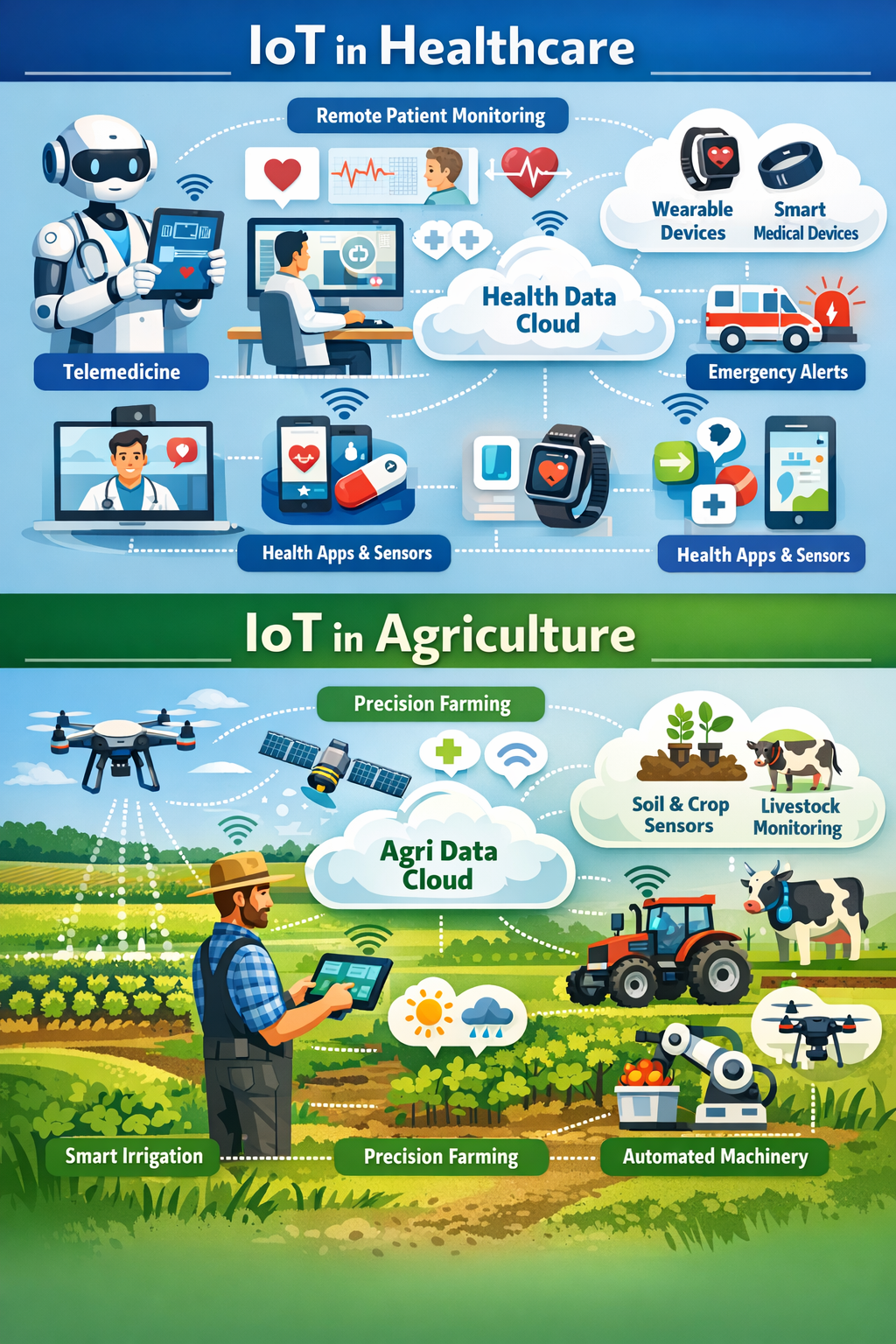
IoT enables continuous monitoring, data collection, and intelligent actions in critical fields like healthcare and agriculture. It helps improve outcomes, reduce costs, and optimize resource usage through smart technologies.
IoT in Healthcare
IoT is transforming healthcare by enabling remote monitoring, smart devices, and data-driven medical decisions.
1. Remote Patient Monitoring
IoT devices allow continuous monitoring of patients outside hospitals.
- Wearable Devices: Track heart rate, blood pressure, and temperature
- Real-Time Data: Sends health data to doctors instantly
- Early Detection: Identifies health issues at an early stage
Example: A wearable device alerts doctors if a patient’s heart rate becomes abnormal.
2. Smart Medical Devices
IoT-enabled medical devices improve diagnosis and treatment.
- Connected Equipment: Devices share data with healthcare systems
- Automated Functions: Reduce manual errors
- Improved Accuracy: Provides precise measurements
Example: Smart glucose monitors track blood sugar levels and send updates to mobile apps.
3. Hospital Management Systems
IoT helps hospitals manage resources and operations efficiently.
- Asset Tracking: Monitor medical equipment location
- Patient Flow Management: Optimize hospital operations
- Resource Utilization: Improve staff and equipment usage
Example: Hospitals track the availability of beds and equipment in real time.
4. Emergency Response Systems
IoT enhances emergency services and response time.
- Real-Time Alerts: Immediate notification during emergencies
- Location Tracking: Identify patient location quickly
- Faster Response: Improves ambulance and emergency services
Example: Ambulances use IoT to find the fastest route to hospitals.
IoT in Agriculture
IoT is revolutionizing agriculture by enabling smart farming techniques and efficient resource management.
1. Smart Irrigation Systems
IoT helps optimize water usage in farming.
- Soil Moisture Sensors: Measure water levels in soil
- Automated Irrigation: Water crops only when needed
- Water Conservation: Reduces water waste
Example: A system automatically irrigates fields when soil moisture is low.
2. Crop Monitoring
IoT devices monitor crop health and growth conditions.
- Environmental Sensors: Track temperature, humidity, and light
- Real-Time Data: Helps farmers monitor crops remotely
- Improved Yield: Supports better crop management
Example: Farmers receive alerts about unfavorable conditions affecting crops.
3. Livestock Monitoring
IoT helps track and manage livestock health and behavior.
- Wearable Sensors: Monitor animal health and movement
- Location Tracking: Prevent loss of animals
- Health Alerts: Detect diseases early
Example: Farmers track cattle health using smart collars.
4. Precision Farming
IoT enables data-driven farming for better productivity.
- Data Analysis: Optimize planting and harvesting
- Resource Optimization: Efficient use of fertilizers and pesticides
- Automation: Use of smart machines and drones
Example: Farmers use data to decide the best time for planting crops.
Benefits of IoT in Healthcare and Agriculture
IoT provides significant advantages in both healthcare and agriculture by enabling automation, real-time monitoring, and data-driven decision-making. These benefits improve efficiency, reduce costs, and enhance outcomes.
1. Improved Efficiency
IoT automates routine tasks and streamlines operations in both sectors.
- Process Automation: Reduces manual work in monitoring and management
- System Optimization: Enhances overall performance of healthcare and farming systems
- Time Saving: Speeds up operations and responses
This leads to more efficient and reliable systems.
2. Better Decision Making
IoT enables informed decisions using real-time and historical data.
- Data-Driven Insights: Improves accuracy in diagnosis and farming decisions
- Timely Actions: Enables quick responses to changing conditions
- Predictive Support: Helps anticipate future needs and risks
This improves both patient care and agricultural planning.
3. Cost Reduction
IoT reduces operational costs by optimizing resources and preventing failures.
- Lower Maintenance Costs: Predictive monitoring reduces unexpected breakdowns
- Resource Optimization: Efficient use of water, energy, and medical resources
- Reduced Waste: Minimizes unnecessary usage
This makes systems more economical and sustainable.
4. Real-Time Monitoring
IoT allows continuous monitoring of health and environmental conditions.
- Continuous Tracking: Monitor patients and crops 24/7
- Instant Alerts: Detect issues and respond immediately
- Remote Access: Enables monitoring from anywhere
This improves response time and system reliability.
5. Increased Productivity
IoT enhances productivity in both healthcare and agriculture.
- Improved Patient Care: Better treatment outcomes and faster diagnosis
- Higher Crop Yield: Optimized farming practices increase production
- System Effectiveness: Enhances overall performance
This results in better outcomes and higher efficiency.
Challenges in IoT Implementation
Despite its benefits, IoT in healthcare and agriculture faces several challenges that must be addressed for successful implementation.
1. Data Security and Privacy
Handling sensitive data requires strong security measures.
- Sensitive Data Protection: Health records and farm data must be secured
- Cybersecurity Risks: Systems are vulnerable to hacking and attacks
- Privacy Concerns: Unauthorized access can lead to data misuse
Ensuring security is critical for trust and compliance.
2. High Cost
IoT implementation can be expensive, especially at large scale.
- Device Cost: Sensors, wearables, and smart equipment
- Infrastructure Cost: Cloud services, networks, and storage
- Maintenance Cost: Regular updates and system monitoring
Cost management is important for widespread adoption.
3. Connectivity Issues
Reliable connectivity is essential for IoT systems.
- Limited Coverage: Rural and remote areas may lack network access
- Unstable Connections: Interruptions affect system performance
- Latency Issues: Delays in communication can impact real-time decisions
Improving connectivity is key to effective IoT deployment.
4. Technical Complexity
IoT systems require integration of multiple technologies and expertise.
- Complex Integration: Combining hardware, software, and networks
- Skill Requirements: Need for trained professionals
- System Management: Managing large and complex systems
Proper planning and skilled resources are needed to handle complexity.
Conclusion
IoT in Healthcare and Agriculture is transforming both sectors by enabling smart monitoring, automation, and data-driven decision-making. In healthcare, it improves patient care and hospital management, while in agriculture, it enhances crop production and resource efficiency. Despite challenges, IoT continues to play a vital role in building smarter and more sustainable systems for the future.
IoT in Healthcare and Agriculture – Subtopics
Explore IoT in Healthcare and Agriculture to understand how smart devices improve patient care, remote monitoring, and precision farming. Learn how real-time data, automation, and connected systems enhance efficiency, productivity, and decision-making in both sectors.
- IoT in Healthcare Explained for Beginners
- IoT Applications in Healthcare Industry
- Remote Patient Monitoring Using IoT Devices
- Wearable Health Devices and IoT Technology
- Smart Hospitals and IoT Systems Explained
- IoT in Disease Detection and Diagnosis
- IoT in Healthcare Data Management Systems
- Benefits of IoT in Healthcare Sector
- Challenges in IoT Healthcare Implementation
- IoT Security and Privacy in Healthcare Systems
- IoT in Agriculture Explained for Beginners
- Smart Farming Using IoT Technology
- Precision Agriculture with IoT Sensors
- IoT-Based Irrigation Systems and Water Management
- Crop Monitoring Using IoT Devices
- Livestock Monitoring with IoT Solutions
- IoT in Soil Monitoring and Fertility Management
- Benefits of IoT in Agriculture Sector
- Challenges in IoT Agriculture Implementation
- Future of IoT in Healthcare and Agriculture