











IoT in Agriculture and Smart Farming
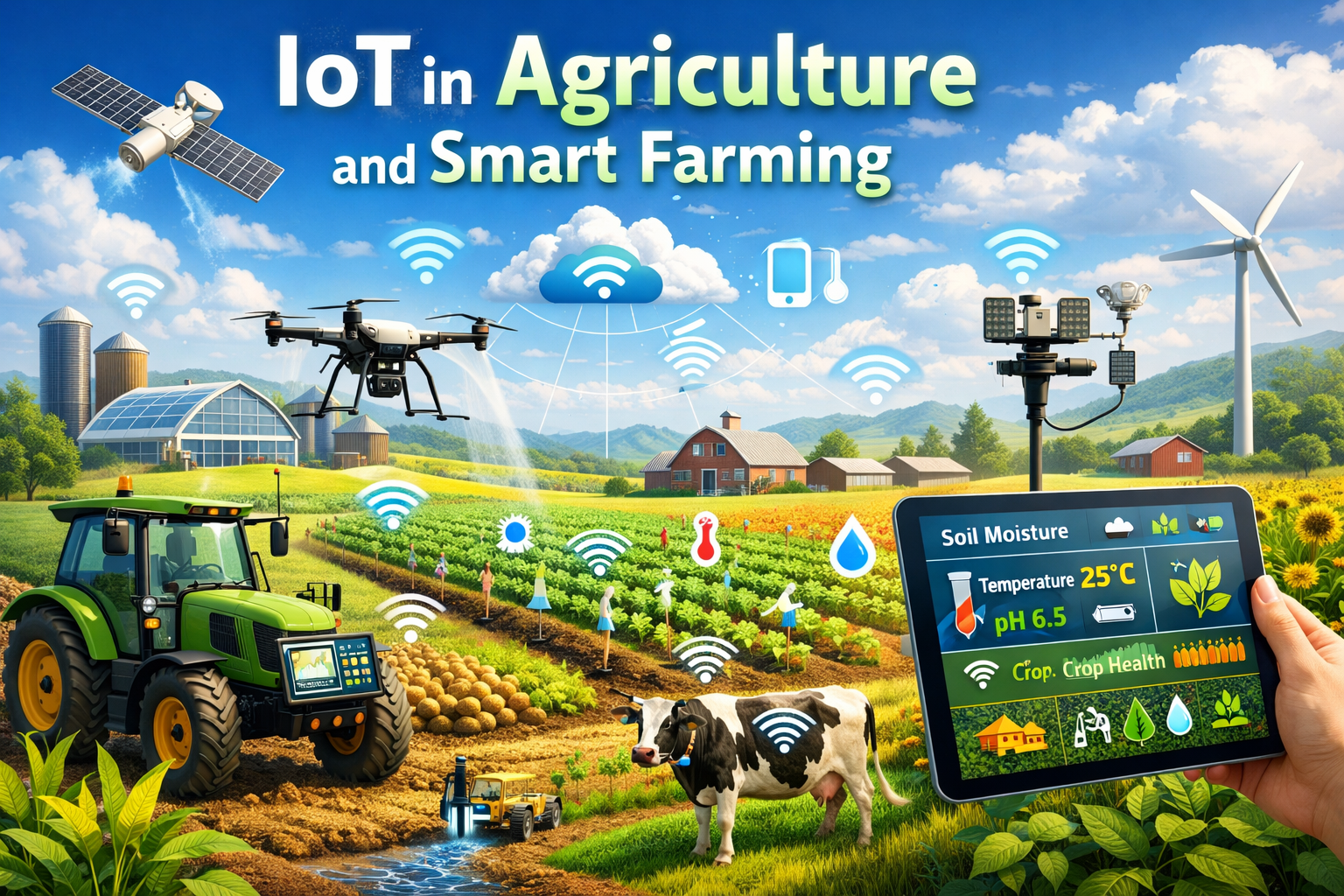
Internet of Things (IoT) in agriculture is transforming traditional farming into smart, data-driven agriculture systems. It helps farmers monitor crops, soil, weather, and livestock in real time for better productivity and efficiency.
What is IoT in Agriculture?
IoT in agriculture refers to the use of connected devices, sensors, and smart systems to monitor and manage farming activities automatically. It enables farmers to make informed decisions using real-time data and analytics.
List of key concepts such as smart farming definition, connected devices, and real-time monitoring are explained below.
1. Smart Farming Concept
Smart farming uses IoT technology to automate agricultural processes and improve crop yield. It integrates sensors, cloud computing, and data analytics for intelligent decision-making.
- Automation: Reduces manual labor through smart systems
- Data-Driven Decisions: Uses real-time data for accurate farming
- Efficiency: Improves productivity and reduces waste
2. IoT-Based Agriculture System
An IoT-based system connects various devices such as sensors, drones, and irrigation systems to collect and process data.
- Sensors: Collect soil moisture, temperature, and humidity data
- Connectivity: Transfers data via internet or wireless networks
- Cloud Platforms: Store and analyze collected data
How IoT Works in Smart Farming
IoT in agriculture works by collecting data from the field, processing it, and taking automated actions. It creates a continuous loop of monitoring and improvement.
List of working steps such as data collection, processing, and automated response is given below.
1. Data Collection from Sensors
Sensors placed in the field collect environmental and soil data continuously. This data forms the foundation of smart farming systems.
- Soil Sensors: Measure moisture and nutrients
- Weather Sensors: Track temperature and humidity
- Crop Sensors: Monitor plant health
2. Data Transmission and Storage
Collected data is transmitted to cloud servers using internet connectivity. This ensures centralized storage and easy access.
- Wireless Networks: Enable remote data transfer
- Cloud Storage: Stores large volumes of data
- Real-Time Access: Allows farmers to monitor anytime
3. Data Processing and Analysis
Advanced analytics tools process the data to generate insights. These insights help in predicting crop needs and improving yield.
- AI Algorithms: Analyze patterns and trends
- Predictive Analytics: Forecast weather and crop growth
- Decision Support: Helps in planning farming activities
4. Automated Actions and Control
Based on analyzed data, automated systems perform actions such as irrigation and fertilization.
- Smart Irrigation: Water is supplied when needed
- Fertilizer Control: Optimizes nutrient usage
- Alerts and Notifications: Inform farmers instantly
Key Components of IoT in Agriculture
IoT systems in agriculture consist of multiple components that work together to create an intelligent farming environment. These components ensure efficient monitoring and automation.
List of components such as sensors, connectivity, and cloud platforms is provided below.
1. Sensors and Devices
Sensors are the core components that collect data from the farming environment. They monitor soil, crops, and weather conditions.
- Soil Moisture Sensors: Detect water levels in soil
- Temperature Sensors: Monitor environmental conditions
- Humidity Sensors: Measure air moisture
2. Connectivity Technologies
Connectivity enables communication between devices and cloud systems. It ensures real-time data transfer.
- Wi-Fi and Cellular Networks: Provide internet access
- LPWAN: Supports long-range communication
- Bluetooth and Zigbee: Used for short-range connectivity
3. Cloud Computing Platforms
Cloud platforms store and process large amounts of data collected from IoT devices. They provide analytics and insights.
- Data Storage: Handles big data efficiently
- Processing Power: Enables real-time analysis
- Remote Access: Allows monitoring from anywhere
4. Data Analytics and AI
Data analytics transforms raw data into useful insights. AI enhances decision-making through intelligent predictions.
- Pattern Recognition: Identifies trends in data
- Automation Support: Improves system efficiency
- Decision Making: Helps optimize farming practices
Applications of IoT in Agriculture
IoT is widely used in agriculture for improving productivity, reducing costs, and ensuring sustainable farming practices. It supports various smart farming applications.
List of applications such as precision farming, livestock monitoring, and smart irrigation is explained below.
1. Precision Farming
Precision farming uses IoT data to optimize field-level management. It ensures efficient use of resources.
- Targeted Irrigation: Reduces water wastage
- Soil Monitoring: Maintains soil health
- Crop Yield Optimization: Improves productivity
2. Smart Irrigation Systems
Smart irrigation systems automatically control water supply based on soil conditions. This reduces water consumption.
- Automated Watering: Supplies water only when needed
- Water Efficiency: Prevents over-irrigation
- Real-Time Monitoring: Tracks soil moisture levels
3. Livestock Monitoring
IoT devices monitor animal health and behavior in real time. This improves livestock management and productivity.
- Health Tracking: Detects diseases early
- Location Tracking: Prevents loss of animals
- Behavior Analysis: Improves animal welfare
4. Greenhouse Automation
IoT enables automated control of greenhouse environments. It ensures optimal conditions for plant growth.
- Temperature Control: Maintains ideal climate
- Humidity Regulation: Supports plant health
- Lighting Automation: Enhances growth conditions
5. Drone-Based Monitoring
Drones equipped with sensors and cameras monitor large agricultural fields efficiently.
- Aerial Imaging: Provides crop health insights
- Field Mapping: Improves land management
- Pest Detection: Identifies issues early
Benefits of IoT in Smart Farming
IoT provides numerous benefits that improve efficiency, productivity, and sustainability in agriculture. It helps farmers make smarter decisions.
List of benefits such as cost reduction, increased yield, and resource optimization is given below.
1. Increased Crop Yield
IoT enables precise monitoring and management, leading to better crop production.
- Optimized Resources: Efficient use of water and fertilizers
- Early Problem Detection: Reduces crop loss
- Improved Growth Conditions: Enhances productivity
2. Cost Efficiency
Smart farming reduces operational costs by minimizing resource wastage and manual labor.
- Reduced Labor Costs: Automation handles repetitive tasks
- Efficient Resource Usage: Saves water and fertilizers
- Lower Maintenance Costs: Predictive maintenance reduces failures
3. Real-Time Monitoring
Farmers can monitor their fields and livestock in real time from anywhere.
- Remote Access: Monitor using mobile devices
- Instant Alerts: Get notifications for issues
- Better Control: Improves farm management
4. Sustainable Agriculture
IoT supports environmentally friendly farming practices.
- Water Conservation: Reduces water usage
- Reduced Chemical Use: Minimizes environmental impact
- Energy Efficiency: Optimizes energy consumption
Challenges of IoT in Agriculture
Despite its benefits, IoT in agriculture faces several challenges that affect its implementation and adoption. Understanding these challenges is important.
List of challenges such as cost, connectivity, and security is discussed below.
1. High Initial Cost
Setting up IoT systems requires significant investment in devices and infrastructure.
- Equipment Cost: Sensors and devices are expensive
- Installation Cost: Requires technical setup
- Maintenance Cost: Ongoing expenses
2. Connectivity Issues
Reliable internet connectivity is required for IoT systems to function effectively.
- Rural Limitations: Limited internet access in remote areas
- Network Reliability: Connectivity interruptions affect performance
- Data Transmission Delays: Impact real-time monitoring
3. Data Security and Privacy
IoT systems are vulnerable to cyber threats and data breaches.
- Unauthorized Access: Hackers may exploit systems
- Data Loss: Sensitive information may be exposed
- Security Management: Requires strong protection mechanisms
4. Lack of Technical Knowledge
Farmers may face difficulties in understanding and using IoT technologies.
- Training Requirement: Need for technical education
- Complex Systems: Difficult to manage without expertise
- Adoption Barriers: Slows down implementation
Future of IoT in Agriculture
The future of IoT in agriculture looks promising with advancements in AI, automation, and connectivity technologies. It will continue to revolutionize farming practices.
List of future trends such as AI integration, smart robots, and advanced analytics is explained below.
1. AI and Machine Learning Integration
AI will enhance IoT systems by providing intelligent decision-making capabilities.
- Predictive Farming: Forecast crop outcomes
- Automation: Reduce human intervention
- Smart Insights: Improve efficiency
2. Use of Robotics in Farming
Robots will automate tasks such as planting, harvesting, and monitoring.
- Autonomous Machines: Perform farming tasks independently
- Precision Work: Improves accuracy
- Labor Reduction: Minimizes manual effort
3. Advanced Data Analytics
Future systems will use advanced analytics for deeper insights and better decision-making.
- Big Data Processing: Handles large datasets
- Real-Time Insights: Faster decision-making
- Optimization: Improves overall farm performance
4. Expansion of Smart Agriculture Systems
Smart agriculture systems will become more accessible and widely adopted.
- Global Adoption: Increased use worldwide
- Affordable Solutions: Lower cost technologies
- Improved Connectivity: Better network infrastructure
Conclusion
IoT in agriculture and smart farming is revolutionizing the agricultural sector by introducing automation, real-time monitoring, and data-driven decision-making. It improves productivity, reduces costs, and supports sustainable farming practices.
With continuous advancements in technology, IoT will play a key role in shaping the future of agriculture, making farming more efficient, intelligent, and environmentally friendly.