









Internet of Things (IoT)
Before the Internet of Things (IoT), the Internet-connected millions of people worldwide. With the development of IoT, the internet has connected various devices such as smartwatches, home appliances, airplanes, and many things more. This connection of things to each other is called IoT.
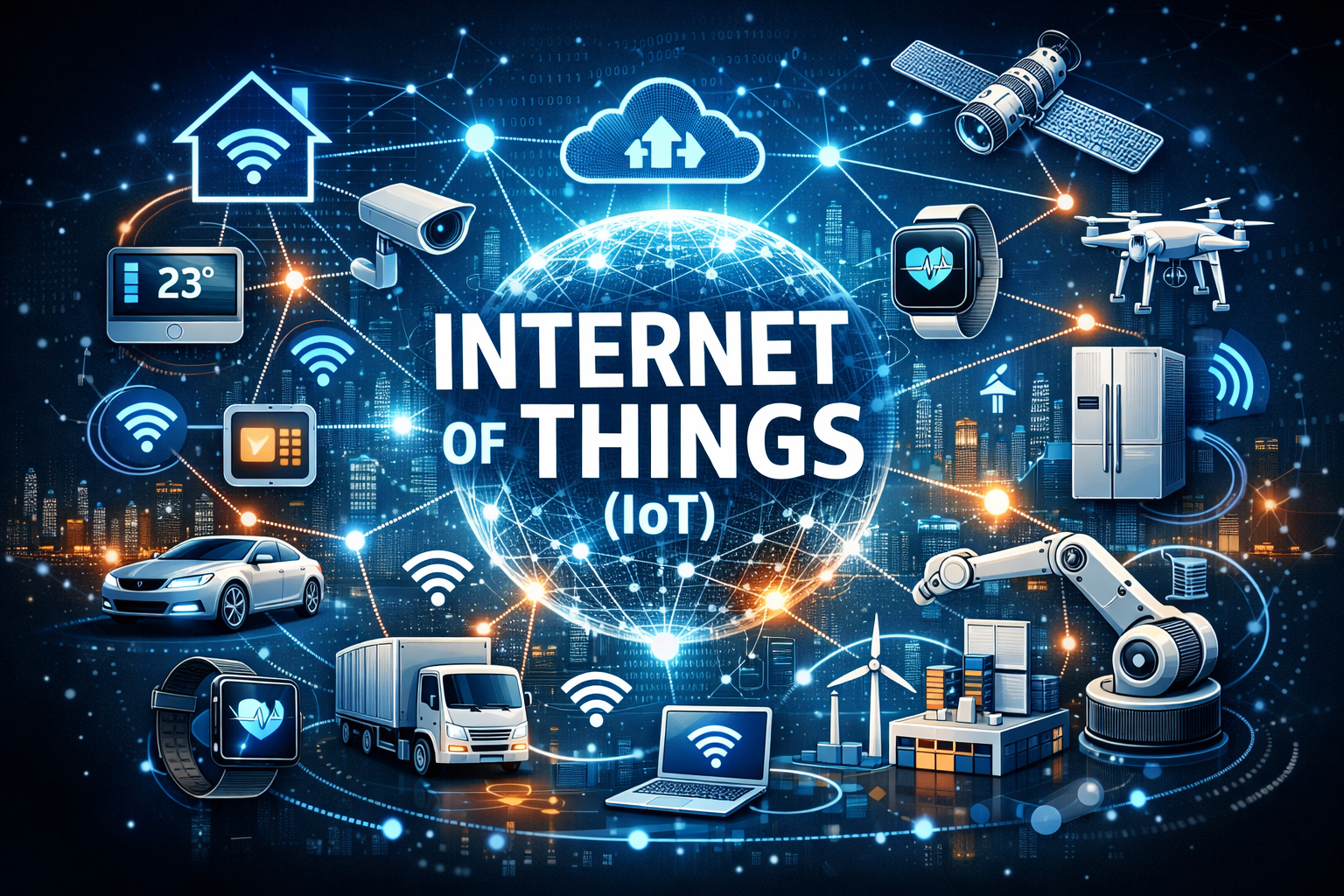
With the success of IoT, the Things are rapidly increasing. Everything that is used in IoT has sensors that sense the data continuously and transmit it to other things. On the basis of data, certain actions are performed.
The basic purpose of IoT is to reduce human interaction.
Example of IoT
Let’s suppose a patient wears a smart watch (iBeat) on the wrist, which senses data about heart conditions. If the smartwatch finds symptoms of a heart problem at a certain time, it immediately reports to the nearest Hospital. As the Hospital received the message, an ambulance reached the patient, which was arranged by the hospital.
In this example, human interaction is minimal. But without IoT, a patient will be too late to manage everything, as explained above.
Tip: For IoT, the basic need is a wireless connection and internet.
How IoT Works
IoT systems operate through a continuous cycle of data collection, transmission, processing, and action. This cycle allows devices to interact with the environment, make intelligent decisions, and automate tasks without human intervention.
1. Sensing
IoT devices use sensors to collect data from the physical environment such as temperature, motion, light, humidity, and pressure. These sensors continuously monitor conditions and convert physical signals into digital data, which becomes the foundation for further processing.
2. Connectivity
The collected data is transmitted to other devices or cloud platforms through communication networks like Wi-Fi, Bluetooth, cellular (4G/5G), or LPWAN. Secure communication protocols ensure that data is transferred efficiently and safely.
3. Data Processing
The transmitted data is processed using cloud computing or edge computing technologies. During this stage, raw data is analyzed, filtered, and transformed into meaningful information using algorithms and analytics tools.
4. Decision Making
Based on processed data, the system makes decisions using predefined rules, logic, or artificial intelligence. This step determines what action should be taken in response to the data received.
5. Action
The system performs actions through actuators or connected devices. This may include turning on appliances, sending alerts, adjusting system settings, or triggering automated responses.
6. Continuous Feedback
IoT systems continuously monitor new data and update their actions accordingly. This creates a feedback loop that ensures systems remain responsive, adaptive, and efficient over time.
Key Components of IoT
IoT systems consist of several essential components that work together to enable smart functionality and communication.
1. Sensors
Sensors collect real-time data from the environment and convert it into digital signals that can be processed by IoT systems.
2. Devices
Devices include hardware components such as microcontrollers and embedded systems that process, store, and transmit data.
3. Connectivity
Connectivity technologies allow devices to communicate with each other and with cloud platforms using various networks and protocols.
4. Data Processing
Processing systems analyze the collected data to generate insights, detect patterns, and support decision-making.
5. User Interface
Users interact with IoT systems through mobile apps, web dashboards, or control panels to monitor data and control devices.
Key Features of IoT
IoT systems have several important features that make them powerful, flexible, and efficient.
1. Connectivity
Devices are interconnected through the internet, enabling seamless communication and data exchange across different systems.
2. Automation
IoT systems can perform tasks automatically based on data and predefined rules, reducing the need for manual intervention.
3. Real-Time Operation
Data is processed instantly, allowing systems to respond quickly to changes and support time-sensitive applications.
4. Scalability
IoT systems can grow easily by adding more devices and handling increased data without affecting performance.
5. Intelligence
IoT integrates data analytics and artificial intelligence to enable smart decision-making, predictive capabilities, and adaptive system behavior.
Benefits of Internet of Things (IoT)
IoT provides many advantages across different industries by enabling automation, real-time monitoring, and intelligent data-driven systems. It improves efficiency, reduces costs, and enhances overall performance in modern applications.
1. Improved Efficiency
IoT systems automate routine tasks and continuously monitor operations in real time. This reduces manual effort, minimizes errors, and improves productivity in environments such as manufacturing, healthcare, and smart homes.
2. Cost Savings
IoT optimizes the use of resources such as energy, time, and labor. By reducing waste, preventing equipment failures, and automating processes, organizations can significantly lower operational and maintenance costs.
3. Better Decision Making
IoT systems collect large amounts of data from devices and sensors. This data is analyzed to generate insights, helping organizations make accurate and informed decisions based on real-time information.
4. Enhanced User Experience
IoT improves convenience and user control by enabling smart interactions with devices. Users can remotely manage systems, receive alerts, and customize settings according to their needs, leading to a better overall experience.
5. Increased Safety
IoT systems monitor environments and detect potential risks such as equipment failure, security threats, or hazardous conditions. They can send alerts or take automatic actions to prevent accidents and ensure safety.
Challenges of IoT
Despite its benefits, IoT also presents several challenges that must be addressed for successful implementation.
1. Security Issues
IoT devices are often vulnerable to cyberattacks due to weak security measures. Protecting devices, networks, and data through encryption, authentication, and secure protocols is essential.
2. Privacy Concerns
IoT systems collect sensitive personal and organizational data. Ensuring data privacy and compliance with regulations is critical to prevent misuse and maintain trust.
3. Connectivity Problems
IoT systems depend on reliable internet connectivity. Poor network performance or outages can disrupt communication between devices and affect system functionality.
4. Data Management
IoT devices generate massive volumes of data that need to be stored, processed, and analyzed efficiently. Managing this data requires advanced tools and infrastructure.
5. Compatibility Issues
Different IoT devices and platforms may use different standards and protocols, making integration difficult. Lack of standardization can limit interoperability between systems.
Real-World Examples of IoT
IoT is widely used in everyday life and across various industries to improve efficiency and enable smart operations.
1. Smart Homes
IoT devices such as smart thermostats, lighting systems, and security cameras automate home management. Users can control these devices remotely and improve energy efficiency and security.
2. Healthcare
Wearable devices and medical sensors monitor patient health in real time. Doctors can access this data remotely, enabling early diagnosis, continuous monitoring, and better patient care.
3. Smart Cities
IoT is used in urban environments for traffic control, waste management, energy optimization, and public safety. It helps cities operate more efficiently and improve the quality of life for residents.
4. Industrial IoT (IIoT)
Industries use IoT for automation, predictive maintenance, and performance monitoring. It helps reduce downtime, improve productivity, and optimize manufacturing processes.
5. Agriculture
IoT systems monitor soil moisture, weather conditions, and crop health. Farmers can use this data to optimize irrigation, increase crop yield, and reduce resource wastage.
Conclusion
The Internet of Things (IoT) is transforming how devices interact and communicate by enabling smart, connected systems. It supports automation, real-time monitoring, and intelligent decision-making across multiple industries. Despite some challenges, IoT continues to drive innovation and plays a vital role in shaping the future of technology.