









Cloud Deployment Models Overview
Cloud deployment models define how cloud infrastructure is set up and who has access to it. They help organizations choose the right environment based on security, cost, and scalability needs.
What are Cloud Deployment Models?
Cloud deployment models define how cloud environments are structured, managed, and accessed, helping organizations choose the right setup for their needs.
- Access Control: Determines who can access the cloud environment.
- Ownership: Defines who owns and manages the infrastructure.
- Environment Type: Includes public, private, hybrid, and multi-cloud setups.
Why Cloud Deployment Models are Important
Choosing the right deployment model directly impacts security, performance, cost, and flexibility.
- Security Needs: Sensitive data requires controlled and secure environments.
- Cost Management: Different models offer different cost structures.
- Scalability: Some models support rapid growth better than others.
- Flexibility: Businesses can choose models based on specific requirements.
Types of Cloud Deployment Models
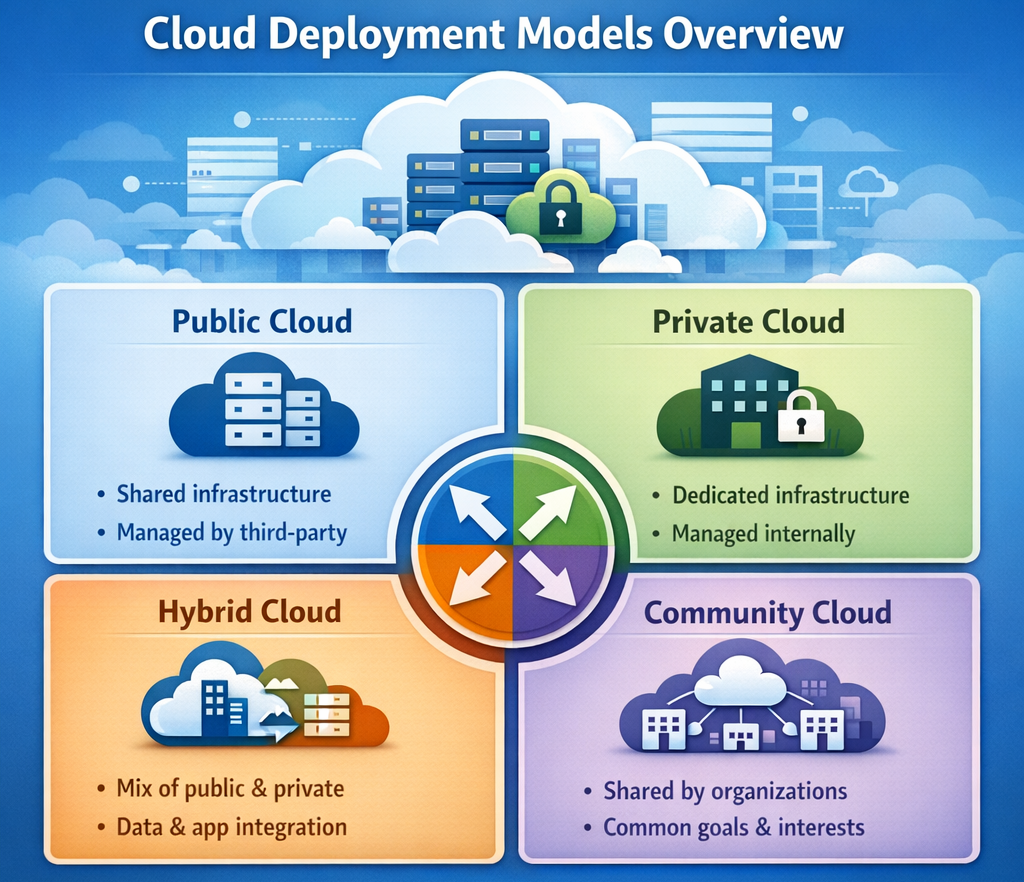
There are four main cloud deployment models used in cloud computing.
1. Public Cloud
Public cloud provides services over the internet where resources are shared among multiple users and managed by third-party providers.
Key Features
These features define how public cloud operates.
- Shared Infrastructure: Multiple users share the same resources efficiently.
- Third-Party Managed: Providers handle maintenance and operations.
- Global Access: Services are available worldwide via the internet.
Advantages
These benefits make public cloud widely popular.
- Cost Effective: No need to invest in hardware or infrastructure.
- Highly Scalable: Resources can be increased or decreased easily.
- Easy to Use: Quick setup and fast deployment.
Disadvantages
These limitations should be considered before adoption.
- Less Control: Limited customization and control over systems.
- Security Concerns: Shared environment may increase risks.
2. Private Cloud
Private cloud is a dedicated environment used by a single organization, offering high security and control.
Key Features
These features make private cloud suitable for sensitive workloads.
- Single Organization Use: Resources are not shared with others.
- High Security: Strong protection for sensitive data.
- Customizable Environment: Tailored to specific business needs.
Advantages
These benefits highlight the strength of private cloud.
- Better Control: Full authority over infrastructure and settings.
- Enhanced Security: Ideal for confidential and regulated data.
- Custom Configuration: Flexible system design.
Disadvantages
These challenges may affect implementation.
- Higher Cost: Requires investment in infrastructure.
- Maintenance Effort: Needs ongoing management and updates.
3. Hybrid Cloud
Hybrid cloud combines public and private cloud environments to provide flexibility and optimized resource usage.
Key Features
These features enable integration between environments.
- Combination Model: Uses both public and private clouds.
- Data Movement: Allows secure transfer of data between environments.
- Flexible Usage: Choose environment based on workload needs.
Advantages
These benefits provide a balanced solution.
- Balanced Approach: Combines cost efficiency and security.
- Flexibility: Optimize workloads across environments.
- Scalability: Expand resources using public cloud when needed.
Disadvantages
These factors require careful planning.
- Complex Setup: Requires proper configuration and management.
- Integration Challenges: Systems must be well integrated.
4. Multi-Cloud
Multi-cloud uses multiple cloud providers to run applications and services, improving flexibility and reducing dependency.
Key Features
These features define multi-cloud strategy.
- Multiple Providers: Uses different cloud platforms.
- No Vendor Lock-In: Avoids reliance on a single provider.
- Improved Reliability: Backup and services across providers.
Advantages
These benefits enhance performance and reliability.
- High Availability: Reduces risk of downtime.
- Flexibility: Choose best services from each provider.
- Risk Reduction: Eliminates single point of failure.
Disadvantages
These challenges must be managed properly.
- Complex Management: Managing multiple platforms is difficult.
- Cost Tracking: Monitoring expenses across providers can be complex.
Deep Concept: Choosing the Right Deployment Model
Choosing the right cloud deployment model depends on security needs, budget, scalability, and business goals, ensuring the best balance between performance and control.
Security
Security requirements play a critical role in selecting the appropriate cloud model.
- High Security Needed: Private cloud is ideal for sensitive and regulated data.
- Moderate Security: Hybrid cloud provides a balance between protection and flexibility.
- Basic Security: Public cloud is suitable for general applications and workloads.
Cost
Budget considerations influence which deployment model is most suitable.
- Low Cost: Public cloud is the most affordable option with no upfront investment.
- Moderate Cost: Hybrid cloud balances cost and performance.
- High Budget: Private cloud offers full control but requires higher investment.
Scalability
Different models offer varying levels of scalability based on business needs.
- High Scalability: Public cloud supports rapid growth and large workloads.
- Balanced Needs: Hybrid cloud allows flexible scaling across environments.
- Controlled Growth: Private cloud supports planned and limited scaling.
Real-World Example
This example shows how organizations combine deployment models for better results.
- Public Cloud: Used for hosting websites and applications with high traffic.
- Private Cloud: Used for storing sensitive and confidential data securely.
- Hybrid Cloud: Connects both environments for flexibility and efficient data flow.
This approach improves flexibility, performance, and overall efficiency.
Benefits of Cloud Deployment Models
Cloud deployment models provide several advantages for modern IT systems.
- Flexibility: Choose the model based on specific business needs.
- Scalability: Easily handle growth and changing workloads.
- Cost Efficiency: Optimize spending by selecting the right model.
- Security Options: Select appropriate security levels based on requirements.
Challenges in Deployment Models
Some challenges must be managed carefully when selecting and implementing cloud models.
- Complex Decision Making: Choosing the right model can be difficult.
- Security Risks: Misconfigurations may expose systems to threats.
- Management Complexity: Managing multiple environments requires expertise.
Conclusion
Cloud deployment models help organizations decide how to use cloud infrastructure effectively. By understanding public, private, hybrid, and multi-cloud models, businesses can select the best approach based on security, cost, scalability, and flexibility, enabling efficient and reliable cloud solutions.