












Security Risks in Cloud Computing
Cloud computing provides many benefits, but it also introduces several security risks. Understanding these risks helps organizations protect their data, applications, and systems in the cloud.
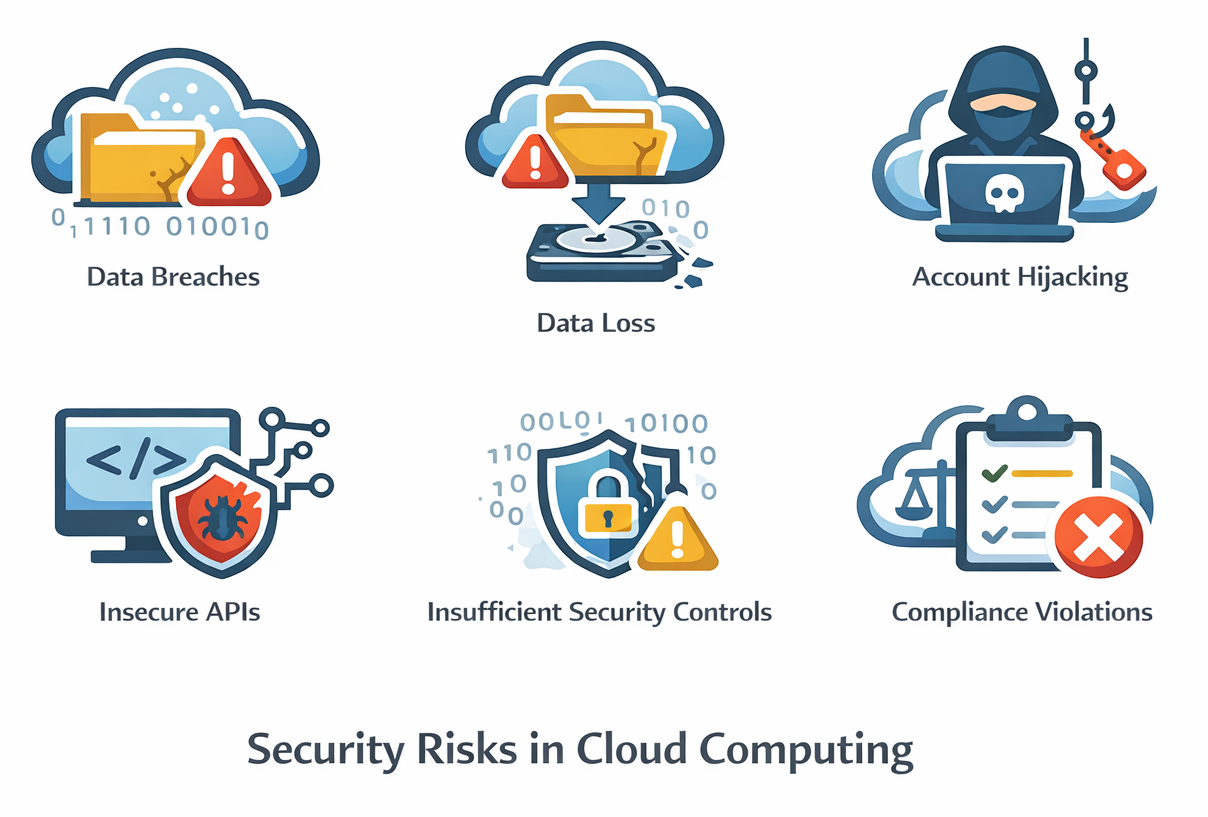
What are Security Risks in Cloud Computing?
Security risks in cloud computing refer to potential threats and vulnerabilities that can compromise data, systems, and services in cloud environments.
- Unauthorized Access: Attackers gain access to systems or data without permission.
- Data Loss: Important data may be deleted, corrupted, or lost.
- Service Disruption: Cloud services may be interrupted, affecting availability.
Why Cloud Security Risks Occur
Cloud environments are exposed to various risks due to their internet-based and shared nature.
- Internet Exposure: Cloud systems are accessible globally, increasing attack surfaces.
- Shared Resources: Multiple users share infrastructure, which may increase risk if not properly isolated.
- Misconfiguration: Incorrect settings can leave systems vulnerable to attacks.
- Human Errors: Mistakes by users or administrators can create security gaps.
- Complex Architecture: Multiple services and integrations increase the chances of vulnerabilities.
Common Security Risks in Cloud Computing
These are the most critical security risks that organizations must understand and manage.
1. Data Breaches
Data breaches occur when sensitive or confidential information is accessed without authorization.
Key Points
These points explain the impact of data breaches.
- Unauthorized Access to Data: Attackers may access confidential business or personal information.
- Financial Loss: Can result in financial damage due to theft or penalties.
- Reputational Damage: Affects trust and credibility of organizations.
- Legal Consequences: May lead to regulatory penalties and compliance issues.
2. Data Loss
Data loss happens when important data is permanently deleted, corrupted, or becomes inaccessible.
Key Points
These points highlight causes and impact of data loss.
- Accidental Deletion: Human error can lead to loss of important files.
- System Failures: Hardware or software issues may cause data corruption.
- Lack of Backups: Without proper backups, recovery becomes difficult.
- Cyber Attacks: Ransomware or malware can destroy or lock data.
3. Account Hijacking
Account hijacking occurs when attackers gain control of user accounts and misuse them.
Key Points
These points explain how account hijacking happens.
- Weak Passwords: Easy-to-guess passwords increase risk.
- Phishing Attacks: Attackers trick users into revealing credentials.
- Unauthorized Activities: Attackers can perform actions on behalf of users.
- Data Manipulation: Sensitive information can be altered or stolen.
4. Misconfiguration
Misconfiguration is one of the most common causes of cloud security issues.
Key Points
These points explain how misconfiguration creates vulnerabilities.
- Open Storage Systems: Public access to storage can expose data.
- Unsecured Databases: Improper settings can allow unauthorized access.
- Incorrect Permissions: Users may get more access than required.
- Lack of Monitoring: Misconfigured systems may go unnoticed.
5. Insider Threats
Insider threats are risks caused by internal users such as employees or contractors.
Key Points
These points explain internal security risks.
- Misuse of Access Privileges: Employees may misuse authorized access.
- Accidental Errors: Mistakes can expose or delete data.
- Intentional Attacks: Malicious insiders may harm systems.
- Data Leakage: Sensitive data may be shared without authorization.
6. Denial of Service (DDoS) Attacks
DDoS attacks occur when attackers overload cloud systems with massive traffic, making services unavailable to legitimate users.
Key Points
These points explain how DDoS attacks impact cloud systems.
- High Traffic Floods Servers: Attackers send large volumes of requests to overwhelm systems.
- Service Disruption: Applications and websites become slow or completely unavailable.
- Downtime Risk: Can cause temporary shutdown of services affecting users and businesses.
- Resource Exhaustion: Consumes bandwidth, CPU, and memory resources.
7. Insecure APIs
Insecure APIs can expose cloud systems to unauthorized access and exploitation if not properly secured.
Key Points
These points highlight risks related to poorly secured APIs.
- Weak Authentication: Lack of strong login and verification methods increases risk.
- Poor Encryption: Data transmitted through APIs may be exposed without encryption.
- Unauthorized Access: Attackers can access system functions and sensitive data.
- Data Manipulation: APIs can be used to modify or steal information if not protected.
Impact of Security Risks
Cloud security risks can lead to serious technical, financial, and reputational consequences for organizations.
- Financial Loss: Attacks, downtime, and recovery efforts can result in significant monetary loss.
- Data Exposure: Sensitive business or customer data may be leaked or stolen.
- Reputation Damage: Loss of trust can affect customer confidence and brand image.
- Legal Issues: Non-compliance with regulations can lead to penalties and legal actions.
- Operational Disruption: Business activities may be interrupted due to security incidents.
How to Reduce Cloud Security Risks
Applying best practices helps organizations protect cloud environments and minimize vulnerabilities.
- Use Strong Authentication: Implement strong passwords and secure login mechanisms.
- Enable Multi-Factor Authentication (MFA): Add an extra layer of security beyond passwords.
- Encrypt Sensitive Data: Protect data both at rest and in transit.
- Regular Monitoring and Auditing: Continuously track system activity to detect threats early.
- Backup Data Frequently: Maintain regular backups to prevent data loss.
- Apply Proper Access Controls: Limit access based on roles and responsibilities.
- Update Systems Regularly: Ensure all software and security patches are up to date.
Real-World Example
This example shows how a small mistake can lead to major security issues.
- Public Exposure: A company stores data in cloud storage but leaves it publicly accessible.
- Unauthorized Access: Attackers discover and access sensitive data.
- Data Breach: Confidential information is exposed or stolen.
- Business Impact: The company faces financial loss and damage to its reputation.
- Key Lesson: Proper configuration and security controls are essential to prevent such risks.
Conclusion
Security risks in cloud computing are critical and must be carefully managed to ensure safe operations. Threats such as data breaches, misconfiguration, and unauthorized access can impact businesses significantly. However, by understanding these risks and applying strong security practices like encryption, access control, and monitoring, organizations can build secure, reliable, and resilient cloud environments.