












Introduction to Multi-Cloud in Cloud Computing
Multi-cloud is a modern cloud computing approach where organizations use multiple cloud service providers instead of relying on a single one. It helps improve flexibility, reliability, and performance.
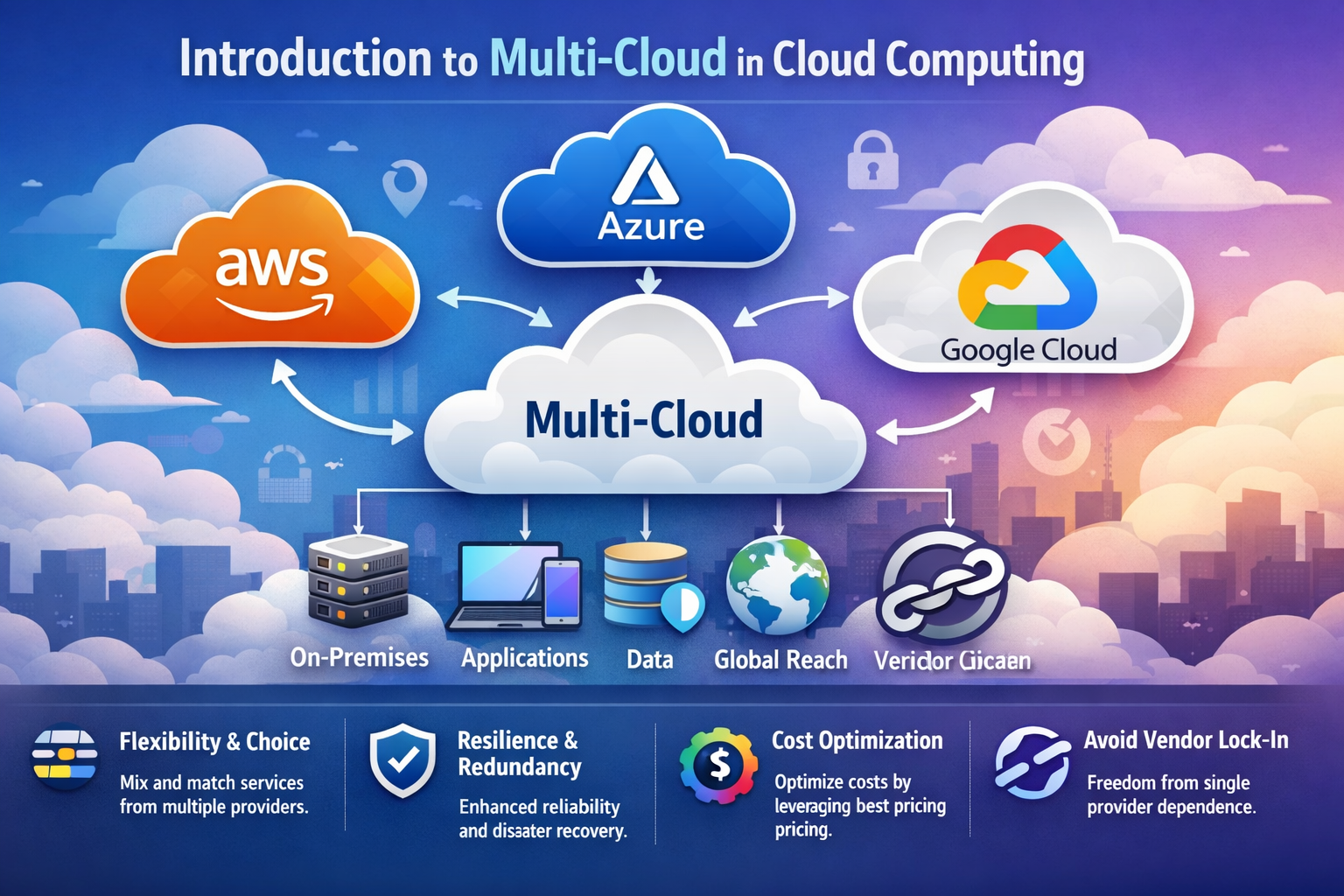
What is Multi-Cloud?
Multi-cloud is a cloud strategy where organizations use services from multiple cloud providers such as AWS, Azure, and Google Cloud to meet different needs.
- Multiple Providers: Uses two or more cloud platforms for different services.
- No Single Dependency: Avoids reliance on one provider, reducing risk.
- Flexible Usage: Organizations can choose the best services from each provider.
- Service Diversity: Different providers offer unique tools and capabilities.
What is Multi-Cloud in Cloud Computing?
In cloud computing, multi-cloud refers to distributing applications, data, and workloads across multiple cloud environments to improve performance and reliability.
- Workload Distribution: Applications and services run on different cloud platforms based on requirements.
- Service Optimization: Organizations use the best features and tools from each provider.
- Improved Availability: Reduces the risk of downtime by not depending on a single cloud.
- Performance Enhancement: Workloads can be placed where they perform best.
How Multi-Cloud Works
Multi-cloud works by integrating and managing multiple cloud platforms to operate as a unified system.
Step-by-Step Process
This process shows how organizations implement multi-cloud in real-world environments.
- Select Providers: Choose multiple cloud providers based on features, cost, and performance.
- Deploy Applications: Applications are deployed across different cloud platforms.
- Integrate Systems: Data and services are connected using APIs and networking.
- Manage Workloads: Tasks are distributed efficiently across clouds.
- Monitor Performance: Systems are continuously monitored for optimization.
Key Features of Multi-Cloud
These features make multi-cloud a powerful and flexible cloud strategy.
- Vendor Independence: Eliminates dependency on a single provider, avoiding vendor lock-in.
- High Availability: Services remain active even if one provider fails.
- Scalability: Resources can be expanded across multiple cloud platforms.
- Flexibility: Organizations can use different tools and services based on their needs.
- Risk Management: Reduces risk by distributing workloads across environments.
- Cost Optimization: Choose cost-effective services from different providers.
Benefits of Multi-Cloud
Multi-cloud provides a flexible and powerful approach that improves reliability, performance, and cost efficiency by leveraging multiple cloud providers.
- Improved Reliability: Reduces the risk of downtime by distributing workloads across multiple cloud platforms.
- Better Performance: Enables use of the fastest and most suitable services from different providers.
- Cost Optimization: Allows organizations to select cost-effective services and avoid unnecessary expenses.
- Flexibility: Supports customized solutions by combining features from multiple cloud providers.
- Vendor Independence: Avoids dependency on a single provider, reducing vendor lock-in risks.
- Scalability: Expands resources across different clouds to handle increasing workloads efficiently.
Challenges of Multi-Cloud
Multi-cloud introduces operational and technical challenges that must be managed carefully to ensure efficiency, security, and cost control.
- Complex Management: Managing multiple platforms, tools, and configurations increases operational complexity.
- Security Issues: Ensuring consistent security policies across different providers can be challenging.
- Integration Difficulty: Connecting services, applications, and data across clouds requires advanced integration strategies.
- Cost Tracking: Monitoring and controlling expenses across multiple cloud platforms can be difficult.
- Skill Requirements: Requires skilled professionals to manage, monitor, and optimize multi-cloud environments.
- Data Transfer Issues: Moving data between cloud providers can introduce latency and additional costs.
Multi-Cloud vs Hybrid Cloud
This comparison table clearly explains the differences between multi-cloud and hybrid cloud strategies for better understanding.
| Feature | Multi-Cloud | Hybrid Cloud |
|---|---|---|
| Definition | Uses multiple cloud providers for services and workloads | Combines public cloud, private cloud, and on-premise infrastructure |
| Focus | Multiple providers | Integration of different environments |
| Infrastructure | Different cloud platforms (AWS, Azure, Google Cloud, etc.) | Mix of private cloud, public cloud, and on-premise systems |
| Main Goal | Flexibility and vendor independence | Balance between security and scalability |
| Vendor Dependency | Avoids vendor lock-in | May still depend on selected providers |
| Data Movement | Data distributed across multiple cloud providers | Data moves between private and public environments |
| Complexity | High (managing multiple providers) | High (integration and synchronization required) |
| Security Control | Depends on each provider | Higher control for sensitive data in private environment |
| Scalability | High scalability across providers | Scalable using public cloud while keeping control via private cloud |
| Use Case | Best for using best services from different providers | Best for organizations needing both security and flexibility |
Real-World Example
This example explains how organizations use a multi-cloud strategy to improve performance, reliability, and operational efficiency.
- Storage Provider: One cloud provider is selected for storing large volumes of data because it offers cost-effective and scalable storage solutions.
- AI and Analytics Services: Another provider is used for advanced analytics and AI processing due to its powerful machine learning tools and high-performance computing capabilities.
- Backup and Disaster Recovery: A different cloud platform is used for backup and recovery to ensure data protection and quick restoration during failures.
- Performance Optimization: Workloads are distributed across providers based on their strengths, ensuring faster processing and better system efficiency.
- Risk Reduction: If one cloud provider experiences downtime, other providers continue running services, minimizing impact on business operations.
- Cost Optimization: Organizations choose the most cost-effective services from each provider, reducing overall expenses.
- Business Continuity: Multi-cloud ensures continuous service availability even during outages or technical issues.
When to Use Multi-Cloud
Multi-cloud is ideal for organizations that require flexibility, reliability, and optimized performance by leveraging multiple cloud providers.
- Avoid Vendor Lock-In: Prevent dependency on a single cloud provider, allowing freedom to switch or combine services as needed.
- High Availability Needs: Ensure systems remain operational even if one provider experiences downtime or failures.
- Best-of-Breed Services: Use the most advanced features and tools from different providers for specific workloads.
- Global Performance Optimization: Deliver applications efficiently across different regions using geographically distributed cloud services.
- Compliance Requirements: Meet regional laws and industry regulations by storing and processing data in specific locations.
- Workload Distribution: Run different applications on different providers based on performance and cost requirements.
- Cost Optimization Strategy: Choose the most cost-effective provider for each service to reduce overall expenses.
Conclusion
Multi-cloud in cloud computing is a powerful strategy that enhances flexibility, reliability, and performance by leveraging multiple cloud providers. It allows organizations to optimize workloads, reduce risks, and avoid dependency on a single platform. By adopting multi-cloud, businesses can build resilient, scalable, and efficient systems that meet modern technological and operational demands.