











Role of Data Centers in Cloud Computing
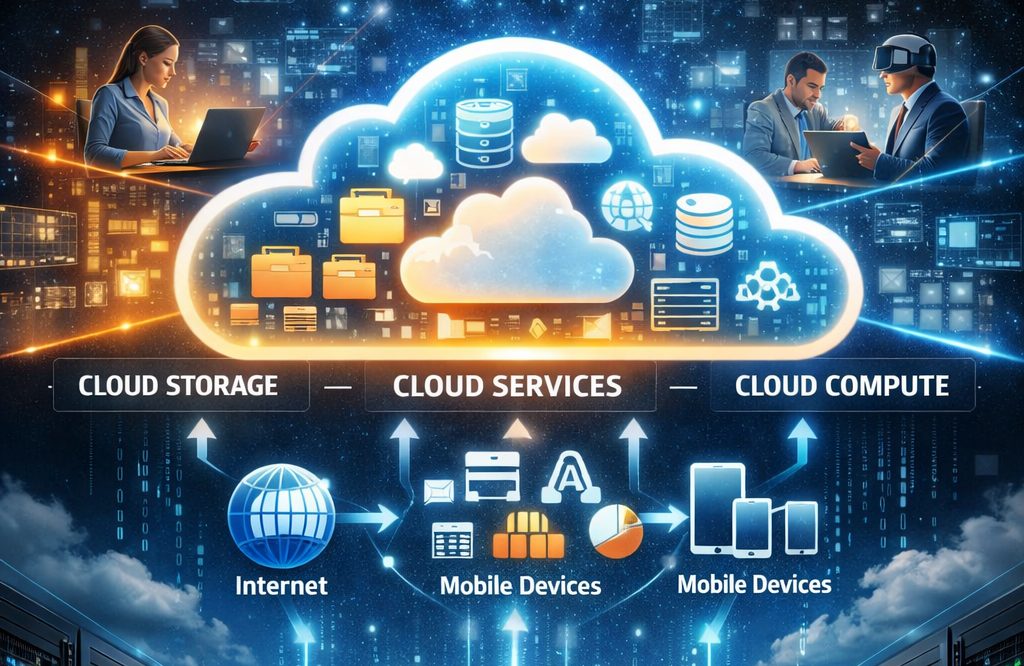
Data centers in cloud computing are the core infrastructure that powers all cloud-based services, applications, and data operations. They act as centralized hubs where computing resources are managed efficiently, enabling cloud platforms to deliver high performance, scalability, reliability, and security to users across the world.
What is a Data Center?
A data center is a physical facility that contains servers, storage systems, and networking equipment used to process, store, and manage data for applications and services.
Key Features of a Data Center
- Centralized Infrastructure: All computing resources such as servers, storage, and networking are located in one place for efficient management.
- High-Performance Systems: Designed to handle large-scale workloads, high-speed processing, and millions of user requests.
- Secure Environment: Protected with physical security (CCTV, access control) and digital security (encryption, firewalls).
- Scalable Resources: Can expand computing power and storage as demand increases.
- Reliable Operations: Built with backup systems to ensure continuous availability.
A data center is like a powerful digital hub where all cloud data and applications are stored and managed securely, ensuring fast and reliable access for users.
What is the Role of Data Centers in Cloud Computing?
Data centers in cloud computing provide the core infrastructure that powers all cloud services, applications, and data operations. They act as the backbone that ensures cloud platforms deliver fast, reliable, and secure services to users.
Key Roles of Data Centers
- Host Cloud Services: Run applications, websites, databases, and cloud platforms efficiently for users worldwide.
- Store Data: Manage and store large volumes of structured and unstructured data securely.
- Enable Connectivity: Support communication between users, devices, and cloud systems through high-speed networks.
- Process Requests: Handle user requests and execute computations in real time.
- Ensure Availability: Provide continuous service with minimal downtime using backup systems.
- Support Scalability: Expand resources easily to handle increasing workloads and users.
A data center acts like the engine of cloud computing, where all data is stored, processed, and delivered to users quickly and securely.
Key Functions of Data Centers in Cloud Computing
Data centers are the backbone of cloud computing, responsible for storing, processing, and delivering data efficiently. They ensure that cloud services remain fast, secure, scalable, and always available for users. Understanding these key functions helps in learning how cloud systems operate in real-world environments.
1. Data Storage
Data centers store massive amounts of structured and unstructured data in a secure and organized way. This ensures that user data, applications, and backups are always available when needed. Here are some key points of data storage.
- Data Management:
Store files, databases, applications, and backups in an organized structure for easy access and retrieval. - High Availability:
Data is accessible 24/7 through redundant systems, ensuring minimal downtime. - Data Durability:
Data is replicated across multiple servers or locations to prevent loss due to failures. - Scalable Storage:
Storage capacity can be increased or decreased based on demand. - Efficient Retrieval:
Advanced indexing and storage systems ensure fast data access.
2. Data Processing
Data centers use powerful servers to process user requests and run applications. This is where actual computing happens in the cloud. Here are some key points of data processing.
- Application Execution:
Run cloud applications, websites, and services requested by users. - Workload Handling:
Process large-scale tasks such as analytics, AI workloads, and business operations. - Real-Time Processing:
Deliver instant responses for applications like online transactions and streaming. - Resource Allocation:
Dynamically assign CPU, memory, and storage based on workload requirements. - Performance Optimization:
Ensure efficient processing using load balancing and optimized hardware.
3. Networking and Connectivity
Data centers provide the communication infrastructure that connects users to cloud services and enables data transfer between systems. Here are some key points of networking and connectivity
- User Connectivity:
Connect users, devices, and applications to cloud platforms through the internet. - High-Speed Data Transfer:
Use advanced networking technologies to ensure fast and reliable communication. - Traffic Management:
Distribute network traffic efficiently to avoid congestion and delays. - Load Balancing:
Balance requests across multiple servers to maintain performance. - Global Access:
Enable access to cloud services from anywhere in the world.
4. Backup and Disaster Recovery
Data centers ensure that data is protected and can be recovered quickly in case of failures, cyberattacks, or disasters. Here are some key points of backup and disaster recovery
- Data Replication:
Create copies of data across multiple servers or geographic locations. - Automated Backups:
Perform regular backups without manual intervention. - Disaster Recovery Systems:
Restore applications and data quickly after failures. - Failover Mechanisms:
Automatically switch to backup systems when the primary system fails. - Business Continuity:
Ensure that services remain available even during unexpected disruptions.
5. Security Management
Security is a critical function of data centers, protecting sensitive data and ensuring safe operations. Here are some key points of security management
- Physical Security:
Protect facilities with surveillance cameras, access control systems, and biometric authentication. - Network Security:
Use firewalls, intrusion detection systems, and secure protocols to protect data in transit. - Data Encryption:
Encrypt data both at rest and in transit to prevent unauthorized access. - Access Control:
Restrict system access based on roles and permissions. - Continuous Monitoring:
Monitor systems in real time to detect and respond to threats quickly.
Types of Data Centers in Cloud Computing
Different types of data centers in cloud computing are designed to meet various business needs, performance requirements, scalability demands, and operational control. Each type serves a specific purpose, helping organizations choose the right infrastructure based on cost, security, and performance requirements.
1. Enterprise Data Centers
Enterprise data centers are owned, operated, and managed by a single organization for its internal business operations. These data centers provide maximum control, security, and customization, making them suitable for large enterprises with strict requirements. Here are some key points of enterprise data centers.
- Full Infrastructure Control: Organizations have complete control over servers, storage, networking, and security configurations, ensuring systems meet exact business needs.
- Private Usage Environment: All resources are dedicated to a single organization, ensuring high security and no external interference.
- Customization and Flexibility: Infrastructure can be tailored to support specific applications, workloads, and business processes.
- High Security and Compliance: Ideal for industries like banking, healthcare, and government that require strict data protection and regulatory compliance.
- Performance Optimization: Systems can be optimized for critical workloads, ensuring consistent and high performance.
2. Colocation Data Centers
Colocation data centers allow organizations to rent physical space in a third-party facility while still using their own hardware. This model reduces infrastructure costs while providing a professionally managed environment. Here are some key points of colocation data centers.
- Shared Facility Environment: Multiple organizations use the same facility while maintaining separate servers and systems.
- Cost Efficiency: Eliminates the need to build and maintain a private data center, reducing capital and operational costs.
- Managed Infrastructure Support: The provider manages power, cooling, physical security, and environmental controls.
- Scalability Options: Organizations can expand their space and resources as business needs grow.
- High Reliability: Built with redundant systems to ensure uptime and stable operations.
3. Hyperscale Data Centers
Hyperscale data centers are massive facilities built to support large-scale cloud services and millions of users. They are typically operated by major cloud providers and are designed for extreme scalability and performance. Here are some key points of hyperscale data centers.
- Massive Infrastructure Capacity: Designed to handle huge volumes of data, applications, and users simultaneously.
- High Scalability: Resources can be expanded rapidly to meet increasing demand without performance issues.
- Efficient Resource Utilization: Uses automation and virtualization to maximize resource efficiency.
- Global Service Delivery: Supports cloud platforms that provide services across the world.
- High Availability and Redundancy: Built with backup systems to ensure continuous operation even during failures.
4. Edge Data Centers
Edge data centers are small, distributed facilities located closer to end-users or data sources. They are designed to reduce latency and improve performance for real-time applications. Here are some key points of edge data centers.
- Low Latency Processing: Data is processed closer to users, reducing delay and improving response time.
- Real-Time Data Handling: Ideal for applications like IoT, autonomous systems, and video streaming that require instant processing.
- Reduced Network Load: Minimizes data transfer to central servers, reducing bandwidth usage.
- Improved User Experience: Faster data delivery ensures smoother and more responsive applications.
- Support for Modern Technologies: Essential for emerging technologies such as smart cities, connected devices, and 5G networks.
Benefits of Data Centers in Cloud Computing
Data centers in cloud computing provide essential advantages that ensure cloud systems operate efficiently, securely, and at scale. These benefits enable organizations to deliver reliable services, handle large workloads, and support global users effectively.
1. Reliable Performance
Data centers ensure smooth and continuous operation of cloud services. Here are some key points of reliable performance.
- High Availability: Services remain accessible with minimal downtime using redundant systems and failover mechanisms.
- Consistent Speed: Fast processing ensures quick response times for applications and user requests.
- Fault Tolerance: Backup systems automatically handle failures without interrupting services.
- Load Distribution: Workloads are balanced across multiple servers to avoid system overload.
- System Stability: Dedicated infrastructure ensures stable and predictable performance.
2. High Security
Data centers provide strong protection for sensitive data and systems. Here are some key points of high security.
- Physical Security: Facilities are protected using surveillance systems, restricted access, and biometric controls.
- Digital Security: Advanced technologies like encryption, firewalls, and intrusion detection systems protect data.
- Data Protection: Prevents unauthorized access and ensures confidentiality of information.
- Access Control: Only authorized users can access systems based on defined permissions.
- Continuous Monitoring: Systems are monitored in real time to detect and respond to threats quickly.
3. Scalability
Data centers support increasing workloads and user demands efficiently. Here are some key points of scalability.
- Flexible Resources: Storage and computing power can be increased or decreased as needed.
- On-Demand Expansion: Resources can be scaled instantly based on workload requirements.
- Efficient Growth: Supports large-scale applications and growing user bases without performance issues.
- Elastic Infrastructure: Automatically adjusts resources according to demand.
- Future Readiness: Supports business expansion and technological growth.
4. Global Access
Data centers enable cloud services to be accessed from anywhere in the world. Here are some key points of global access.
- Worldwide Availability: Users can access cloud applications from any location with internet connectivity.
- Distributed Locations: Multiple data centers across regions improve accessibility and reliability.
- Fast Data Delivery: Content is delivered quickly using optimized networks and caching techniques.
- Reduced Latency: Data centers closer to users improve response times.
- 24/7 Accessibility: Services are available anytime without interruption.
Challenges of Data Centers
Data centers face several challenges that must be managed effectively to ensure smooth, secure, and efficient cloud operations.
1. High Energy Consumption
Data centers require a large amount of electricity to operate continuously. Here are some key points of high energy consumption.
- Power Demand: Continuous server operation consumes significant energy.
- Operational Cost: High electricity usage increases overall expenses.
- Environmental Impact: Increased energy consumption leads to a higher carbon footprint.
- Sustainability Challenges: Requires efficient energy management and green solutions.
2. Maintenance Cost
Managing and maintaining data center infrastructure is expensive. Here are some key points of maintenance cost.
- Hardware Investment: Servers, storage devices, and networking equipment require high initial cost.
- Operational Expenses: Ongoing monitoring, upgrades, and maintenance add to costs.
- Skilled Workforce: Requires trained IT professionals to manage systems effectively.
- Upgrade Requirements: Regular updates are needed to maintain performance and security.
3. Cooling Requirements
Data centers generate significant heat and require proper cooling systems. Here are some key points of cooling requirements.
- Heat Generation: Servers produce continuous heat during operation.
- Cooling Systems: Advanced air conditioning and cooling infrastructure are required.
- Energy Consumption: Cooling systems increase overall power usage.
- Thermal Management: Proper temperature control is essential for system reliability.
4. Security Risks
Data centers must continuously address physical and cyber security threats. Here are some key points of security risks.
- Cyber Attacks: Risk of hacking, malware, and data breaches.
- Physical Threats: Unauthorized access or damage to infrastructure.
- Data Protection Challenges: Requires strong encryption and security policies.
- Evolving Threats: Security systems must adapt to new and advanced threats.
Real-World Example
This example explains how data centers handle user requests in real time.
- User Request: A user sends a request through a cloud application using the internet.
- Data Center Receives Request: The request reaches a data center where cloud systems are hosted.
- Server Processing: Servers process the request and execute the required application.
- Data Retrieval: Required data is fetched from storage systems or databases.
- Response Generation: The system prepares the output based on processing.
- Response Sent: The final result is sent back to the user’s device.
Conclusion
- Backbone of Cloud Computing: Data centers provide the core infrastructure for storage, processing, networking, and security.
- High Performance and Reliability: They ensure fast, stable, and always-available cloud services.
- Scalability and Global Reach: Support growing workloads and provide worldwide access to applications.
- Advanced Features: Use redundancy, load balancing, and monitoring for efficient operations.
- Challenges and Improvements: Despite challenges like energy use and costs, continuous innovation is improving efficiency and sustainability.