











Benefits of IoT in Modern Technology
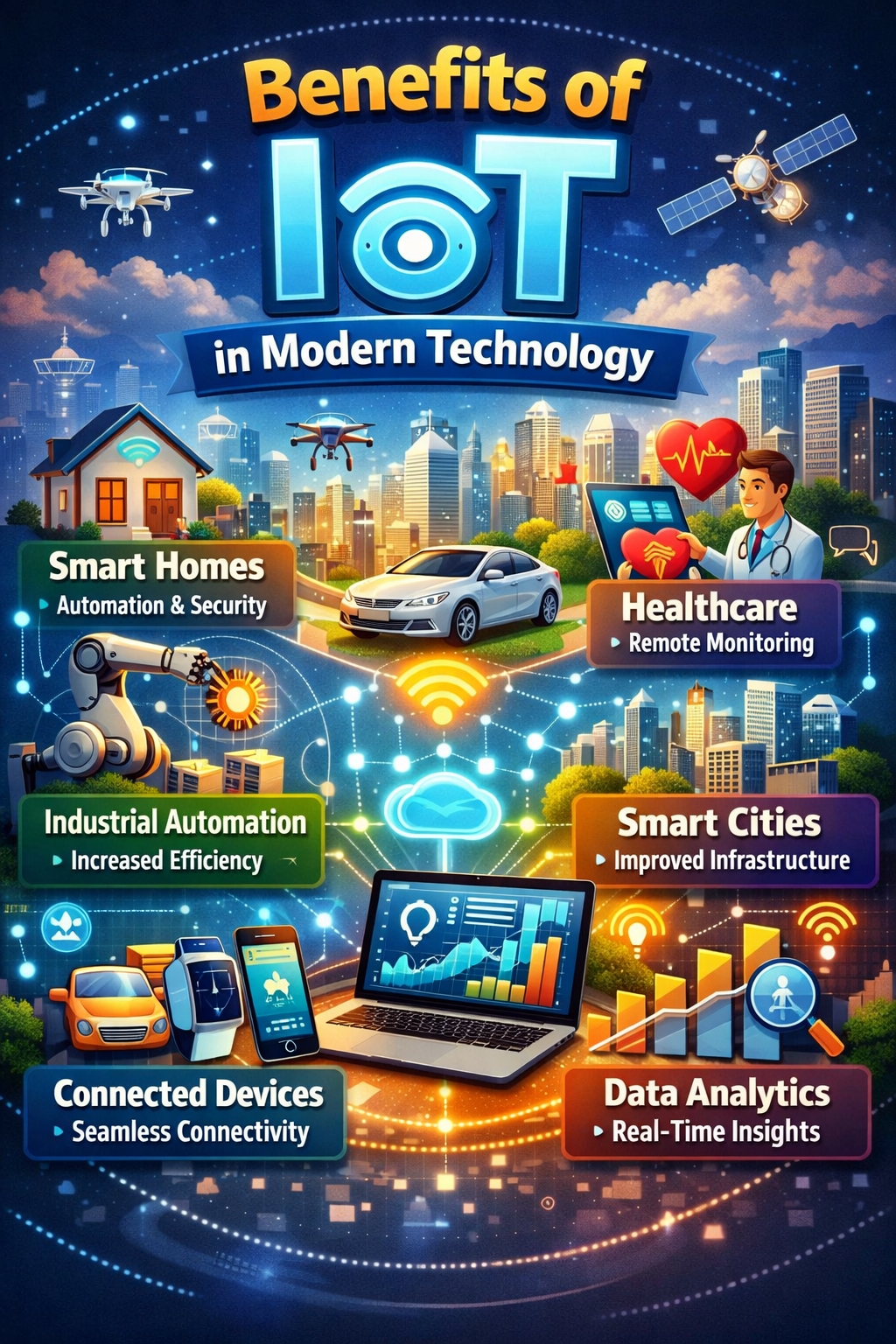
The Internet of Things (IoT) is transforming modern technology by connecting devices, enabling automation, and improving decision-making through real-time data. IoT benefits industries, businesses, and everyday life by making systems smarter, faster, and more efficient.
Improved Efficiency and Productivity
IoT improves efficiency by automating processes and reducing manual effort in various systems. It helps organizations optimize operations using real-time monitoring and smart decision-making. List of key efficiency benefits is given below.
1. Process Automation
IoT enables machines and systems to perform tasks automatically without human intervention, improving workflow efficiency.
- Reduces manual work and human errors
- Speeds up operations in industries and businesses
- Enables continuous and consistent performance
2. Real-Time Monitoring
IoT devices continuously collect and transmit data, allowing systems to be monitored in real time.
- Tracks performance of machines and systems
- Detects issues instantly before they grow
- Improves operational visibility
3. Smart Decision Making
IoT uses collected data to support intelligent decisions and automation.
- Helps businesses make data-driven decisions
- Improves planning and resource allocation
- Enhances system responsiveness
Cost Savings and Resource Optimization
IoT reduces operational costs by optimizing the use of resources and minimizing waste. It enables efficient energy use, predictive maintenance, and smart resource allocation. List of cost-saving benefits is given below.
1. Reduced Operational Costs
IoT automates tasks and reduces the need for human labor and manual processes.
- Lowers labor and maintenance costs
- Minimizes downtime and repair expenses
- Improves overall efficiency
2. Efficient Resource Utilization
IoT ensures that resources like energy, water, and raw materials are used efficiently.
- Prevents resource wastage
- Optimizes usage based on demand
- Improves sustainability
3. Predictive Maintenance
IoT devices monitor equipment health and predict failures before they occur.
- Reduces unexpected breakdowns
- Increases equipment lifespan
- Saves maintenance costs
Enhanced Connectivity and Communication
IoT connects devices, systems, and people, enabling seamless communication and data exchange. It improves collaboration and ensures better coordination across different platforms. List of connectivity benefits is given below.
1. Device-to-Device Communication
IoT allows devices to communicate with each other without human involvement.
- Enables machine-to-machine interaction
- Improves automation and coordination
- Supports smart environments
2. Remote Access and Control
IoT systems can be accessed and controlled from anywhere through the internet.
- Allows remote monitoring and management
- Supports mobile and web-based control
- Increases flexibility and convenience
3. Improved Data Sharing
IoT enables efficient sharing of data across platforms and systems.
- Facilitates faster communication
- Enhances collaboration between departments
- Supports real-time data analysis
Better User Experience and Convenience
IoT enhances user experience by providing smart and personalized services in everyday life. It simplifies tasks and improves comfort through automation and intelligent systems. List of user experience benefits is given below.
1. Smart Home Automation
IoT enables smart homes where devices can be controlled automatically or remotely.
- Controls lighting, temperature, and appliances
- Improves comfort and convenience
- Enhances energy efficiency
2. Personalized Services
IoT systems analyze user behavior to provide customized experiences.
- Offers tailored recommendations
- Improves customer satisfaction
- Enhances user engagement
3. Seamless Integration
IoT integrates multiple devices into a single system for better control.
- Connects different devices and platforms
- Provides unified control systems
- Improves ease of use
Enhanced Security and Safety
IoT improves safety by monitoring environments and detecting risks in real time. It provides advanced security solutions for homes, industries, and public systems. List of security benefits is given below.
1. Real-Time Alerts and Notifications
IoT systems send alerts when unusual activities or risks are detected.
- Detects intrusions and system failures
- Provides instant notifications
- Enhances response time
2. Smart Surveillance Systems
IoT enables intelligent security systems with cameras and sensors.
- Monitors environments continuously
- Uses AI for threat detection
- Improves security management
3. Emergency Response Systems
IoT helps in quick response during emergencies by providing real-time data.
- Detects fire, gas leaks, or accidents
- Alerts emergency services instantly
- Reduces damage and risks
Data Collection and Advanced Analytics
IoT generates large amounts of data that can be analyzed to gain valuable insights. It helps organizations understand patterns, trends, and behaviors. List of data benefits is given below.
1. Continuous Data Collection
IoT devices collect data from the environment continuously.
- Captures real-time information
- Supports accurate analysis
- Improves decision-making
2. Big Data Integration
IoT works with big data technologies to process large volumes of data.
- Enables deep data analysis
- Identifies patterns and trends
- Supports business intelligence
3. Predictive Analytics
IoT uses analytics to predict future outcomes and behaviors.
- Helps in forecasting demand
- Improves planning and strategy
- Reduces risks
Industry-Specific Benefits of IoT
IoT provides unique benefits across different industries by improving operations, safety, and innovation. It plays a key role in digital transformation across sectors. List of industry benefits is given below.
1. Healthcare
IoT improves patient care and monitoring through smart medical devices.
- Enables remote health monitoring
- Improves diagnosis and treatment
- Reduces hospital visits
2. Agriculture
IoT helps farmers monitor crops and optimize farming processes.
- Tracks soil moisture and weather conditions
- Improves crop yield
- Reduces water usage
3. Manufacturing
IoT enables smart factories and industrial automation.
- Improves production efficiency
- Reduces downtime
- Enhances quality control
4. Smart Cities
IoT improves urban infrastructure and public services.
- Manages traffic and transportation
- Optimizes energy consumption
- Enhances public safety
Scalability and Flexibility
IoT systems are highly scalable and can grow according to user needs and demands. They provide flexibility in deployment and integration with new technologies. List of scalability benefits is given below.
1. Easy Expansion
IoT systems can be expanded by adding more devices and sensors.
- Supports business growth
- Adapts to changing requirements
- Enables future upgrades
2. Flexible Integration
IoT can integrate with cloud computing, AI, and other technologies.
- Supports advanced applications
- Improves system capabilities
- Enables innovation
3. Adaptive Systems
IoT systems can adjust based on real-time conditions and data.
- Responds to environmental changes
- Improves performance
- Enhances reliability
Summary Table of IoT Benefits
| Category | Key Benefits | Impact |
|---|---|---|
| Efficiency | Automation, monitoring | Improved productivity |
| Cost | Resource optimization | Reduced expenses |
| Connectivity | Device communication | Better coordination |
| User Experience | Smart services | Convenience |
| Security | Real-time alerts | Safety improvement |
| Data | Analytics, insights | Better decisions |
| Industry Use | Healthcare, agriculture | Innovation |
| Scalability | Flexible systems | Future growth |
Conclusion
IoT is a powerful technology that brings multiple benefits to modern systems by improving efficiency, reducing costs, enhancing connectivity, and enabling smart decision-making. It is transforming industries and everyday life by making systems more intelligent, responsive, and user-friendly.