












IoT Growth with Cloud Computing Technologies
The growth of Internet of Things (IoT) has accelerated rapidly due to the power of cloud computing technologies, enabling smarter, connected, and scalable systems. Cloud platforms provide the infrastructure, storage, and processing capabilities needed to manage billions of IoT devices efficiently.
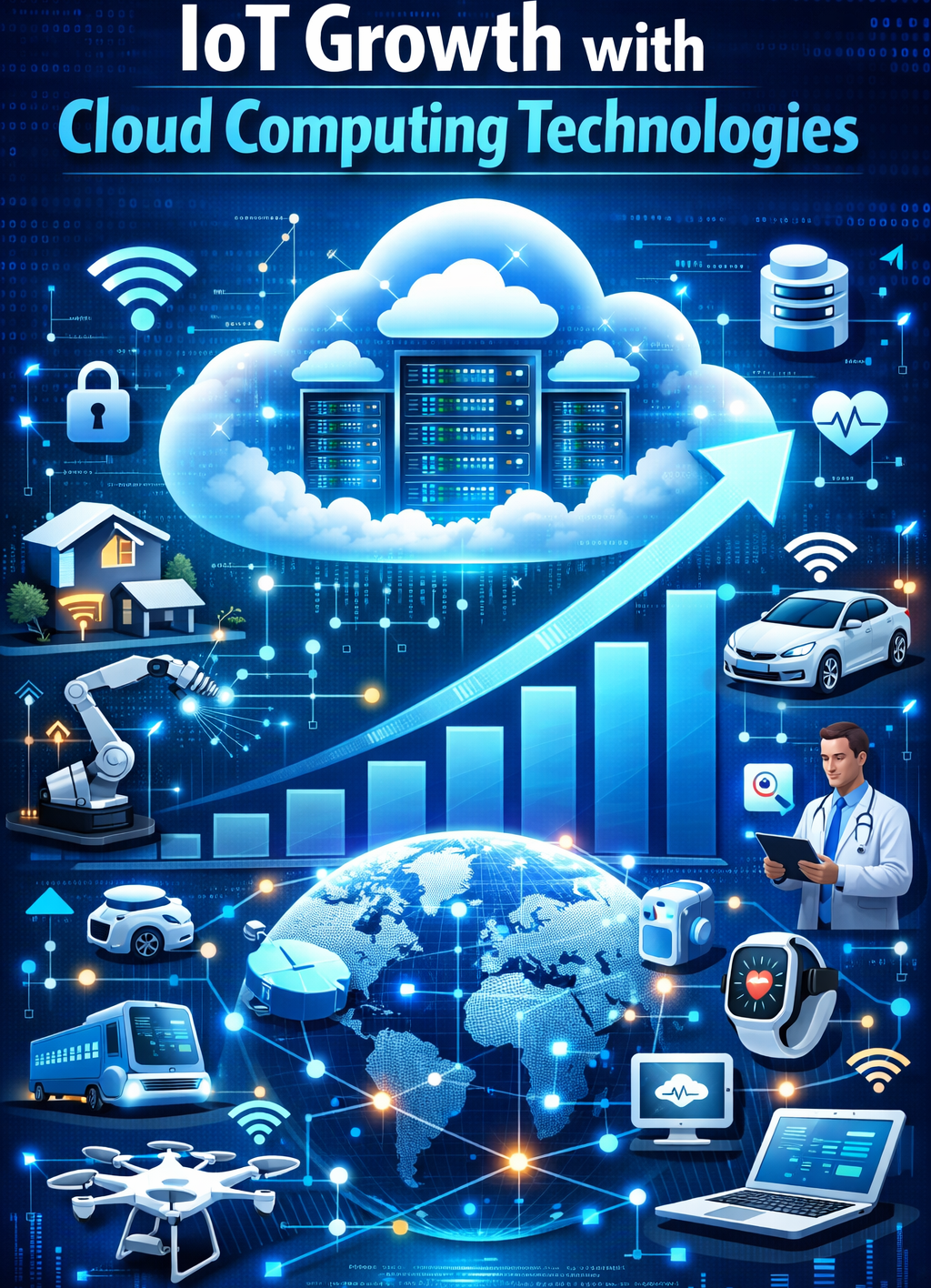
What is IoT and Cloud Computing Integration?
IoT and cloud computing integration refers to the connection between smart devices and cloud platforms to store, process, and analyze data in real time. This integration allows seamless communication, automation, and intelligent decision-making in modern systems.
1. IoT Overview and Core Concept
IoT is a network of physical devices connected to the internet that collect and exchange data to automate tasks and improve efficiency.
- Connected Devices: Sensors, smart appliances, and machines communicate through networks
- Data Collection: Devices gather real-time data from the environment
- Automation: Systems perform actions without human intervention
2. Cloud Computing Overview in IoT
Cloud computing provides on-demand access to computing resources such as storage, servers, and databases over the internet.
- Scalable Infrastructure: Supports large numbers of IoT devices
- Remote Access: Users can access data from anywhere
- Cost Efficiency: Pay-as-you-use model reduces infrastructure costs
3. Importance of Integration
The integration of IoT with cloud computing enables efficient data handling and intelligent services.
- Real-Time Analytics: Quick processing of IoT data
- Centralized Management: Devices can be controlled from a single platform
- Improved Performance: Faster response and better reliability
Role of Cloud Computing in IoT Growth
Cloud computing acts as the backbone of IoT systems, providing the necessary tools and infrastructure to support massive data and device connectivity. The list of key roles of cloud computing in IoT growth is given below
1. Scalable Data Storage
Cloud platforms store large volumes of IoT data securely and efficiently.
- Unlimited Storage: Handles big data generated by IoT devices
- Data Backup: Ensures safety and recovery of data
- Efficient Management: Organized storage for easy retrieval
2. High Processing Power
Cloud computing provides powerful processing capabilities to analyze IoT data.
- Big Data Processing: Handles complex computations
- Real-Time Processing: Immediate response to data inputs
- AI Integration: Supports machine learning models
3. Device Connectivity and Management
Cloud platforms manage and monitor connected devices effectively.
- Device Monitoring: Tracks device status and performance
- Remote Control: Manage devices from anywhere
- Firmware Updates: Automatic updates for devices
4. Data Analytics and Insights
Cloud computing enables advanced analytics to extract meaningful insights from IoT data.
- Predictive Analysis: Forecast future trends
- Data Visualization: Easy understanding of complex data
- Decision Support: Helps in better decision-making
5. Security and Data Protection
Cloud services provide strong security measures to protect IoT systems.
- Encryption: Secure data transmission
- Access Control: Restricted data access
- Threat Detection: Identifies and prevents cyber attacks
Key Technologies Enabling IoT Growth with Cloud
Several technologies work together to enhance the integration of IoT and cloud computing. The list of important enabling technologies is given below
1. Edge Computing
Edge computing processes data closer to the device rather than sending everything to the cloud.
- Reduced Latency: Faster response time
- Bandwidth Optimization: Less data sent to cloud
- Real-Time Processing: Immediate decision-making
2. Artificial Intelligence and Machine Learning
AI and ML enhance IoT systems by analyzing data and making intelligent predictions.
- Smart Automation: Systems learn and improve
- Pattern Recognition: Identify trends in data
- Anomaly Detection: Detect unusual activities
3. Big Data Technologies
Big data tools manage and analyze large datasets generated by IoT devices.
- Data Handling: Process huge volumes of data
- Advanced Analytics: Deep insights from data
- Scalable Systems: Supports growing data needs
4. 5G and Advanced Networking
High-speed networks like 5G improve IoT connectivity and performance.
- Faster Communication: High data transfer speeds
- Low Latency: Real-time communication
- Massive Device Support: Connect millions of devices
Benefits of IoT Growth with Cloud Computing
The combination of IoT and cloud computing offers multiple advantages for businesses and users. The list of key benefits is given below
1. Improved Scalability
IoT systems can easily scale with cloud resources as demand increases.
- Flexible Expansion: Add devices without infrastructure changes
- Dynamic Resource Allocation: Adjust resources automatically
- Cost Optimization: Pay only for used resources
2. Cost Efficiency
Cloud computing reduces the need for physical infrastructure and maintenance.
- No Hardware Costs: No need to buy servers
- Lower Maintenance: Managed by cloud providers
- Pay-as-You-Go: Efficient cost model
3. Enhanced Data Accessibility
Users can access IoT data anytime from anywhere using cloud platforms.
- Global Access: Available worldwide
- Multi-Device Access: Use smartphones, laptops, etc.
- Real-Time Updates: Instant data availability
4. Faster Deployment
Cloud platforms allow quick deployment of IoT applications and services.
- Rapid Setup: Launch systems quickly
- Pre-Built Services: Ready-to-use tools
- Reduced Complexity: Simplified development
5. Better Decision Making
Cloud-based analytics help in making informed and intelligent decisions.
- Real-Time Insights: Immediate data analysis
- Predictive Models: Future forecasting
- Data-Driven Decisions: Improved outcomes
Challenges in IoT and Cloud Integration
Despite many benefits, integrating IoT with cloud computing also presents challenges. The list of common challenges is given below
1. Security Risks
IoT systems are vulnerable to cyber threats and attacks.
- Data Breaches: Unauthorized access to data
- Weak Devices: Some IoT devices lack strong security
- Network Attacks: Risks during data transmission
2. Data Privacy Issues
Handling sensitive data raises privacy concerns.
- User Data Protection: Personal information risks
- Compliance Issues: Legal and regulatory challenges
- Data Ownership: Unclear ownership of data
3. Connectivity Dependence
IoT systems depend heavily on internet connectivity.
- Network Failure: Disrupts system functionality
- Latency Issues: Delays in communication
- Limited Access Areas: Rural connectivity challenges
4. Complexity of System Integration
Combining IoT devices with cloud systems can be complex.
- Multiple Technologies: Requires integration of various tools
- Compatibility Issues: Devices from different vendors
- High Setup Complexity: Requires technical expertise
Real-World Applications of IoT with Cloud Computing
IoT and cloud computing are widely used in various industries to improve efficiency and automation. The list of real-world applications is given below
1. Smart Homes
IoT devices connected to the cloud automate home systems.
- Smart Lighting: Remote control of lights
- Smart Thermostats: Temperature control
- Security Systems: Surveillance and alerts
2. Healthcare Systems
Cloud-enabled IoT improves patient monitoring and healthcare services.
- Remote Monitoring: Track patient health
- Wearable Devices: Fitness and health tracking
- Data Storage: Secure patient records
3. Industrial IoT (IIoT)
Industries use IoT and cloud to optimize operations and productivity.
- Predictive Maintenance: Prevent machine failures
- Automation: Smart manufacturing processes
- Supply Chain Optimization: Efficient logistics
4. Smart Cities
IoT and cloud computing help manage urban infrastructure efficiently.
- Traffic Management: Reduce congestion
- Waste Management: Smart waste collection
- Energy Management: Efficient power usage
Comparison Table: IoT with and without Cloud Computing
The following table highlights the differences between IoT systems with and without cloud computing.
| Feature | IoT without Cloud | IoT with Cloud Computing |
|---|---|---|
| Data Storage | Limited local storage | Unlimited cloud storage |
| Processing | Low processing power | High processing capability |
| Scalability | Difficult to scale | Highly scalable |
| Accessibility | Limited access | Global access |
| Cost | High infrastructure cost | Pay-as-you-go model |
| Maintenance | User managed | Provider managed |
Future of IoT Growth with Cloud Computing
The future of IoT with cloud computing is highly promising as technologies continue to evolve and improve. This section includes future trends and innovations shaping the next generation of IoT systems.
1. Integration with AI and Automation
IoT systems will become more intelligent with AI-powered automation.
- Self-Learning Systems: Continuous improvement
- Smart Decision Making: Autonomous systems
- Advanced Analytics: Deeper insights
2. Expansion of Edge and Fog Computing
Processing will shift closer to devices for faster response times.
- Reduced Latency: Immediate processing
- Efficient Data Handling: Less cloud dependency
- Real-Time Applications: Critical systems support
3. Growth of Smart Ecosystems
IoT will connect multiple systems into integrated ecosystems.
- Interconnected Devices: Seamless communication
- Smart Environments: Homes, cities, industries
- Improved User Experience: Better automation
4. Enhanced Security Technologies
Future IoT systems will include stronger security measures.
- Advanced Encryption: Better data protection
- Blockchain Integration: Secure transactions
- AI-Based Security: Intelligent threat detection
Conclusion
IoT growth with cloud computing technologies is transforming modern digital systems by enabling scalability, real-time processing, and intelligent automation. As both technologies continue to evolve, their integration will play a critical role in shaping the future of smart devices, industries, and connected environments.