










Real World Examples of IoT Applications
The Internet of Things (IoT) is transforming how devices interact, communicate, and automate tasks in real life. This guide explains real-world IoT applications with simple examples to help students understand how IoT works in daily life and industries.
What Are Real World IoT Applications?
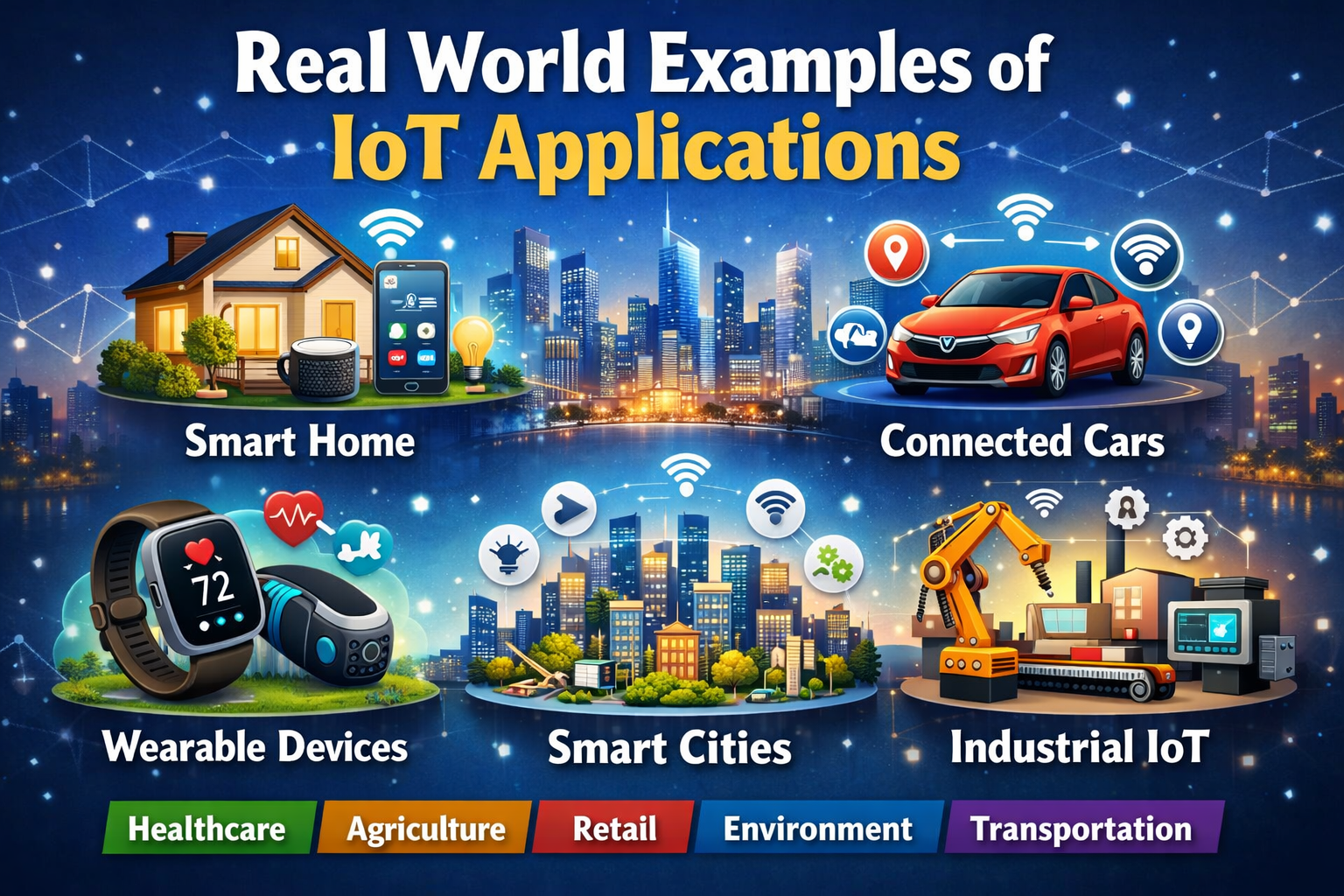
Real-world IoT applications refer to practical uses of connected devices that collect, share, and process data to improve efficiency, automation, and decision-making. Below is the list of major real-world IoT applications explained in detail.
1. Smart Homes and Home Automation
Smart homes use IoT devices to automate household tasks and improve comfort, security, and energy efficiency.
- Smart Lighting: Lights automatically turn on/off based on motion or schedule
- Smart Thermostats: Adjust room temperature automatically to save energy
- Smart Security Systems: Cameras and sensors provide real-time monitoring
- Voice Assistants: Devices like Alexa control appliances through voice commands
2. Healthcare and Remote Patient Monitoring
IoT in healthcare enables real-time monitoring and better patient care through connected devices.
- Wearable Devices: Track heart rate, steps, and sleep patterns
- Remote Monitoring: Doctors monitor patients without hospital visits
- Smart Medical Equipment: Devices automatically send patient data
- Emergency Alerts: Sensors detect abnormal health conditions instantly
IoT Applications in Daily Life
IoT is widely used in everyday activities, making life more convenient and efficient. Below are common daily life IoT applications explained.
1. Smart Wearables
Smart wearables are IoT devices worn on the body that collect health and fitness data.
- Fitness Tracking: Monitor steps, calories, and activity levels
- Health Monitoring: Track heart rate and oxygen levels
- Sleep Tracking: Analyze sleep patterns for better health
2. Smart Appliances
Smart appliances use IoT to automate tasks and improve energy efficiency in homes.
- Smart Refrigerators: Monitor food and suggest recipes
- Smart Washing Machines: Automatically select wash cycles
- Smart Ovens: Controlled remotely via mobile apps
3. Connected Vehicles
IoT enables vehicles to communicate with systems and provide intelligent features.
- GPS Tracking: Real-time navigation and location tracking
- Vehicle Diagnostics: Monitor engine performance
- Smart Parking: Helps find available parking spaces
IoT Applications in Industry and Business
IoT is transforming industries by improving productivity, reducing costs, and enabling automation. Below are key industrial IoT applications explained.
1. Industrial IoT (IIoT)
Industrial IoT connects machines and systems to optimize manufacturing processes.
- Predictive Maintenance: Detect machine failures before they occur
- Automation: Reduce human intervention in production
- Real-Time Monitoring: Track equipment performance
2. Smart Supply Chain and Logistics
IoT improves supply chain visibility and efficiency through real-time tracking.
- Inventory Tracking: Monitor stock levels automatically
- Shipment Tracking: Track goods in real time
- Temperature Monitoring: Ensure product quality (e.g., food, medicine)
3. Retail and Smart Stores
IoT enhances customer experience and store management in retail.
- Smart Shelves: Track product availability
- Customer Behavior Analysis: Understand shopping patterns
- Automated Billing: Checkout without long queues
IoT Applications in Smart Cities
Smart cities use IoT to improve urban living, infrastructure, and sustainability. Below are major smart city applications explained.
1. Smart Traffic Management
IoT helps reduce traffic congestion and improve transportation systems.
- Traffic Sensors: Monitor traffic flow in real time
- Smart Signals: Automatically adjust signal timing
- Public Transport Tracking: Provide real-time updates
2. Smart Waste Management
IoT improves waste collection and reduces environmental impact.
- Smart Bins: Notify when bins are full
- Optimized Collection Routes: Reduce fuel usage
- Recycling Management: Improve waste sorting
3. Smart Energy Management
IoT helps manage energy consumption efficiently in cities.
- Smart Grids: Monitor and distribute electricity
- Energy Usage Tracking: Reduce energy waste
- Renewable Integration: Support solar and wind energy
IoT Applications in Agriculture
IoT is revolutionizing farming by improving productivity and resource management. Below are key agriculture IoT applications explained.
1. Smart Farming
Smart farming uses IoT devices to monitor and control agricultural processes.
- Soil Sensors: Measure moisture and nutrients
- Weather Monitoring: Predict weather conditions
- Automated Irrigation: Water crops based on need
2. Livestock Monitoring
IoT helps farmers track and manage livestock efficiently.
- Health Monitoring: Track animal health and activity
- Location Tracking: Prevent loss of animals
- Feeding Automation: Manage feeding schedules
IoT Applications in Energy and Environment
IoT plays a key role in environmental monitoring and energy management. Below are important applications explained.
1. Environmental Monitoring
IoT devices collect environmental data for better decision-making.
- Air Quality Monitoring: Detect pollution levels
- Water Quality Monitoring: Ensure safe drinking water
- Disaster Detection: Early warning for floods and earthquakes
2. Smart Energy Systems
IoT helps optimize energy production and consumption.
- Smart Meters: Track electricity usage
- Energy Optimization: Reduce wastage
- Remote Monitoring: Manage energy systems efficiently
Comparison Table of IoT Applications Across Domains
| Domain | Key Application | Benefits | Example Use Case |
|---|---|---|---|
| Smart Homes | Home Automation | Comfort, energy saving | Smart lights, thermostats |
| Healthcare | Remote Monitoring | Better patient care | Wearable health devices |
| Industry | Predictive Maintenance | Reduced downtime | Machine monitoring |
| Smart Cities | Traffic Management | Reduced congestion | Smart traffic signals |
| Agriculture | Smart Farming | Increased productivity | Automated irrigation |
| Energy | Smart Meters | Efficient energy use | Electricity monitoring |
Benefits of Real World IoT Applications
Real-world IoT applications provide multiple advantages across different sectors. Below are key benefits explained.
1. Improved Efficiency
IoT automates processes and reduces manual work, improving overall efficiency.
- Automation: Tasks are performed automatically
- Time Saving: Faster operations and responses
- Accuracy: Reduced human errors
2. Cost Savings
IoT reduces operational costs by optimizing resources and preventing failures.
- Energy Savings: Efficient energy usage
- Maintenance Reduction: Predictive maintenance avoids breakdowns
- Resource Optimization: Better use of materials
3. Better Decision Making
IoT provides real-time data that helps in making informed decisions.
- Data Insights: Analyze real-time information
- Predictive Analysis: Forecast future trends
- Improved Planning: Better resource management
Challenges in Real World IoT Applications
Despite benefits, IoT applications face several challenges that need to be addressed.
1. Security and Privacy Issues
IoT devices are vulnerable to cyber threats and data breaches.
- Data Protection: Sensitive information may be exposed
- Unauthorized Access: Devices can be hacked
- Privacy Risks: Personal data misuse
2. Connectivity Issues
IoT devices depend on stable internet connectivity for proper functioning.
- Network Reliability: Poor connectivity affects performance
- Latency Issues: Delays in data transmission
- Coverage Limitations: Rural areas may lack connectivity
3. High Implementation Cost
Setting up IoT systems can be expensive initially.
- Device Cost: Sensors and hardware are costly
- Infrastructure Cost: Requires network and cloud setup
- Maintenance Cost: Ongoing expenses
Conclusion
Real-world IoT applications are transforming everyday life and industries by enabling smart automation, real-time monitoring, and data-driven decision-making. From smart homes to industrial automation and smart cities, IoT continues to improve efficiency, reduce costs, and create intelligent systems for the future.