











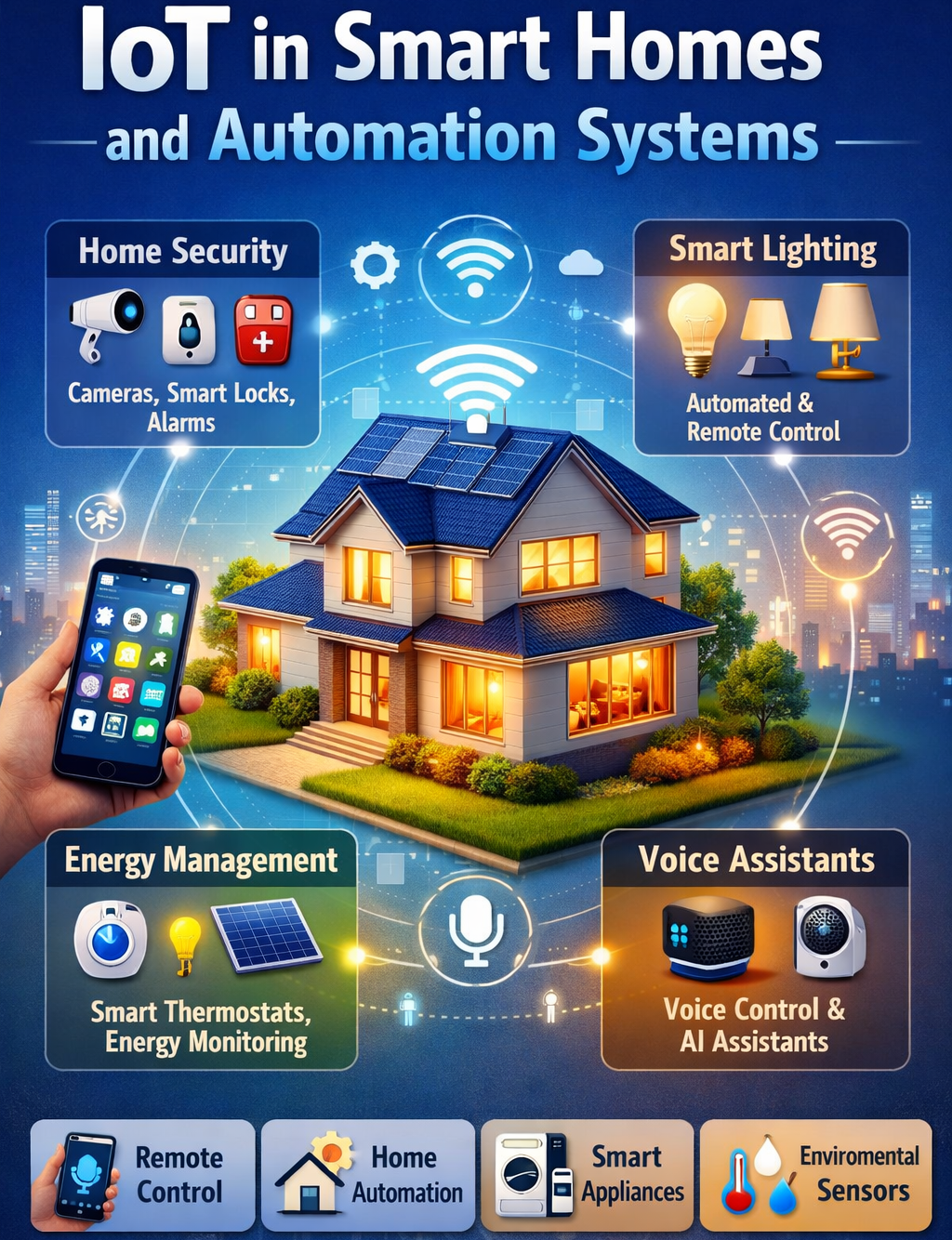
IoT in Smart Homes and Automation Systems
The integration of Internet of Things (IoT) in smart homes and automation systems is transforming how people live, interact, and manage daily tasks. This technology enables devices to connect, communicate, and operate intelligently for better comfort, efficiency, and security.
What is IoT in Smart Homes?
IoT in smart homes refers to the use of connected devices that can monitor, control, and automate household functions through the internet. It allows users to manage their homes remotely and efficiently.
The list of key concepts, working, and features is given below.
1. Definition of Smart Home IoT
Smart home IoT is a system where everyday household devices are connected to the internet and can communicate with each other.
- Connected Devices: Appliances like lights, fans, and TVs are internet-enabled
- Remote Control: Users can control devices using smartphones or apps
- Automation: Devices perform tasks automatically based on conditions
- Real-Time Monitoring: Continuous tracking of home environment
2. Key Components of Smart Home Systems
Smart homes consist of multiple interconnected components that work together to provide automation and control.
- Sensors: Detect temperature, motion, light, and humidity
- Actuators: Perform actions like turning devices on/off
- Controllers: Smartphones or hubs that manage devices
- Connectivity: Wi-Fi, Bluetooth, Zigbee for communication
- Cloud Services: Store data and enable remote access
3. How IoT Works in Smart Homes
IoT systems in smart homes follow a step-by-step process to ensure smooth operation and automation.
- Data Collection: Sensors gather data from the environment
- Data Transmission: Data is sent to cloud or local system
- Processing: System analyzes data using algorithms
- Decision Making: Automated actions are triggered
- Execution: Devices respond accordingly
Key Features of Smart Home Automation
Smart home automation offers advanced features that improve convenience, security, and efficiency.
The list of important features and functionalities is given below.
1. Remote Access and Control
Users can manage home devices from anywhere using internet-enabled devices.
- Mobile Apps: Control devices via smartphone applications
- Web Dashboards: Access systems through browsers
- Global Accessibility: Manage home from any location
- Real-Time Updates: Instant notifications and alerts
2. Automation and Scheduling
Automation allows devices to operate without manual intervention based on predefined rules.
- Time-Based Scheduling: Turn devices on/off at specific times
- Event-Based Automation: Trigger actions using sensor data
- Routine Creation: Combine multiple actions into one command
- Energy Optimization: Reduce unnecessary power usage
3. Voice Control Integration
Voice assistants enhance user interaction by enabling hands-free control.
- Voice Commands: Control devices using speech
- Integration with Assistants: Works with Alexa or Google Assistant
- Natural Interaction: Easy for all age groups
- Accessibility: Helpful for elderly and disabled users
4. Energy Efficiency and Monitoring
Smart homes help in reducing energy consumption and improving sustainability.
- Energy Tracking: Monitor electricity usage in real-time
- Smart Thermostats: Adjust temperature automatically
- Automated Lighting: Lights turn off when not needed
- Cost Savings: Lower electricity bills
Applications of IoT in Smart Homes
IoT applications in smart homes provide practical solutions for daily life, making homes more intelligent and responsive.
The list of real-world applications of IoT in smart homes is given below.
1. Smart Lighting Systems
Smart lighting systems automatically adjust brightness and color based on user needs.
- Motion Detection: Lights turn on when someone enters a room
- Remote Control: Adjust lighting from smartphone
- Energy Saving: Lights turn off automatically
- Customization: Change color and intensity
2. Smart Security Systems
IoT enhances home security by providing advanced monitoring and alert systems.
- Smart Cameras: Real-time video surveillance
- Motion Sensors: Detect unusual activities
- Smart Locks: Keyless entry systems
- Alerts: Instant notifications on suspicious activity
3. Smart Appliances
Household appliances become intelligent and more efficient with IoT integration.
- Smart Refrigerators: Monitor food and suggest recipes
- Smart Washing Machines: Operate remotely
- Smart Ovens: Controlled via mobile apps
- Maintenance Alerts: Notify users of issues
4. Smart Climate Control
Smart climate systems maintain comfortable indoor environments automatically.
- Smart Thermostats: Adjust temperature based on preferences
- Humidity Control: Maintain air quality
- Energy Optimization: Reduce heating and cooling costs
- Remote Adjustment: Control climate from anywhere
5. Smart Entertainment Systems
Entertainment devices become more interactive and personalized.
- Smart TVs: Internet-connected streaming services
- Multi-Room Audio: Control music across rooms
- Voice Control: Play content using commands
- Personalization: Recommend content based on user behavior
Benefits of IoT in Smart Homes
IoT in smart homes offers multiple advantages that improve lifestyle and efficiency.
The list of major benefits and advantages is given below.
1. Improved Convenience
Smart homes simplify daily tasks and reduce manual effort.
- Automation: Devices operate automatically
- Remote Control: Manage home from anywhere
- Time Saving: Reduce routine work
- User-Friendly: Easy to use systems
2. Enhanced Security
Smart home systems provide better protection and monitoring.
- Real-Time Alerts: Instant notifications
- Surveillance Systems: Continuous monitoring
- Access Control: Manage entry permissions
- Emergency Response: Quick action during incidents
3. Energy Efficiency
IoT helps reduce energy waste and promotes sustainability.
- Smart Monitoring: Track energy usage
- Automated Systems: Reduce unnecessary consumption
- Cost Reduction: Lower utility bills
- Eco-Friendly: Supports green living
4. Better Quality of Life
Smart homes improve comfort and overall living standards.
- Personalized Environment: Adjust settings as per preferences
- Health Monitoring: Track air quality and temperature
- Accessibility: Assist elderly and disabled individuals
- Stress Reduction: Automated systems reduce workload
Challenges of Smart Home IoT Systems
Despite many benefits, IoT in smart homes faces several challenges that need to be addressed.
The list of key challenges and limitations is given below.
1. Security and Privacy Risks
Connected devices can be vulnerable to cyber threats and data breaches.
- Hacking Risks: Unauthorized access to devices
- Data Privacy: Sensitive data exposure
- Weak Authentication: Poor password security
- Need for Encryption: Secure communication required
2. High Initial Cost
Setting up smart home systems can be expensive for many users.
- Device Cost: Smart devices are costly
- Installation Cost: Professional setup required
- Maintenance Expenses: Regular updates needed
- Upgrades: Technology evolves rapidly
3. Compatibility Issues
Different devices may not work together due to lack of standardization.
- Multiple Protocols: Zigbee, Wi-Fi, Bluetooth differences
- Vendor Lock-In: Limited interoperability
- Integration Complexity: Difficult setup
- Software Issues: Compatibility errors
4. Dependence on Internet
Smart home systems rely heavily on internet connectivity.
- Connectivity Issues: Poor internet affects performance
- Downtime: System stops without internet
- Latency: Delays in response
- Reliability Concerns: Network stability required
Comparison of Traditional Homes vs Smart Homes
Understanding the difference between traditional homes and smart homes helps in evaluating the importance of IoT technology.
| Feature | Traditional Homes | Smart Homes (IoT-Based) |
|---|---|---|
| Control | Manual | Automated and Remote |
| Energy Efficiency | Low | High |
| Security | Basic | Advanced |
| Convenience | Limited | High |
| Cost | Lower Initial Cost | Higher Initial Cost |
| Monitoring | Not Available | Real-Time Monitoring |
Future of IoT in Smart Homes
The future of IoT in smart homes is rapidly evolving with advancements in technology and increasing adoption.
The list of future trends and developments is given below.
1. AI Integration with IoT
Artificial Intelligence will make smart homes more intelligent and predictive.
- Predictive Automation: Devices learn user behavior
- Smart Decision Making: Automated responses improve efficiency
- Personalization: Customized user experience
- Self-Learning Systems: Continuous improvement
2. Improved Security Technologies
Advanced security solutions will enhance protection in smart homes.
- Biometric Authentication: Fingerprint and facial recognition
- Advanced Encryption: Strong data protection
- AI-Based Threat Detection: Identify risks automatically
- Secure Networks: Improved cybersecurity
3. Expansion of Smart Devices
More devices will become IoT-enabled in the future.
- Connected Appliances: More smart gadgets
- Affordable Devices: Reduced cost over time
- Better Integration: Seamless connectivity
- Wider Adoption: Increased global usage
4. Edge Computing in Smart Homes
Edge computing will improve performance and reduce latency.
- Local Data Processing: Faster response times
- Reduced Cloud Dependency: More efficient systems
- Enhanced Privacy: Data processed locally
- Real-Time Decision Making: Immediate actions
Conclusion
IoT in smart homes and automation systems is revolutionizing modern living by offering convenience, security, and efficiency. With continuous advancements in AI, connectivity, and device integration, smart homes will become more intelligent, affordable, and widely adopted in the future.