





IoT Application Development
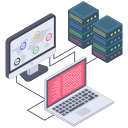
IoT Application Development is the process of designing, building, and deploying applications that connect devices, collect data, and enable intelligent actions. It combines hardware, software, networking, and cloud technologies to create smart and scalable IoT solutions.
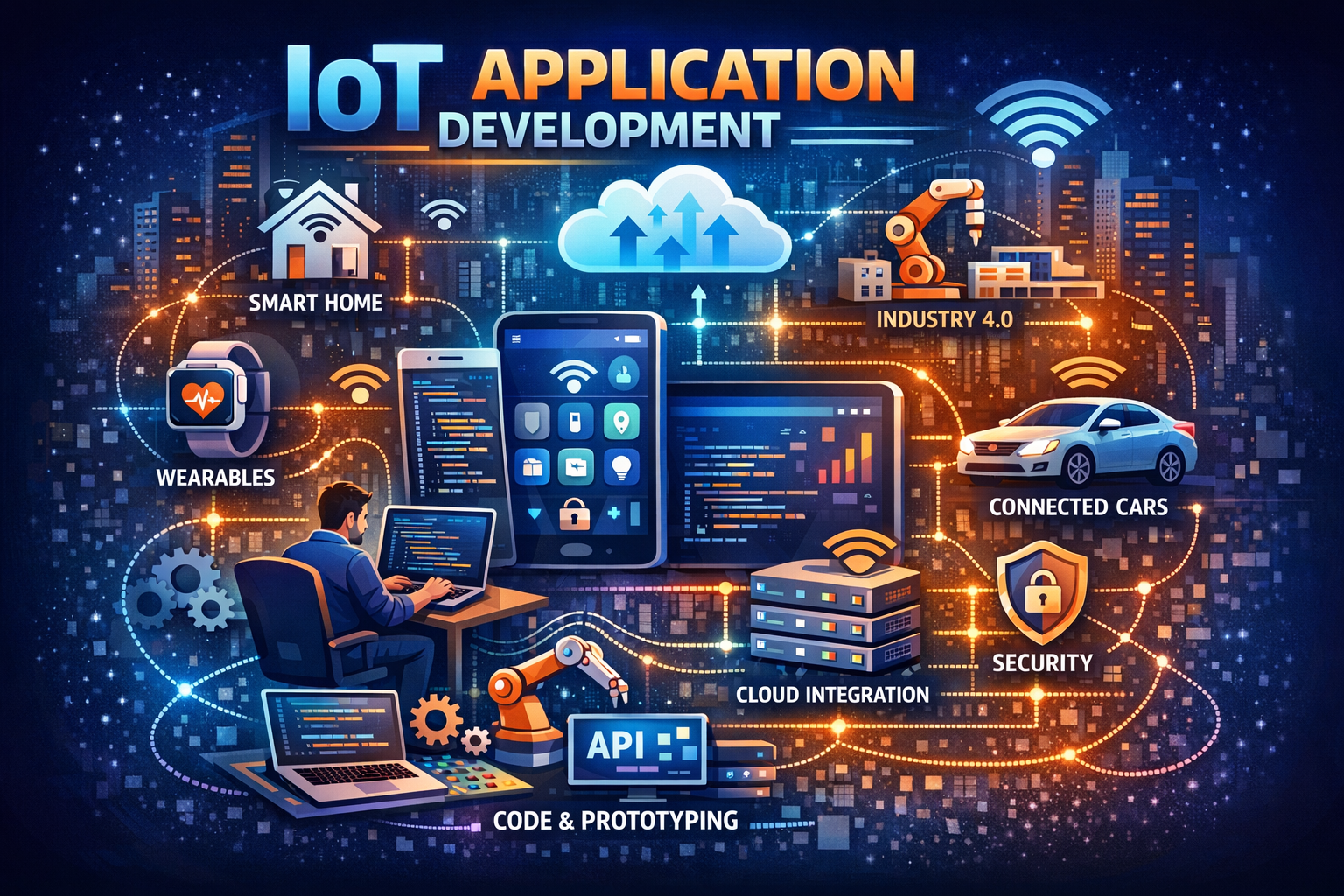
IoT applications connect sensors, devices, and platforms to collect real-time data and provide useful insights. These applications are used in smart homes, healthcare, agriculture, industries, and smart cities.
Key Components of IoT Application Development
IoT applications are built using several essential components that work together to collect data, process it, and deliver intelligent outcomes. Each component plays a critical role in ensuring system efficiency and functionality.
1. Devices and Sensors
Devices and sensors are responsible for collecting real-world data from the environment.
- Sensors: Measure parameters like temperature, humidity, motion, and light
- Actuators: Perform actions such as turning devices ON/OFF or adjusting settings
- Embedded Systems: Control device operations and manage data collection
Example: A temperature sensor collects room temperature data and sends it for processing.
2. Connectivity
Connectivity enables communication between IoT devices and systems.
- Wireless Networks: Wi-Fi, Bluetooth, Zigbee, and LoRaWAN for device communication
- Communication Protocols: MQTT, HTTP, and CoAP for data exchange
- Data Transmission: Sends collected data from devices to servers or cloud platforms
Example: A sensor transmits data to the cloud using a Wi-Fi connection.
3. Data Processing
Data processing transforms raw data into meaningful insights.
- Edge Computing: Processes data near the device for faster response
- Cloud Computing: Handles large-scale data storage and advanced analytics
- Data Filtering: Removes noise and irrelevant data
Example: A system analyzes sensor data to detect unusual patterns or anomalies.
4. Application Layer
The application layer provides user interaction and system control.
- Mobile Applications: Allow users to monitor and control IoT devices
- Web Dashboards: Display real-time data and analytics
- User Interface: Ensures easy and intuitive interaction
Example: A mobile app displays temperature data and allows users to control a smart thermostat.
IoT Application Development Process
Developing an IoT application follows a structured process to ensure reliability, scalability, and performance.
1. Requirement Analysis
This phase defines the foundation of the IoT project.
- Define Goals: Identify objectives and expected outcomes
- Identify Users: Understand target users and use cases
- Determine Requirements: Specify hardware, software, and system needs
2. System Design
This phase focuses on designing the overall architecture of the system.
- Architecture Design: Plan system structure and components
- Technology Selection: Choose appropriate hardware and software
- Data Flow Planning: Define how data moves within the system
3. Development
In this phase, the actual system is built and integrated.
- Hardware Setup: Assemble sensors, devices, and controllers
- Software Development: Build applications and backend systems
- System Integration: Connect all components into a working system
4. Testing
Testing ensures that the system works correctly and efficiently.
- Functionality Testing: Verify system operations
- Bug Fixing: Identify and resolve errors
- Performance Optimization: Improve system efficiency
5. Deployment
The system is launched and made available for use.
- System Launch: Deploy the application in a real environment
- Performance Monitoring: Track system behavior
- Operational Stability: Ensure smooth functioning
6. Maintenance
Maintenance ensures long-term performance and security.
- System Updates: Add new features and improvements
- Security Enhancements: Protect against new threats
- Issue Resolution: Fix bugs and optimize performance
Tools and Technologies for IoT Development
Various tools and technologies are used to build efficient, scalable, and intelligent IoT applications. These tools support hardware integration, software development, cloud processing, and system management, making IoT solutions easier to design and deploy.
Hardware Platforms
Hardware platforms are the foundation of IoT systems, enabling data collection, device control, and interaction with the physical environment.
1. Arduino
Arduino is a beginner-friendly microcontroller platform widely used for IoT prototyping and small-scale projects. It supports a large number of sensors and modules, making it ideal for learning and rapid development.
- Ease of Use: Simple programming and setup for beginners
- Wide Community Support: Extensive libraries and tutorials available
- Flexible Integration: Supports multiple sensors and actuators
2. Raspberry Pi
Raspberry Pi is a powerful single-board computer used for advanced IoT applications that require higher processing power and multitasking.
- High Performance: Supports complex applications and operating systems
- Multi-Functionality: Can act as a server, gateway, or controller
- Connectivity Options: Supports Wi-Fi, Ethernet, and Bluetooth
3. ESP8266 / ESP32
ESP8266 and ESP32 are low-cost microcontrollers with built-in Wi-Fi (and Bluetooth in ESP32), widely used in IoT devices.
- Low Cost: Affordable for large-scale deployments
- Built-in Connectivity: Eliminates need for external modules
- Energy Efficient: Suitable for battery-powered devices
Software and Programming
Software tools and programming technologies are used to develop IoT applications, control devices, and create user interfaces.
1. Programming Languages
Programming languages are used to write logic for IoT systems and applications.
- Python: Easy to use for data processing and backend development
- C/C++: Commonly used for embedded systems and microcontrollers
- JavaScript: Used for web-based dashboards and real-time applications
2. Embedded Development Tools
These tools are used to program microcontrollers and hardware devices.
- Firmware Development: Write and upload code to devices
- Debugging Tools: Identify and fix errors in embedded systems
- Hardware Control: Manage sensors, actuators, and communication modules
3. Web and Mobile Frameworks
These frameworks help build user interfaces for interacting with IoT systems.
- Web Applications: Dashboards for monitoring and control
- Mobile Apps: Remote access and device management
- User Interaction: Real-time alerts and control features
Cloud Platforms
Cloud platforms provide storage, processing power, and analytics capabilities for IoT systems, enabling large-scale deployments and real-time insights.
1. AWS IoT
AWS IoT offers scalable device management, secure communication, and integration with cloud services for analytics and automation.
- Device Management: Connect and monitor devices easily
- Data Processing: Real-time data handling and analytics
- Integration: Works with multiple AWS services
2. Microsoft Azure IoT
Azure IoT provides enterprise-level solutions with strong security, analytics, and AI integration.
- Secure Communication: Advanced authentication and encryption
- Analytics Tools: Process and analyze IoT data
- Enterprise Support: Suitable for large organizations
3. Google Cloud IoT
Google Cloud IoT focuses on data analytics and machine learning integration for intelligent IoT applications.
- Big Data Integration: Analyze large datasets efficiently
- AI Support: Enable predictive analytics
- Scalable Infrastructure: Supports global IoT deployments
IoT Platforms and Frameworks
IoT platforms and frameworks simplify development, integration, and monitoring of IoT systems.
1. ThingSpeak
ThingSpeak is used for collecting, analyzing, and visualizing IoT data in real time.
- Data Visualization: Charts and dashboards
- Cloud Integration: Store and analyze data online
- Easy Setup: Suitable for beginners and small projects
2. Node-RED
Node-RED is a flow-based development tool that connects devices, APIs, and services using a visual interface.
- Drag-and-Drop Interface: Simplifies application development
- Rapid Prototyping: Build applications quickly
- Integration Support: Connect multiple systems easily
3. Blynk
Blynk is a platform used to create mobile applications for controlling IoT devices.
- Mobile Control: Manage devices through smartphone apps
- User-Friendly Interface: Easy to design dashboards
- Real-Time Interaction: Instant device control and monitoring
Best Practices for IoT Application Development
Following best practices ensures that IoT applications are secure, efficient, and scalable.
1. Scalability
Design IoT systems that can grow with increasing devices and data.
- Flexible Architecture: Supports expansion without redesign
- Device Management: Leverage the best MDM solution to efficiently provision, monitor, secure, and manage a growing number of IoT devices from a single console.
2. Security First Approach
Security should be implemented from the beginning of development.
- Encryption: Protect data during transmission
- Authentication: Ensure only authorized access
- Secure Design: Prevent system vulnerabilities
3. Energy Efficiency
Efficient energy usage is critical for IoT devices, especially battery-powered systems.
- Low-Power Devices: Use energy-efficient hardware
- Power Optimization: Reduce unnecessary energy consumption
- Battery Management: Extend device lifespan
4. Reliable Connectivity
Stable communication ensures smooth IoT system operation.
- Network Stability: Maintain consistent connectivity
- Protocol Selection: Choose suitable communication protocols
- Low Latency: Support real-time performance
5. Data Management
Efficient data handling is essential for IoT success.
- Data Storage: Use scalable storage solutions
- Data Processing: Analyze data efficiently
- Analytics: Generate meaningful insights
Challenges in IoT Application Development
IoT development involves several challenges that must be managed carefully for successful implementation.
1. Security Issues
- Cyber Threats: Risk of hacking and data breaches
- Weak Protection: Many devices lack strong security
- Need for Safeguards: Strong security mechanisms are required
2. Integration Complexity
- System Integration: Combining hardware, software, and networks
- Compatibility Issues: Different technologies may not work together
- Complex Architecture: Managing multiple components
3. Data Handling
- Big Data: Large volumes of data generated continuously
- Storage Challenges: Requires scalable infrastructure
- Processing Complexity: Real-time analysis can be demanding
4. Cost
- Development Cost: Building IoT systems can be expensive
- Infrastructure Cost: Cloud and networking expenses
- Maintenance Cost: Ongoing updates, monitoring, and support
Conclusion
IoT Application Development involves integrating devices, connectivity, data processing, and user interfaces to create smart systems. By using the right tools and technologies and following best practices, developers can build scalable, secure, and efficient IoT applications. Despite challenges such as security, cost, and complexity, IoT continues to grow and play a key role in modern technology solutions.
IoT Application Development – Subtopics
Explore IoT Application Development to understand how smart applications are designed, built, and deployed to connect devices and process real-time data. Learn how IoT apps integrate hardware, software, and cloud platforms to create intelligent and automated solutions. Subtopics of IoT Application Development are listed below:
- IoT Application Development Explained for Beginners
- How to Build IoT Applications Step by Step
- IoT Application Development Architecture Explained
- IoT Application Development Lifecycle (SDLC) Explained
- Best Programming Languages for IoT Development
- IoT App Development Using Python and Arduino
- Mobile App Development for IoT Systems
- Web Applications for IoT Devices Explained
- IoT Backend Development and Cloud Integration
- API Development for IoT Applications
- IoT App UI/UX Design Best Practices
- Real-Time Data Handling in IoT Applications
- IoT Application Testing and Debugging Techniques
- IoT Security in Application Development
- Cross Platform IoT App Development Tools
- IoT App Deployment and Maintenance Guide
- Low Cost IoT Application Development Ideas
- Common Challenges in IoT App Development
- IoT App Development Tools and Frameworks
- End to End IoT Application Development Guide