












Security and Privacy in IoT Systems
Security and privacy in IoT systems are critical aspects that ensure safe communication, data protection, and trust in connected devices. As billions of IoT devices exchange sensitive information, understanding these concepts helps students and professionals build secure and reliable systems.
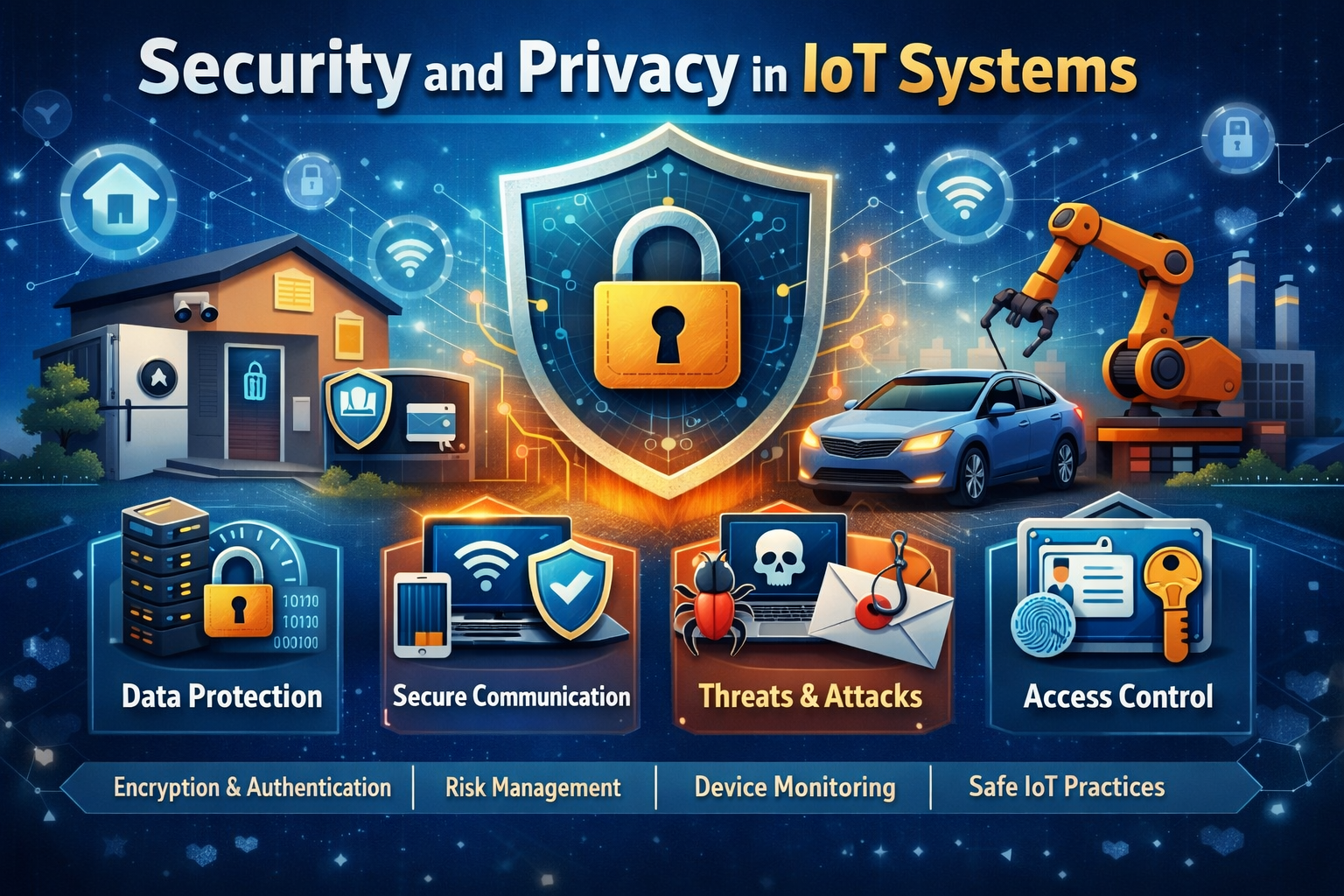
What is Security and Privacy in IoT Systems?
Security and privacy in IoT refer to protecting devices, networks, and data from unauthorized access, attacks, and misuse. It ensures that IoT systems operate safely while maintaining user trust and data confidentiality.
The list of key aspects of IoT security and privacy is given below:
1. IoT Security
IoT security focuses on protecting devices, networks, and systems from cyber threats and attacks. It ensures that only authorized users and systems can access IoT resources.
- Device Protection: Securing hardware and firmware from tampering
- Network Security: Protecting communication channels from attacks
- Access Control: Restricting unauthorized access
- Threat Detection: Identifying suspicious activities in real-time
2. IoT Privacy
IoT privacy ensures that personal and sensitive data collected by devices is handled securely and not misused.
- Data Confidentiality: Keeping user data private
- User Consent: Collecting data with permission
- Data Minimization: Collecting only necessary data
- Secure Storage: Protecting stored information
Importance of Security and Privacy in IoT
Security and privacy are essential for protecting sensitive data, ensuring system reliability, and maintaining user trust in IoT applications.
The list of importance of IoT security and privacy is given below:
1. Protects Sensitive Data
Protecting personal, financial, and operational data from unauthorized access is crucial in IoT systems.
- Prevents Data Breaches: Avoids exposure of confidential information
- Secures Personal Information: Protects user identity and privacy
- Maintains Data Integrity: Ensures data remains accurate
2. Ensures System Reliability
Reliable IoT systems depend on strong security mechanisms that prevent disruptions and attacks.
- Prevents System Failures: Avoids malicious interference
- Maintains Continuous Operation: Ensures uptime
- Reduces Downtime: Minimizes service interruptions
3. Builds User Trust
Users are more likely to adopt IoT technologies when they feel their data and devices are secure.
- Enhances Confidence: Encourages technology adoption
- Improves User Experience: Safe and reliable usage
- Supports Long-Term Usage: Builds loyalty
4. Prevents Cyber Attacks
Strong security mechanisms protect IoT systems from common cyber threats.
- Blocks Unauthorized Access: Stops hackers
- Detects Threats Early: Enables quick response
- Reduces Financial Losses: Avoids damage costs
Common Security Threats in IoT Systems
IoT systems face various security threats due to their distributed nature and limited resources.
The list of common IoT security threats is given below:
1. Device-Level Threats
These threats target individual IoT devices and exploit their vulnerabilities.
- Weak Passwords: Easy to guess credentials
- Firmware Attacks: Exploiting outdated software
- Physical Tampering: Direct access to devices
2. Network-Level Threats
These threats occur during data transmission between devices and servers.
- Man-in-the-Middle Attacks: Intercepting communication
- Data Eavesdropping: Unauthorized data access
- Denial of Service (DoS): Overloading networks
3. Application-Level Threats
These threats target IoT applications and software layers.
- Malware Attacks: Injecting harmful software
- Unauthorized Access: Weak authentication systems
- API Vulnerabilities: Exploiting insecure interfaces
4. Cloud-Level Threats
These threats affect cloud platforms where IoT data is stored and processed.
- Data Breaches: Unauthorized access to cloud data
- Misconfiguration: Improper cloud settings
- Insider Threats: Internal misuse of data
Key Security Requirements in IoT Systems
IoT systems require specific security measures to ensure safe operation and data protection.
The list of key IoT security requirements is given below:
1. Authentication
Authentication ensures that only authorized users and devices can access the system.
- User Authentication: Verifying identity
- Device Authentication: Validating connected devices
- Multi-Factor Authentication: Adding extra security layers
2. Authorization
Authorization controls what actions users and devices can perform after authentication.
- Role-Based Access: Assigning permissions
- Access Control Policies: Defining allowed actions
- Least Privilege Principle: Limiting access rights
3. Data Encryption
Encryption protects data during transmission and storage.
- Data-in-Transit Encryption: Secure communication channels
- Data-at-Rest Encryption: Protect stored data
- End-to-End Encryption: Full data protection
4. Secure Communication
Secure communication ensures safe data exchange between devices and systems.
- Use of Secure Protocols: HTTPS, MQTT with TLS
- Network Isolation: Segmentation of networks
- Secure Gateways: Controlled data flow
5. Device Management
Proper device management helps maintain security throughout the device lifecycle.
- Firmware Updates: Regular patching
- Device Monitoring: Tracking device activity
- Remote Management: Controlling devices securely
Privacy Challenges in IoT Systems
IoT systems face several privacy challenges due to continuous data collection and sharing.
The list of privacy challenges in IoT is given below:
1. Data Over-Collection
IoT devices often collect more data than necessary.
- Excessive Data Storage: Increases risk
- Unnecessary Tracking: Violates privacy
- Data Misuse: Improper usage
2. Lack of User Awareness
Users may not fully understand how their data is collected and used.
- Hidden Data Collection: Lack of transparency
- Complex Privacy Policies: Hard to understand
- Limited Control: Users cannot manage data
3. Data Sharing Risks
Sharing data across platforms increases privacy risks.
- Third-Party Access: External data usage
- Data Leakage: Unintentional exposure
- Cross-System Integration: Increased vulnerabilities
4. Weak Data Protection Mechanisms
Inadequate security measures can compromise user privacy.
- Unencrypted Data: Easy to access
- Poor Storage Practices: Insecure databases
- Weak Access Controls: Unauthorized access
Best Practices for IoT Security and Privacy
Implementing best practices helps improve the overall security and privacy of IoT systems.
The list of best practices for IoT security and privacy is given below:
1. Strong Authentication Mechanisms
Strong authentication ensures only authorized access to IoT systems.
- Use Multi-Factor Authentication
- Avoid Default Credentials
- Implement Secure Login Systems
2. Regular Software Updates
Keeping software updated helps fix vulnerabilities and improve security.
- Apply Security Patches
- Update Firmware Regularly
- Automate Updates Where Possible
3. Data Encryption Techniques
Encryption ensures data protection during transmission and storage.
- Use Advanced Encryption Standards (AES)
- Enable Secure Communication Protocols
- Implement End-to-End Encryption
4. Network Security Measures
Securing the network reduces the risk of attacks.
- Use Firewalls and Intrusion Detection Systems
- Segment Networks
- Monitor Network Traffic
5. Privacy-by-Design Approach
Privacy should be integrated into system design from the beginning.
- Minimize Data Collection
- Ensure Transparency
- Provide User Control Over Data
Comparison Table: Security vs Privacy in IoT
| Aspect | Security in IoT | Privacy in IoT |
|---|---|---|
| Focus | Protecting systems and networks | Protecting user data |
| Goal | Prevent unauthorized access | Ensure data confidentiality |
| Key Concern | Cyber attacks and threats | Data misuse and exposure |
| Techniques | Encryption, authentication, firewalls | Data minimization, consent, policies |
| Scope | Devices, networks, infrastructure | Personal and sensitive information |
Real-World Example of IoT Security and Privacy
Understanding real-world applications helps students connect theory with practice in IoT systems.
Smart Home Security System
A smart home uses IoT devices like cameras, sensors, and smart locks to monitor and control the environment.
- Security Aspect:
- Encrypted communication between devices
- Authentication for user access
- Real-time alerts for suspicious activity
- Privacy Aspect:
- User data stored securely in the cloud
- Access control for personal information
- User consent for data collection
This example shows how both security and privacy work together to create a safe and trustworthy IoT system.
Challenges in Implementing IoT Security
Implementing security in IoT systems is complex due to various technical and operational limitations.
The list of challenges in IoT security is given below:
1. Resource Constraints
Many IoT devices have limited processing power and memory.
- Limited Storage: Cannot support heavy security mechanisms
- Low Power Consumption: Restricts security features
- Lightweight Protocol Needs: Requires optimized solutions
2. Scalability Issues
Managing security for billions of devices is challenging.
- Large Device Networks: Hard to monitor
- Dynamic Environments: Constant changes
- Complex Management: Difficult control
3. Lack of Standardization
Different devices use different protocols and standards.
- Compatibility Issues: Difficult integration
- Security Gaps: Inconsistent protection
- Vendor Dependency: Limited flexibility
4. Device Lifecycle Management
Ensuring security throughout the device lifecycle is difficult.
- Outdated Devices: Lack updates
- End-of-Life Issues: Unsupported devices
- Maintenance Challenges: Continuous monitoring required
Conclusion
Security and privacy in IoT systems are essential for protecting data, ensuring system reliability, and building user trust. By understanding threats, implementing strong security measures, and following best practices, organizations can create safe and efficient IoT environments.