









IoT in Industrial Automation (IIoT)
Industrial Internet of Things (IIoT) is transforming traditional industries by connecting machines, sensors, and systems to enable smart, automated operations. It helps businesses improve efficiency, reduce costs, and make better decisions using real-time data.
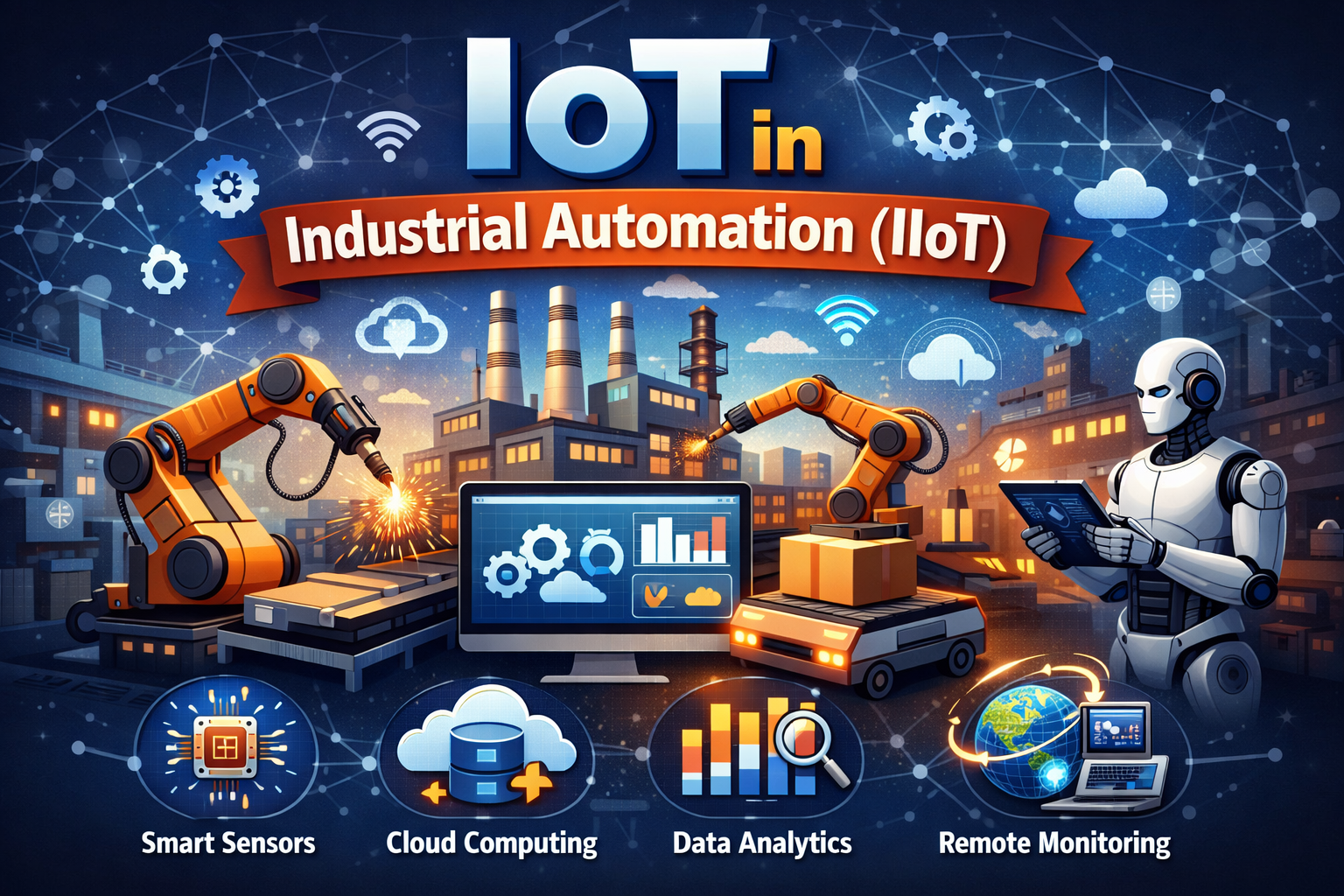
What is IIoT (Industrial Internet of Things)?
Industrial IoT (IIoT) refers to the use of connected devices, sensors, and software in industrial environments to monitor, control, and optimize operations. It plays a key role in smart factories, manufacturing, and industrial automation systems.
Below is the list of key aspects of IIoT explained in detail.
1. Definition of IIoT
IIoT is a network of interconnected industrial devices that collect and exchange data to improve operational efficiency. It focuses on automation, monitoring, and intelligent decision-making in industries.
- Connected Devices: Machines, sensors, and controllers communicate with each other
- Data-Driven Operations: Decisions are based on real-time data
- Automation Focus: Reduces human involvement in repetitive tasks
2. Difference Between IoT and IIoT
While IoT is used in daily life applications, IIoT is specifically designed for industrial environments where reliability and precision are critical.
- IoT: Used in smart homes, healthcare, and daily devices
- IIoT: Used in manufacturing, energy, and industrial systems
- Higher Reliability: IIoT systems require minimal downtime
Key Components of IIoT Systems
IIoT systems are built using multiple components that work together to enable automation and real-time monitoring. These components ensure smooth communication, data processing, and system control.
Below is the list of core components of IIoT systems.
1. Sensors and Devices
Sensors collect data from machines and the environment, such as temperature, pressure, and vibration.
- Data Collection: Gather real-time information
- Monitoring: Track machine performance
- Accuracy: Provide precise measurements
2. Connectivity and Communication
Connectivity allows devices to communicate using networks and protocols such as Wi-Fi, 5G, and industrial Ethernet.
- Real-Time Communication: Enables instant data transfer
- Protocols: MQTT, HTTP, CoAP
- Reliable Networks: Ensure stable connections
3. Data Processing and Edge Computing
Data is processed either locally (edge computing) or in the cloud to generate useful insights.
- Edge Computing: Processes data near devices
- Cloud Integration: Stores and analyzes large data
- Fast Decision Making: Reduces latency
4. Control Systems and Actuators
Control systems use processed data to perform actions through actuators.
- Automation: Machines perform tasks automatically
- Precision Control: Accurate system adjustments
- Feedback Loop: Continuous monitoring and control
5. Cloud and Analytics Platforms
Cloud platforms store data and provide analytics tools for decision-making.
- Big Data Analysis: Identify patterns and trends
- Remote Access: Monitor systems from anywhere
- Scalability: Easily expand system capacity
How IIoT Works in Industrial Automation
IIoT follows a structured workflow where data flows from devices to systems for analysis and action. This process enables intelligent automation and improved performance.
Below is the list of steps explaining how IIoT works.
1. Data Collection
Sensors collect real-time data from machines and industrial environments.
- Temperature Monitoring: Detect overheating
- Vibration Analysis: Identify machine faults
- Environmental Data: Measure humidity and pressure
2. Data Transmission
Collected data is transmitted through secure networks to processing systems.
- Wireless Communication: Wi-Fi, Bluetooth, 5G
- Wired Networks: Ethernet for stability
- Secure Channels: Prevent data loss
3. Data Processing
Data is processed using edge or cloud systems to generate insights.
- Real-Time Analysis: Immediate decision making
- Data Filtering: Remove unnecessary data
- AI Integration: Predict outcomes
4. Decision Making and Action
Based on insights, systems automatically perform actions or notify operators.
- Automatic Shutdown: Prevent damage
- Alerts: Notify maintenance teams
- Optimization: Improve efficiency
Applications of IIoT in Industrial Automation
IIoT is widely used across industries to improve productivity, safety, and efficiency. It enables smart systems that can monitor, analyze, and control industrial processes.
Below is the list of major applications of IIoT.
1. Smart Manufacturing
IIoT enables automated production lines and intelligent factories.
- Automated Machines: Reduce manual work
- Quality Control: Detect defects using sensors
- Production Optimization: Increase efficiency
2. Predictive Maintenance
IIoT helps predict equipment failures before they occur.
- Condition Monitoring: Track machine health
- Failure Prediction: Prevent unexpected breakdowns
- Cost Savings: Reduce maintenance costs
3. Energy Management
IIoT systems optimize energy usage in industries.
- Energy Monitoring: Track consumption
- Efficiency Improvement: Reduce wastage
- Cost Reduction: Lower energy bills
4. Supply Chain and Logistics
IIoT improves tracking and management of goods.
- Real-Time Tracking: Monitor shipments
- Inventory Management: Maintain stock levels
- Improved Visibility: Better decision making
5. Industrial Safety Systems
IIoT enhances safety by monitoring working conditions.
- Hazard Detection: Identify risks
- Worker Safety: Monitor health conditions
- Emergency Response: Quick action during incidents
Benefits of IIoT in Industrial Automation
IIoT provides multiple advantages that improve industrial operations and business performance. It helps industries become more efficient, cost-effective, and competitive.
Below is the list of key benefits of IIoT.
1. Improved Efficiency
IIoT automates processes and reduces manual errors.
- Faster Operations: Increase production speed
- Reduced Downtime: Continuous monitoring
- Better Resource Utilization: Optimize usage
2. Cost Reduction
IIoT reduces operational and maintenance costs.
- Predictive Maintenance: Avoid expensive repairs
- Energy Efficiency: Lower energy costs
- Reduced Labor Costs: Automation
3. Real-Time Monitoring
IIoT allows industries to monitor systems continuously.
- Instant Alerts: Detect issues quickly
- Remote Access: Monitor from anywhere
- Better Control: Improved system management
4. Enhanced Decision Making
IIoT uses data analytics to support smart decisions.
- Data Insights: Analyze trends
- AI Integration: Intelligent predictions
- Improved Planning: Better strategies
5. Increased Safety
IIoT improves workplace safety and reduces risks.
- Hazard Monitoring: Identify dangers
- Worker Protection: Monitor conditions
- Accident Prevention: Reduce incidents
Challenges in IIoT Implementation
Despite its benefits, IIoT also faces several challenges that industries must address. These challenges are related to security, cost, and system complexity.
Below is the list of common challenges in IIoT.
1. Security Risks
IIoT systems are vulnerable to cyber threats and attacks.
- Data Breaches: Sensitive data exposure
- Unauthorized Access: Weak security systems
- Cyber Attacks: Disrupt operations
2. High Implementation Cost
Setting up IIoT systems requires significant investment.
- Infrastructure Cost: Hardware and software
- Maintenance Cost: Regular updates
- Training Cost: Skilled workforce
3. Complexity of Systems
IIoT systems are complex and require proper management.
- Integration Issues: Connecting different systems
- Technical Expertise: Skilled professionals needed
- System Maintenance: Continuous monitoring
4. Data Management Challenges
Large volumes of data can be difficult to manage.
- Big Data Handling: Storage and processing
- Data Accuracy: Ensuring quality data
- Data Privacy: Protect sensitive information
IIoT vs Traditional Industrial Systems
IIoT introduces advanced capabilities compared to traditional industrial systems by using smart technologies and automation.
| Feature | Traditional Systems | IIoT Systems |
|---|---|---|
| Automation | Limited | High |
| Data Usage | Minimal | Real-Time Data |
| Maintenance | Reactive | Predictive |
| Efficiency | Moderate | High |
| Monitoring | Manual | Automated |
Future of IIoT in Industrial Automation
The future of IIoT is promising as industries continue to adopt smart technologies for automation and efficiency. It will play a major role in building intelligent industries and smart manufacturing systems.
Below is the list of future trends in IIoT.
1. AI and Machine Learning Integration
AI will enhance automation and predictive capabilities.
- Smart Decision Making: Automated insights
- Advanced Analytics: Deep data analysis
- Self-Learning Systems: Continuous improvement
2. 5G Connectivity
5G will improve communication speed and reliability.
- Low Latency: Faster data transfer
- High Bandwidth: Support more devices
- Reliable Networks: Stable connections
3. Digital Twins
Digital twins create virtual models of physical systems.
- Simulation: Test systems virtually
- Performance Monitoring: Real-time tracking
- Optimization: Improve efficiency
4. Edge Computing Growth
Edge computing will process data closer to devices.
- Reduced Latency: Faster responses
- Efficient Processing: Local data handling
- Improved Performance: Real-time actions
Conclusion
IIoT is revolutionizing industrial automation by connecting machines, systems, and data to create smart and efficient industries. It improves productivity, reduces costs, and enables real-time decision-making, making it a key technology for the future of industrial development.