












Industrial IoT (IIoT) and Smart Systems
Industrial IoT (IIoT) and Smart Systems refer to the use of connected devices, sensors, and intelligent technologies in industrial environments to improve efficiency, automation, and decision-making. IIoT transforms traditional industries into smart, data-driven systems.
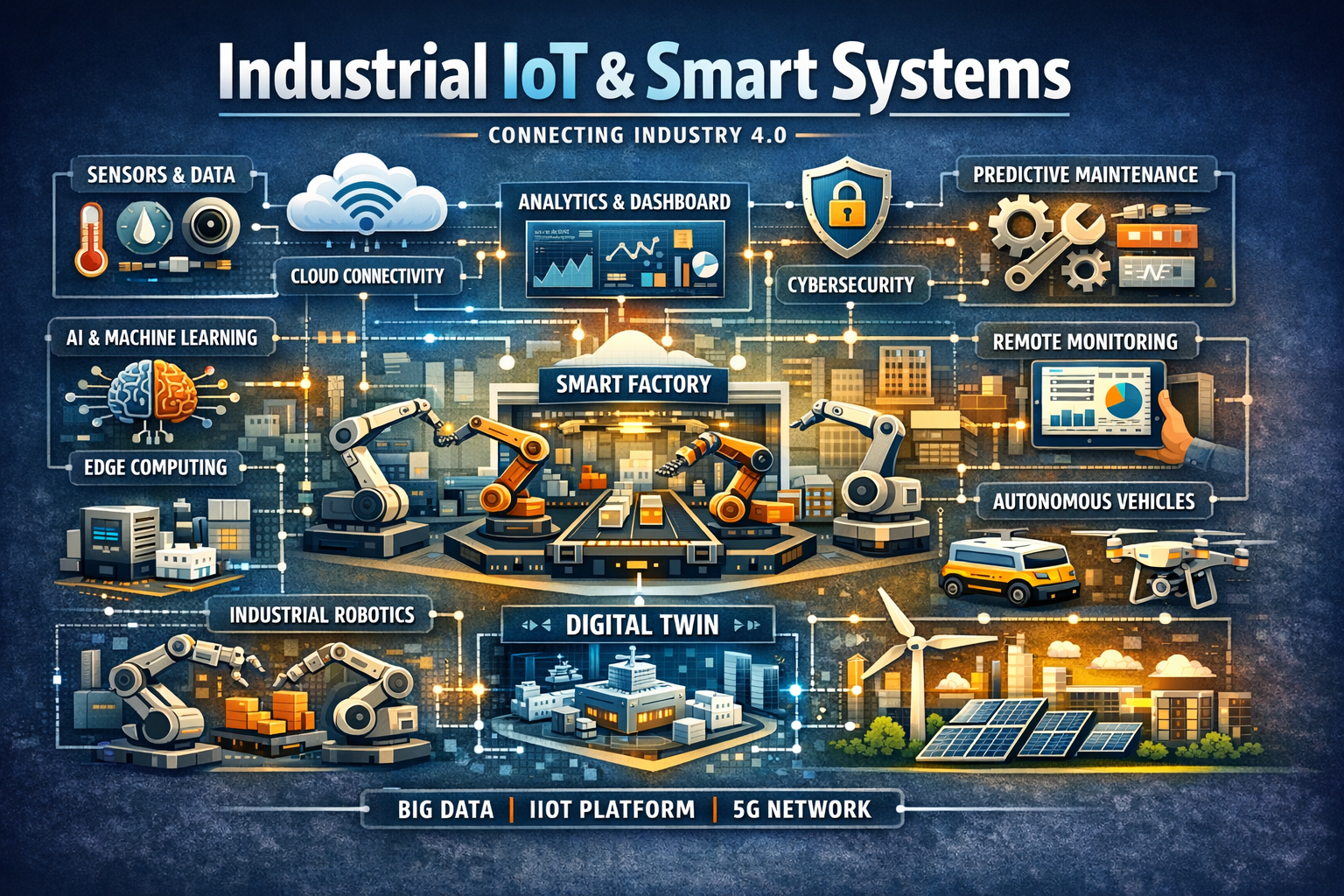
Industrial IoT focuses on applying IoT technologies in industries such as manufacturing, energy, logistics, and transportation. It enables machines, systems, and processes to communicate and operate intelligently.
What is Industrial IoT (IIoT)
IIoT is the integration of IoT with industrial systems to create smart and automated operations.
1. Key Features of IIoT
IIoT systems have unique features that make industrial operations more efficient.
- Machine Connectivity: Connects machines and devices for real-time communication
- Data-Driven Operations: Uses data for decision-making and optimization
- Automation: Reduces manual intervention in industrial processes
- Real-Time Monitoring: Tracks system performance continuously
Example: Sensors monitor machine performance in a factory.
What are Smart Systems in IIoT
Smart systems in Industrial IoT (IIoT) are advanced, intelligent systems that use connected devices, sensors, data analytics, and automation to perform operations efficiently with minimal human intervention. These systems continuously learn from data and improve performance, making industrial processes faster, smarter, and more reliable.
Characteristics of Smart Systems
Smart systems have unique capabilities that make them intelligent and adaptive in industrial environments.
1. Self-Monitoring
Smart systems continuously track system performance, machine health, and environmental conditions using sensors and real-time data. This allows early detection of issues and ensures smooth operation.
2. Self-Optimization
These systems automatically improve efficiency by adjusting operations based on data analysis. They optimize production processes, reduce waste, and enhance overall performance without manual input.
3. Self-Healing
Smart systems can detect faults or failures and take corrective actions automatically. They may restart processes, switch to backup systems, or alert maintenance teams to minimize downtime.
4. Adaptive Behavior
Smart systems adjust their behavior based on changing conditions and real-time data. This allows them to respond dynamically to demand, environmental changes, or system performance.
Example: A smart factory automatically adjusts production speed and resources based on customer demand and machine performance.
Applications of IIoT and Smart Systems
IIoT and smart systems are widely used across various industrial sectors to improve efficiency, productivity, and decision-making.
1. Smart Manufacturing
Smart manufacturing uses IIoT systems to automate production and improve quality.
- Automated Production Lines: Machines and robots operate with minimal human intervention, increasing speed and accuracy.
- Quality Control: AI-powered systems detect defects and ensure consistent product quality.
- Production Optimization: Real-time data helps optimize processes, reduce waste, and improve output.
Example: Robots assemble products in factories with high precision and consistency.
2. Predictive Maintenance
Predictive maintenance uses sensor data and analytics to monitor equipment health and prevent failures.
- Machine Monitoring: Sensors track vibration, temperature, and performance of machines.
- Failure Prediction: Data analysis identifies patterns that indicate potential breakdowns.
- Reduced Downtime: Maintenance is performed before failures occur, avoiding unexpected disruptions.
Example: A machine sends an alert to maintenance teams when it detects unusual vibration patterns.
3. Energy Management
Smart systems help industries monitor and optimize energy usage for better efficiency.
- Energy Monitoring: Track energy consumption across machines and systems.
- Optimization: Adjust operations to reduce energy waste and improve efficiency.
- Cost Savings: Lower energy consumption leads to reduced operational costs.
Example: A factory automatically adjusts lighting and machine usage to minimize electricity consumption.
4. Supply Chain and Logistics
IIoT enhances supply chain operations by improving tracking, inventory, and delivery systems.
- Real-Time Tracking: Monitor the location and condition of goods during transportation.
- Inventory Management: Automatically update stock levels and avoid shortages or overstocking.
- Route Optimization: Use data to select the fastest and most efficient delivery routes.
Example: Companies track shipments using IoT-enabled devices to ensure timely and secure delivery.
Benefits of IIoT and Smart Systems
Industrial IoT (IIoT) and smart systems provide powerful advantages in industrial environments by improving automation, efficiency, and decision-making. These systems enable industries to operate smarter and more effectively.
1. Improved Efficiency
IIoT automates industrial processes and reduces reliance on manual operations.
- Process Automation: Machines perform tasks automatically with minimal human intervention
- Operational Efficiency: Streamlines workflows and reduces delays
- Time Optimization: Faster execution of industrial tasks
This leads to smoother and more efficient industrial operations.
2. Cost Reduction
IIoT helps industries reduce costs through optimization and predictive maintenance.
- Reduced Maintenance Costs: Detect issues early to prevent expensive breakdowns
- Optimized Resource Usage: Efficient use of energy, materials, and labor
- Lower Operational Costs: Minimizes waste and unnecessary expenses
This improves profitability and cost efficiency.
3. Enhanced Safety
IIoT improves workplace safety by monitoring conditions and preventing risks.
- Hazard Monitoring: Detects unsafe conditions in real time
- Accident Prevention: Alerts workers and systems before incidents occur
- Worker Safety: Reduces exposure to dangerous environments
This creates a safer industrial workplace.
4. Better Decision Making
IIoT enables data-driven decision-making using real-time insights.
- Real-Time Data: Continuous monitoring of system performance
- Informed Decisions: Accurate insights improve planning and operations
- Predictive Analysis: Helps anticipate future issues
This enhances strategic and operational decision-making.
5. Increased Productivity
IIoT improves production efficiency and output quality.
- Optimized Processes: Improves manufacturing workflows
- Higher Output Quality: Reduces defects and errors
- Faster Production: Increases overall productivity
This results in better performance and higher output.
Challenges in IIoT Implementation
Despite its advantages, IIoT implementation faces several challenges that industries must address.
1. Security Risks
Industrial systems are vulnerable to cyber threats and attacks.
- Cybersecurity Threats: Risk of hacking and data breaches
- System Vulnerabilities: Weak security in connected devices
- Need for Protection: Strong security measures are required
Security is critical for protecting industrial data and operations.
2. High Implementation Cost
Setting up IIoT systems requires significant investment.
- Infrastructure Cost: Sensors, devices, and networking systems
- Deployment Cost: Installation and system integration
- Maintenance Cost: Continuous monitoring and updates
Cost can be a barrier for small and medium industries.
3. Integration Complexity
Integrating IIoT with existing systems can be challenging.
- Legacy Systems: Older systems may not support IoT integration
- Compatibility Issues: Different technologies may not work together
- System Complexity: Managing multiple components
Proper planning is required for smooth integration.
4. Data Management
IIoT generates large volumes of data that must be handled efficiently.
- Big Data Handling: Continuous data generation from machines
- Storage Challenges: Requires scalable storage solutions
- Processing Complexity: Real-time data analysis is demanding
Efficient data management is essential for system performance.
Future of IIoT and Smart Systems
The future of IIoT focuses on advanced automation, intelligence, and real-time operations.
1. AI Integration
Artificial Intelligence will enhance IIoT systems with intelligent capabilities.
- Smart Decision Making: Automated and intelligent system responses
- Predictive Analytics: Forecast failures and optimize processes
- Automation Enhancement: Reduce human involvement
AI will make industrial systems more intelligent and adaptive.
2. Edge Computing
Edge computing enables faster processing by handling data closer to devices.
- Real-Time Processing: Immediate data analysis near machines
- Reduced Latency: Faster response times
- Less Cloud Dependence: Improves efficiency
This supports critical industrial applications.
3. Autonomous Systems
IIoT is moving toward fully automated industrial environments.
- Self-Operating Machines: Machines work without human control
- Automated Factories: End-to-end automation in production
- Improved Efficiency: Reduced errors and faster operations
Autonomous systems will revolutionize industrial processes.
4. Digital Twins
Digital twins create virtual models of physical systems.
- Simulation: Test and optimize systems virtually
- Performance Monitoring: Track real-time system behavior
- Optimization: Improve efficiency and reduce downtime
Digital twins enhance planning and operational efficiency.
Conclusion
Industrial IoT (IIoT) and Smart Systems are transforming industries by enabling automation, real-time monitoring, and intelligent decision-making. By integrating IoT with advanced technologies like AI and edge computing, industries can achieve higher efficiency, safety, and productivity. Despite challenges, IIoT continues to drive innovation and shape the future of industrial operations.
Industrial IoT (IIoT) and Smart Systems – Subtopics
Explore Industrial IoT (IIoT) and Smart Systems to understand how connected machines, sensors, and automation transform modern industries. Learn how real-time monitoring, predictive maintenance, and data-driven operations improve efficiency, productivity, and system reliability.
- Industrial IoT (IIoT) Explained for Beginners
- Difference Between IoT and IIoT Explained
- Key Components of Industrial IoT Systems
- How IIoT Works in Smart Manufacturing
- Smart Factories Using IIoT Technology
- Automation in Industry Using IoT Systems
- Predictive Maintenance in Industrial IoT
- Real-Time Monitoring in IIoT Applications
- IoT Sensors in Industrial Automation Systems
- Edge Computing in Industrial IoT Systems
- Industrial IoT Communication Protocols Explained
- SCADA Systems and IIoT Integration
- Industrial IoT Security Challenges and Solutions
- Benefits of IIoT in Manufacturing Industry
- Smart Energy Management Using IIoT Systems
- Industrial IoT Use Cases and Real World Examples
- Challenges in IIoT Implementation Explained
- Digital Transformation Using Industrial IoT
- AI and Machine Learning in IIoT Systems
- Future Trends in Industrial IoT and Smart Systems