












IoT Security and Privacy
IoT Security and Privacy focus on protecting connected devices, data, and users from cyber threats and unauthorized access. As IoT systems collect and transmit sensitive information, ensuring strong security and privacy is essential for safe and reliable operations.
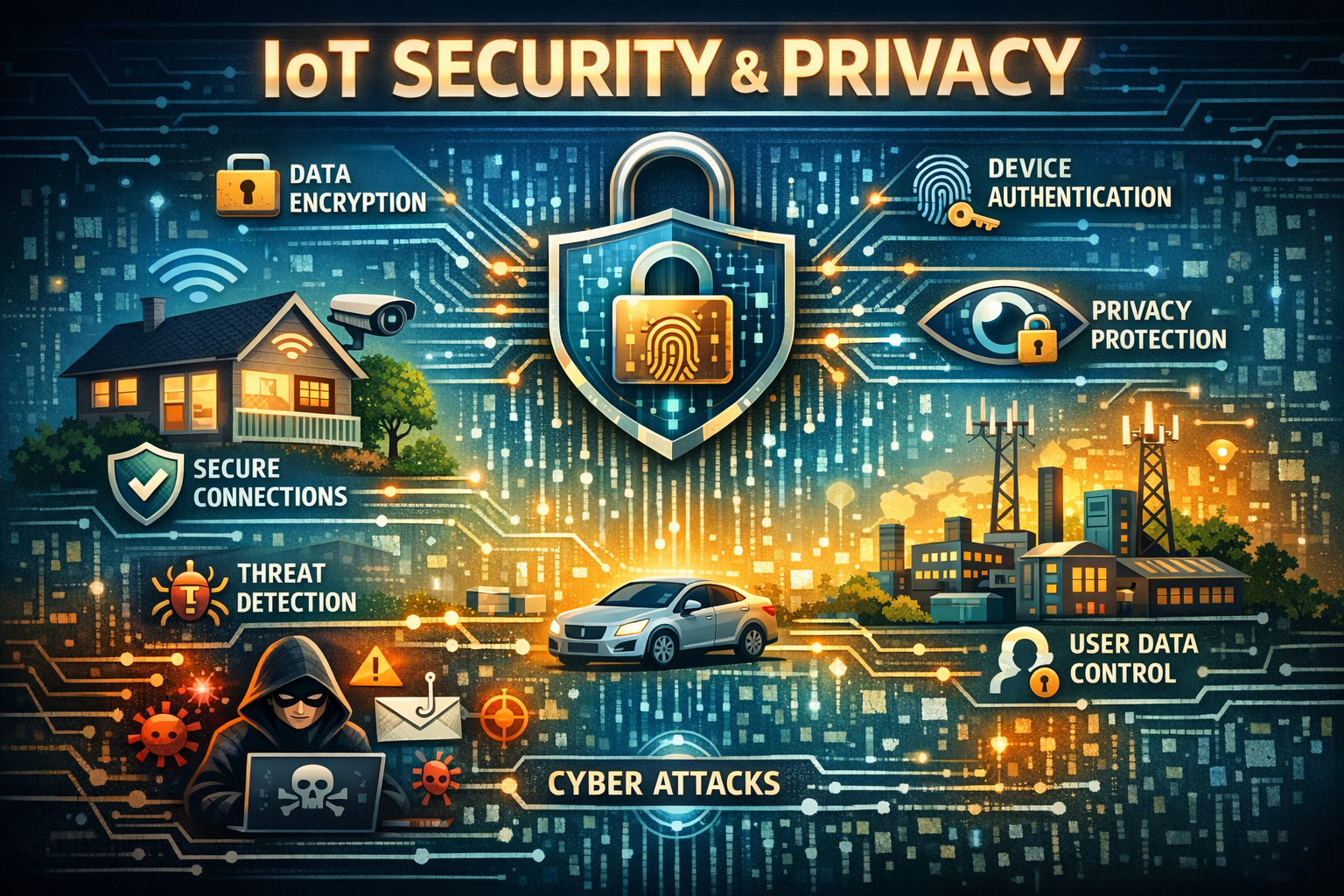
IoT devices continuously generate and exchange data, often including personal or critical information. Without proper security measures, these systems can be vulnerable to attacks, data breaches, and misuse.
IoT Security
IoT security involves protecting devices, networks, and data from cyber threats and unauthorized access.
1. Device Security
Securing individual IoT devices is the first step in building a safe system.
- Secure Hardware: Use trusted and tamper-resistant devices
- Firmware Updates: Regular updates to fix vulnerabilities
- Access Control: Restrict unauthorized device access
Example: A smart camera requires a password and regular firmware updates.
2. Network Security
Network security protects data during transmission between devices and systems.
- Encryption: Protect data while it is being transmitted
- Secure Protocols: Use HTTPS, MQTT with TLS
- Firewalls: Prevent unauthorized network access
Example: Data sent from sensors to the cloud is encrypted to prevent interception.
3. Data Security
Data security ensures that stored and processed data remains safe.
- Data Encryption: Protect stored data from unauthorized access
- Data Integrity: Ensure data is not altered or corrupted
- Access Management: Limit data access to authorized users
Example: Health data in a medical IoT system is encrypted and securely stored.
4. Application Security
Applications that interact with IoT systems must also be secure.
- Secure Coding Practices: Prevent vulnerabilities in software
- Authentication Mechanisms: Verify user identity
- Regular Updates: Fix bugs and improve security
Example: A mobile app requires login authentication to control IoT devices.
IoT Privacy
IoT privacy focuses on protecting user data and ensuring responsible data usage.
1. Data Privacy
- Personal Data Protection: Safeguard user information
- Data Minimization: Collect only necessary data
- User Consent: Obtain permission before data collection
Example: A smart device collects only required user data with consent.
2. Data Ownership
- User Control: Users should control their data
- Transparency: Clear information about data usage
- Access Rights: Users can view and manage their data
3. Data Anonymization
- Remove Personal Identifiers: Protect user identity
- Secure Sharing: Share data without exposing sensitive details
Example: Data used for analytics is anonymized to protect user identity.
Common IoT Security Threats
IoT systems face multiple security threats due to their connectivity, large-scale deployment, and data exchange. Understanding these threats helps in building secure and resilient systems.
1. Unauthorized Access
Unauthorized access occurs when attackers gain control over IoT devices or systems.
- Hacker Access: Attackers exploit weak authentication mechanisms
- Weak Passwords: Default or simple passwords increase vulnerability
- Device Control Risk: Hackers may take control of connected devices
This can lead to misuse of devices and data.
2. Data Breaches
Data breaches involve the exposure or theft of sensitive information.
- Sensitive Data Exposure: Personal or critical data can be stolen
- Lack of Encryption: Unsecured data transmission increases risk
- Privacy Violations: User information may be misused
Strong data protection is essential to prevent breaches.
3. Malware Attacks
Malware attacks infect IoT devices with malicious software.
- Malicious Programs: Harmful code disrupts device operations
- System Damage: Devices may malfunction or stop working
- Botnet Creation: Infected devices can be used for large-scale attacks
This affects system reliability and performance.
4. Denial of Service (DoS) Attacks
DoS attacks overload IoT systems with excessive traffic.
- System Overload: High traffic makes systems slow or unresponsive
- Service Disruption: Users cannot access services
- Network Congestion: Affects overall system performance
These attacks can disrupt critical IoT services.
Best Practices for IoT Security and Privacy
Implementing best practices ensures that IoT systems remain secure, reliable, and privacy-focused.
1. Strong Authentication
Authentication ensures that only authorized users and devices can access the system.
- Secure Passwords: Use strong and unique passwords
- Multi-Factor Authentication (MFA): Adds an extra layer of security
- Identity Verification: Ensures trusted access
2. Data Encryption
Encryption protects data during transmission and storage.
- Secure Communication: Encrypt data using protocols like TLS
- Data Protection: Prevents unauthorized access to sensitive information
- End-to-End Security: Ensures complete data safety
3. Regular Updates
Regular updates help fix vulnerabilities and improve system security.
- Firmware Updates: Keep devices up to date
- Security Patches: Fix known vulnerabilities
- System Improvements: Enhance performance and protection
4. Secure Network Design
A secure network reduces the risk of unauthorized access and attacks.
- Firewalls: Block unauthorized traffic
- Intrusion Detection Systems: Monitor suspicious activities
- Network Monitoring: Track system behavior
5. Privacy by Design
Privacy should be integrated into IoT systems from the beginning.
- Minimal Data Collection: Collect only necessary data
- Transparency: Inform users about data usage
- User Control: Allow users to manage their data
Challenges in IoT Security and Privacy
IoT security faces several challenges due to system diversity and complexity.
1. Limited Device Resources
- Low Processing Power: Difficult to implement advanced security
- Memory Constraints: Limits security features
- Energy Limitations: Affects continuous protection
2. Lack of Standardization
- No Universal Standards: Different devices follow different security practices
- Inconsistent Security: Varying levels of protection
- Integration Issues: Difficult to ensure uniform security
3. Large Attack Surface
- Many Connected Devices: Increases entry points for attackers
- Distributed Systems: Hard to secure all components
- Complex Networks: More vulnerabilities
4. User Awareness
- Weak Security Practices: Users may not follow best practices
- Poor Configurations: Misconfigured devices increase risks
- Lack of Knowledge: Limited awareness of security threats
Importance of IoT Security and Privacy
Ensuring security and privacy is essential for successful IoT implementation.
- Protects Data: Prevents unauthorized access and breaches
- Builds Trust: Increases user confidence in IoT systems
- Ensures Compliance: Meets legal and regulatory requirements
- Supports Reliability: Maintains stable and secure operations
Conclusion
IoT Security and Privacy are critical for protecting connected systems and user data in modern IoT environments. By addressing common threats and implementing best practices such as strong authentication, encryption, and secure design, organizations can build safe and reliable IoT solutions. As IoT continues to expand, maintaining security and privacy will remain a top priority.
IoT Security and Privacy – Subtopics
Explore IoT Security and Privacy to understand how connected devices protect data, ensure safe communication, and prevent cyber threats. Learn key techniques like encryption, authentication, and access control to build secure and reliable IoT systems.
- IoT Security Explained for Beginners
- Importance of Security in IoT Systems
- Common Security Threats in IoT Devices
- IoT Privacy Issues and Data Protection
- Types of IoT Cyber Attacks Explained
- IoT Device Authentication and Authorization Methods
- Encryption Techniques in IoT Security Systems
- Network Security in IoT Environments Explained
- Cloud Security for IoT Applications
- Edge Security in IoT Systems Explained
- Secure Communication Protocols in IoT
- IoT Security Best Practices and Guidelines
- Data Privacy Regulations in IoT Systems
- IoT Security Challenges and Solutions Explained
- Firmware and Software Updates in IoT Security
- IoT Security Testing and Risk Assessment
- Blockchain in IoT Security Applications
- AI-Based IoT Security Systems Explained
- Real World IoT Security Breaches and Lessons
- Future Trends in IoT Security and Privacy