












IoT Data Processing, Edge, and Fog Computing
IoT data processing, edge computing, and fog computing are essential components that enable efficient handling of data generated by IoT devices. These technologies ensure faster decision-making, reduced latency, and optimized system performance by processing data at different levels.
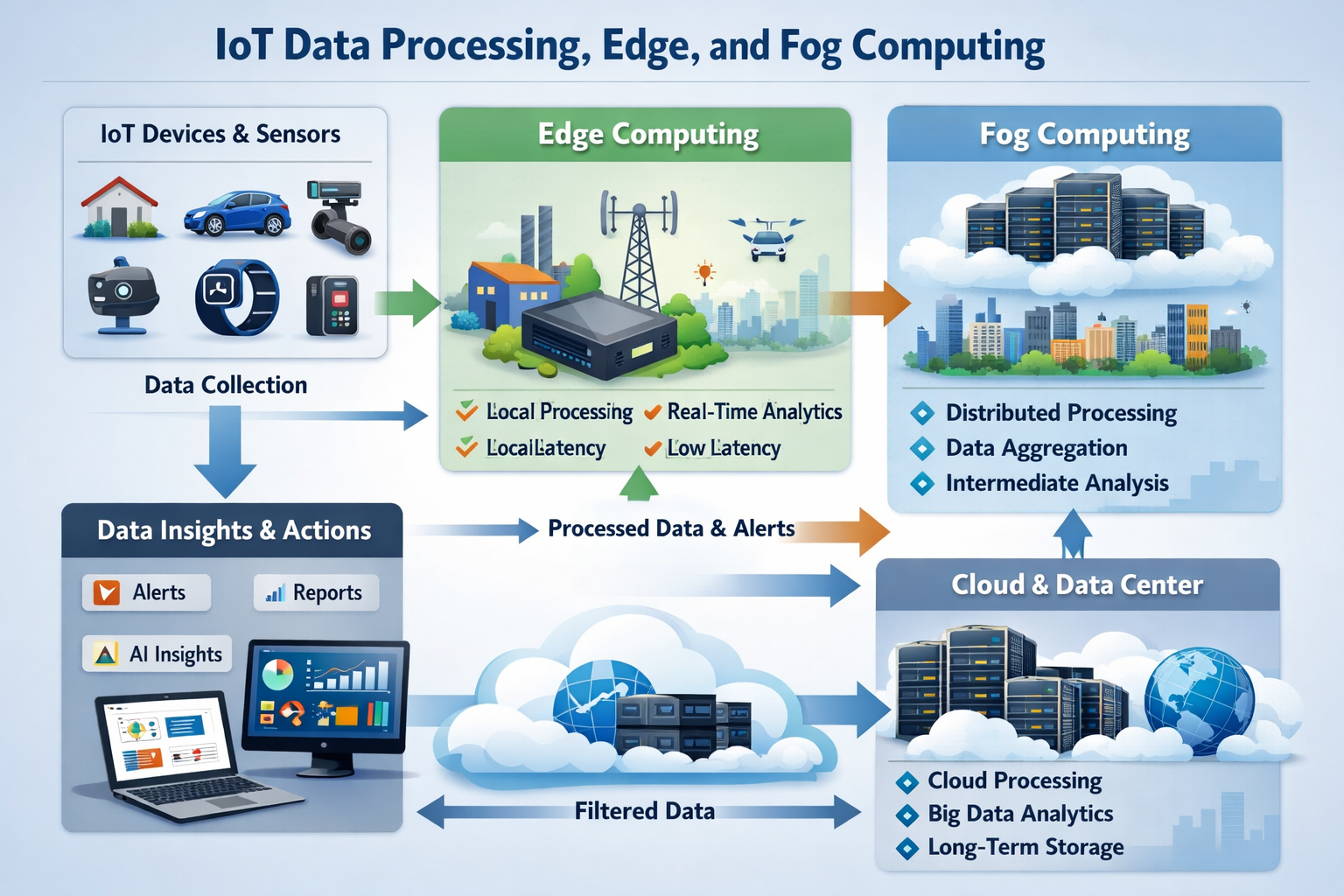
What Is IoT Data Processing?
IoT data processing refers to the transformation of raw data collected from devices into meaningful insights. It involves analyzing, filtering, and interpreting data to support automation and intelligent decision-making.
1. Data Collection
IoT devices such as sensors gather real-time data from the environment, including temperature, humidity, motion, and pressure. This raw data is the starting point of the processing cycle.
2. Data Filtering and Preprocessing
Before analysis, data is cleaned and filtered to remove unnecessary or incorrect information. This improves accuracy and reduces processing load.
3. Data Analysis
Data is analyzed using algorithms and analytics tools to extract useful patterns, trends, and insights. This step enables systems to understand and respond intelligently.
4. Decision Making
Based on analyzed data, the system makes decisions such as triggering alerts, activating devices, or adjusting system behavior automatically.
5. Data Storage
Processed data is stored in databases or cloud systems for future reference, reporting, and advanced analytics.
Types of IoT Data Processing
IoT data can be processed at different locations depending on system requirements and performance needs.
1. Cloud Processing
Cloud processing handles large volumes of data in centralized cloud servers.
- High Processing Power: Suitable for complex analytics
- Scalability: Handles massive data from multiple devices
- Centralized Storage: Easy access and management
2. Edge Processing
Edge processing occurs near or on the IoT devices themselves.
- Low Latency: Faster response times
- Reduced Bandwidth Usage: Less data sent to cloud
- Real-Time Actions: Immediate decision-making
3. Fog Processing
Fog computing acts as an intermediate layer between edge devices and the cloud.
- Distributed Processing: Data processed across multiple nodes
- Improved Efficiency: Reduces load on cloud systems
- Balanced Performance: Combines benefits of edge and cloud
What Is Edge Computing in IoT?
Edge computing is a technology where data is processed directly at or near the source device instead of being sent to a central cloud.
1. Local Data Processing
Data is processed within the device or a nearby edge server, enabling quick analysis and response.
2. Real-Time Decision Making
Edge computing supports immediate actions, which is critical for time-sensitive applications like industrial automation and autonomous systems.
3. Reduced Latency
Since data does not travel long distances to the cloud, delays are minimized, improving system performance.
What Is Fog Computing in IoT?
Fog computing extends cloud computing by introducing a processing layer between edge devices and the cloud.
1. Intermediate Processing Layer
Fog nodes process data closer to the source but not directly on the device, balancing workload between edge and cloud.
2. Distributed Architecture
Data is processed across multiple fog nodes, improving efficiency and reducing bottlenecks.
3. Improved Network Performance
Fog computing reduces the amount of data sent to the cloud, optimizing bandwidth usage and improving overall system performance.
Key Features of Edge and Fog Computing
These technologies enhance IoT systems by improving speed, efficiency, and reliability.
1. Low Latency
Processing data closer to the source ensures faster response times for real-time applications.
2. Bandwidth Optimization
Only necessary data is sent to the cloud, reducing network congestion and costs.
3. Real-Time Analytics
Immediate data processing enables quick insights and automated actions.
4. Enhanced Reliability
Systems can continue functioning even with limited cloud connectivity.
5. Scalability
Supports growing IoT networks by distributing processing across multiple nodes.
Benefits of IoT Data Processing, Edge, and Fog Computing
These technologies provide several advantages for modern IoT systems.
1. Faster Decision Making
Real-time data processing enables immediate actions and improves system responsiveness.
2. Improved Performance
Distributed processing reduces delays and enhances overall system efficiency.
3. Cost Efficiency
Reducing data transfer to the cloud lowers bandwidth and storage costs.
4. Better Security
Processing sensitive data locally reduces exposure to external threats.
5. Efficient Resource Utilization
Optimizes the use of computing resources across devices, edge nodes, and cloud systems.
Challenges in Edge and Fog Computing
Despite their advantages, these technologies also face certain limitations.
1. Complex System Design
Managing distributed systems across edge, fog, and cloud layers can be complex.
2. Security Concerns
Multiple processing points increase the risk of security vulnerabilities.
3. Limited Processing Power at Edge
Edge devices may have limited computational capabilities compared to cloud servers.
4. Maintenance and Management
Maintaining and updating distributed systems requires additional effort and resources.
5. Standardization Issues
Lack of universal standards can create compatibility challenges across different platforms and devices.
Conclusion
IoT data processing, edge computing, and fog computing work together to create efficient, scalable, and intelligent IoT systems. By distributing data processing across different layers, these technologies reduce latency, improve performance, and enable real-time decision-making, making them essential for modern IoT applications.
IoT Data Processing, Edge, and Fog Computing – Subtopics
Explore IoT Data Processing, Edge, and Fog Computing to understand how data is processed at different layers for faster and more efficient IoT systems. Learn how edge and fog computing reduce latency, improve real-time responses, and optimize data handling in connected environments. Subtopics of IoT Data Processing, Edge, and Fog Computing are listed below
- IoT Data Processing Explained for Beginners
- What Is Edge Computing in IoT Systems
- What Is Fog Computing in IoT Explained
- Cloud vs Edge vs Fog Computing in IoT Comparison
- IoT Data Processing Workflow Step by Step
- Real-Time Data Processing in IoT Applications
- Edge Computing Architecture in IoT Systems
- Fog Computing Architecture and Use Cases
- Benefits of Edge Computing in IoT Systems
- Advantages of Fog Computing in IoT Applications
- Latency Reduction Using Edge and Fog Computing
- IoT Data Filtering and Preprocessing Techniques
- Distributed Computing in IoT Systems Explained
- Edge Analytics vs Cloud Analytics in IoT
- IoT Data Processing Tools and Technologies
- Security Challenges in Edge and Fog Computing
- Scalability in IoT Data Processing Systems
- Real World Examples of Edge and Fog Computing in IoT
- Challenges in IoT Data Processing and Solutions
- Future Trends in Edge and Fog Computing for IoT