












IoT Standards, Protocols, and Regulations
IoT Standards, Protocols, and Regulations define how devices communicate, ensure interoperability, and maintain security and compliance in IoT systems. These elements are essential for building reliable, scalable, and secure IoT solutions.
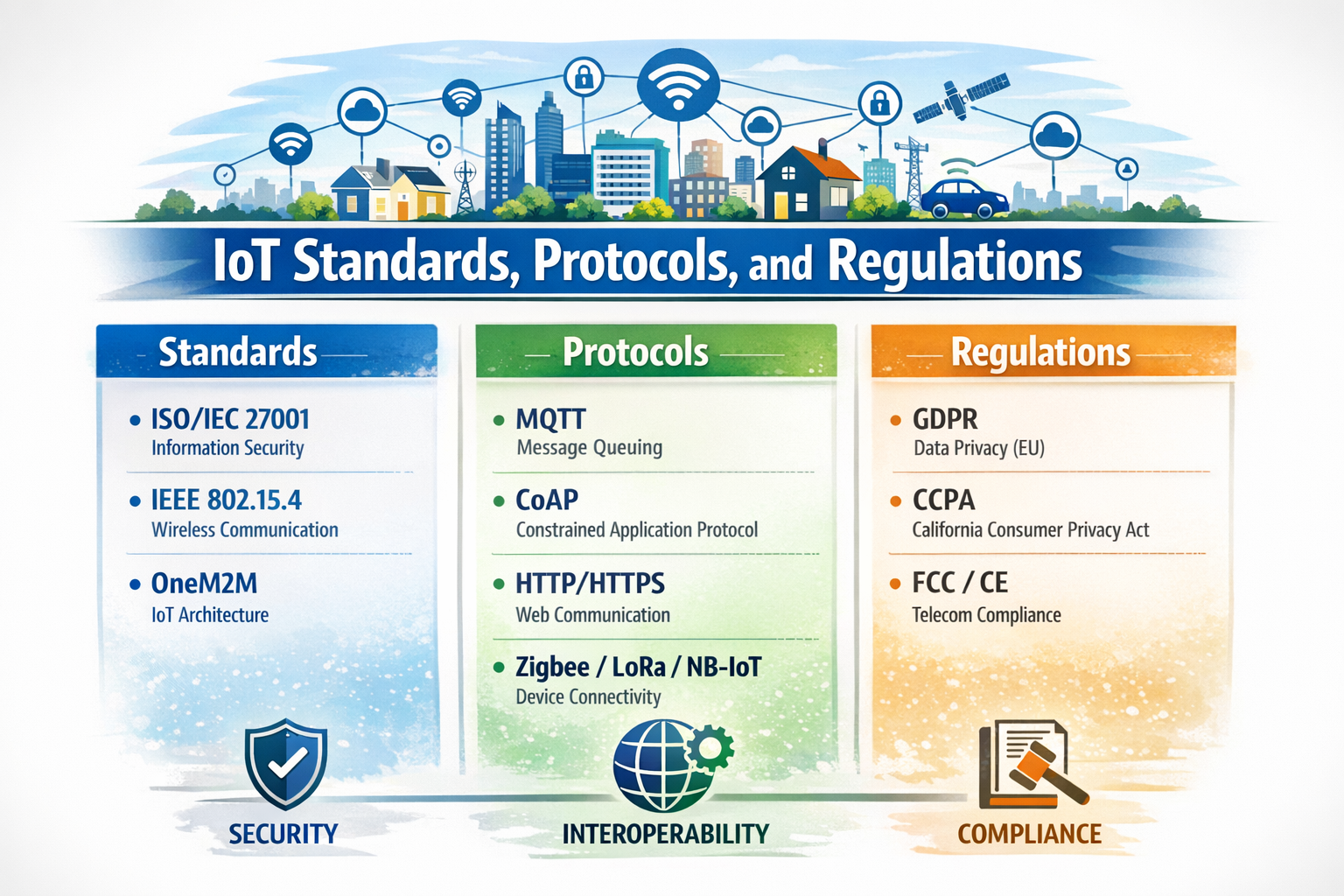
IoT systems involve multiple devices, networks, and platforms. Standards and protocols provide common rules that allow these components to work together smoothly and securely.
IoT Standards
IoT standards are guidelines that ensure compatibility, interoperability, and quality across different devices and systems. They allow devices from different manufacturers to work together smoothly and create a unified IoT ecosystem.
1. Importance of IoT Standards
IoT standards play a critical role in building reliable and scalable systems.
- Interoperability: Devices from different manufacturers can communicate and work together
- Scalability: Systems can grow easily by adding new devices
- Reliability: Ensures consistent performance across the system
- Security: Provides guidelines for secure communication and data protection
Standards help create a stable, efficient, and globally compatible IoT environment.
2. Common IoT Standards
Several international organizations define standards for IoT systems.
- IEEE Standards: Focus on networking, communication protocols, and wireless technologies
- ISO Standards: Ensure quality, safety, and system management practices
- ITU Standards: Govern global communication and telecommunication systems
These standards ensure consistency and global interoperability in IoT systems.
IoT Communication Protocols
IoT communication protocols define how data is transmitted between devices, networks, and applications. They ensure efficient and secure communication within IoT systems.
1. Application Layer Protocols
These protocols manage communication between IoT devices and applications.
- MQTT (Message Queuing Telemetry Transport): Lightweight and efficient for low-bandwidth environments
- HTTP/HTTPS: Widely used for web-based communication and data exchange
- CoAP (Constrained Application Protocol): Designed for low-power and resource-constrained devices
2. Network and Transport Protocols
These protocols handle the transmission of data over networks.
- TCP/IP: Standard protocol suite for reliable internet communication
- UDP: Faster but less reliable communication for time-sensitive data
- IPv6: Supports a large number of connected devices with expanded addressing
3. Connectivity Protocols
These protocols enable wireless communication between IoT devices.
- Wi-Fi: High-speed communication for short to medium range
- Bluetooth: Short-range, low-power communication
- Zigbee: Energy-efficient protocol for smart devices and home automation
- LoRaWAN: Long-range, low-power communication for wide-area IoT networks
IoT Regulations
IoT regulations are rules and policies that ensure safety, privacy, and legal compliance in IoT systems.
1. Importance of IoT Regulations
Regulations help protect users and ensure responsible use of IoT technologies.
- Data Privacy: Protects personal and sensitive user data
- Security Compliance: Ensures safe and secure system operation
- Legal Requirements: Meets government and industry standards
- User Trust: Builds confidence in IoT systems
2. Key Regulatory Areas
IoT regulations focus on several important areas.
- Data Protection Laws: Control how data is collected, stored, and used
- Cybersecurity Regulations: Ensure systems are protected from threats
- Device Certification: Approves devices for safe and standard-compliant use
3. Examples of IoT Regulations
Some well-known regulations and standards guide IoT systems globally.
- GDPR (General Data Protection Regulation): Protects personal data and privacy in the European Union
- HIPAA: Ensures privacy and security of healthcare data
- ISO/IEC Standards: Provide guidelines for information security and system quality
Role of Standards and Protocols in IoT
Standards and protocols play a vital role in IoT system design and operation by ensuring smooth communication, security, and scalability across connected devices and platforms.
1. Interoperability
Interoperability allows devices from different manufacturers and platforms to work together seamlessly.
- Cross-Device Communication: Enables interaction between diverse devices and systems
- Technology Integration: Supports integration of multiple technologies in one ecosystem
This ensures a unified and connected IoT environment.
2. Security
Standards and protocols provide a framework for secure data transmission and system protection.
- Secure Communication: Protects data during transmission using encryption
- Threat Protection: Reduces risks of cyber attacks and unauthorized access
Security is essential for maintaining trust and data integrity in IoT systems.
3. Efficiency
Efficient communication protocols optimize data transfer and system performance.
- Optimized Data Flow: Ensures fast and reliable communication
- Reduced Congestion: Minimizes network traffic and delays
This improves overall system performance and responsiveness.
4. Scalability
Standards and protocols support system growth and expansion.
- Easy Expansion: Allows addition of new devices without major changes
- Flexible Architecture: Supports increasing data and device load
Scalability ensures long-term usability of IoT systems.
Challenges in IoT Standards and Regulations
Despite their importance, IoT standards and regulations face several challenges.
1. Lack of Universal Standards
The absence of a single global standard creates compatibility issues.
- Multiple Standards: Different organizations define different standards
- Integration Issues: Devices may not work together easily
- Global Complexity: Difficult to standardize systems worldwide
2. Security Concerns
Security remains a major challenge due to inconsistent implementation.
- Weak Security Practices: Not all devices follow strong security standards
- System Vulnerabilities: Increased risk of cyber attacks
- Data Risks: Sensitive data may be exposed
3. Regulatory Complexity
Different countries and industries have different regulatory requirements.
- Regional Differences: Regulations vary across regions
- Compliance Challenges: Difficult for global IoT systems to meet all rules
- Legal Barriers: Complex approval and certification processes
Conclusion
IoT Standards, Protocols, and Regulations are essential for ensuring interoperability, security, efficiency, and scalability in IoT systems. While challenges such as lack of universal standards, security risks, and regulatory complexity exist, following established guidelines helps organizations build reliable and secure IoT solutions. Understanding these concepts is crucial for developing modern IoT applications and ensuring compliance in a rapidly evolving technological landscape.
IoT Standards, Protocols, and Regulations – Subtopics
Explore IoT Standards, Protocols, and Regulations to understand how devices communicate securely and efficiently across different platforms and networks. Learn about key communication protocols, industry standards, and compliance requirements that ensure interoperability, security, and reliable IoT operations.
- IoT Standards Explained for Beginners
- Importance of Standards in IoT Systems
- Top IoT Communication Protocols List and Comparison
- MQTT Protocol in IoT Explained with Examples
- HTTP vs MQTT vs CoAP in IoT Comparison
- CoAP Protocol in IoT Systems Explained
- Zigbee vs Bluetooth vs WiFi in IoT Connectivity
- LPWAN Technologies in IoT (LoRaWAN, NB-IoT)
- IoT Network Protocol Stack Explained
- Wireless Communication Standards in IoT
- IoT Interoperability and Standardization Challenges
- Security Standards in IoT Systems Explained
- Data Protection and Privacy Regulations in IoT
- GDPR and IoT Data Privacy Compliance Explained
- IoT Regulatory Frameworks and Compliance Requirements
- Industrial IoT Standards and Protocols Overview
- IoT Device Certification and Compliance Process
- Open Standards vs Proprietary Protocols in IoT
- Future Trends in IoT Standards and Regulations
- Best Practices for IoT Protocol Selection