












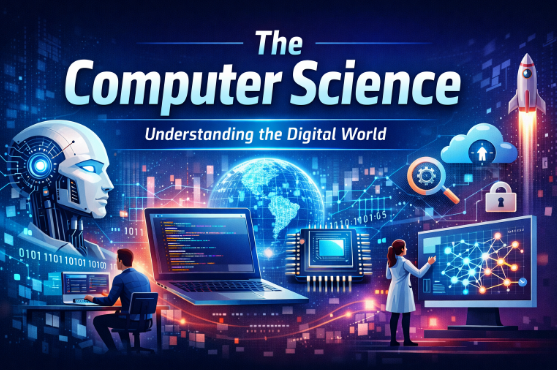
The Computer Science: A Comprehensive Overview
Computer Science is a foundational discipline that supports the digital systems shaping the modern world. From basic computing devices to complex artificial intelligence systems, computer science provides the principles that make technology functional, reliable, and efficient. It is not limited to writing code; instead, it focuses on understanding how information is processed, stored, and transformed to solve real-world problems.
As technology continues to evolve, computer science has become an essential field of study, influencing nearly every industry and profession.
Understanding Computer Science
Computer Science is the systematic study of computation, algorithms, and computer systems. It explores how problems can be broken down into logical steps that a machine can execute accurately. The field emphasizes problem-solving, analytical thinking, and efficiency rather than the simple use of software applications.
This discipline combines mathematics, logic, and engineering concepts to design systems that can handle large amounts of data, perform complex calculations, and automate tasks with minimal human intervention.
Origins and Development of Computer Science
The development of computer science began long before modern computers existed. Early mathematical theories and mechanical devices laid the groundwork for automated calculation. During the 20th century, the invention of electronic computers transformed these theories into practical machines capable of performing millions of operations per second.
As computers became more powerful, the need to organize and improve their functionality led to the emergence of computer science as an independent academic field. Over time, it expanded beyond hardware design to include software development, networking, artificial intelligence, and data analysis.
Key Areas Within Computer Science
Computer science consists of several interconnected areas, each addressing a specific aspect of computing.
Algorithms and Logical Problem Solving
Algorithms form the core of computer science. They provide structured methods for solving problems efficiently. A well-designed algorithm ensures accuracy, reduces processing time, and conserves system resources. Logical problem-solving skills developed in this area are applicable beyond computing, making them valuable in many professions.
Programming and Application Development
Programming involves writing instructions that allow computers to perform specific tasks. Developers use programming languages to build applications, websites, and software systems. This area also includes testing and debugging to ensure programs work as intended and remain reliable over time.
Computer Systems and Architecture
This branch focuses on how hardware components interact with software. It covers processors, memory, operating systems, and system performance. Understanding computer architecture helps professionals optimize systems and ensure smooth operation across different platforms.
Data Management and Databases
Modern organizations rely heavily on data. Computer science provides techniques for storing, managing, and retrieving information efficiently. Databases are designed to maintain data accuracy, security, and accessibility, making them critical for decision-making and business operations.
Artificial Intelligence and Intelligent Systems
Artificial intelligence aims to create systems capable of performing tasks that normally require human intelligence. These include learning, reasoning, and decision-making. AI applications are now widely used in healthcare, finance, education, and customer service, demonstrating the growing impact of computer science.
Networks and Information Security
Computer networks allow devices to communicate and share data across the globe. Alongside networking, information security plays a vital role in protecting systems from unauthorized access and cyber threats. As digital dependence increases, security has become one of the most important areas of computer science.
Role of Computer Science in Everyday Life
Computer science affects daily life in ways that often go unnoticed. Online communication, digital payments, navigation systems, and smart devices all rely on computational principles. In healthcare, computer science supports medical imaging, patient records, and disease analysis. In education, it enables online learning platforms and virtual classrooms.
By automating repetitive tasks and improving accuracy, computer science helps individuals and organizations operate more efficiently.
Career Opportunities in Computer Science
Computer science offers diverse career opportunities across multiple industries. Professionals with strong technical and analytical skills are in high demand worldwide. Common career paths include software development, data analysis, cybersecurity, cloud computing, and artificial intelligence engineering.
These roles often provide competitive salaries, flexible working environments, and long-term growth potential, making the computer science an attractive field for students and professionals alike.
Ethical and Social Considerations
With its growing influence, computer science also raises ethical and social concerns. Issues such as data privacy, digital surveillance, and algorithmic bias require careful attention. Responsible development and use of technology are essential to ensure that innovation benefits society without causing harm.
Computer scientists are increasingly expected to consider ethical principles alongside technical efficiency.
The Future of Computer Science
The future of computer science is closely tied to innovation. Emerging fields such as quantum computing, machine intelligence, and sustainable computing are expected to reshape technology in the coming decades. As these advancements develop, computer science will remain central to solving complex global challenges.
Education and research in this field will continue to play a crucial role in preparing future generations for a technology-driven world.
Conclusion
Computer Science is a dynamic and essential discipline that underpins modern technology. It extends beyond programming to include problem-solving, system design, and ethical responsibility. As digital systems continue to expand, the importance of computer science will only grow, shaping how individuals, organizations, and societies interact with technology.