












Buying and Selling in the Digital Age: New Tools for a Smarter Real Estate Journey
The Power of Data: AI and Big Data in Property Markets

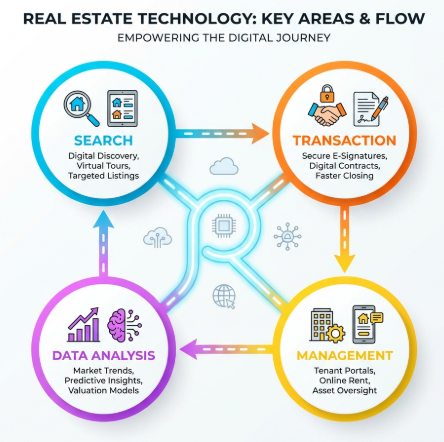
The real estate world is changing fast. For many years, buying or selling a home was a complex process. Now, technology is making it much simpler and smarter. This big change is thanks to what we call real estate technology, or PropTech. It is changing how we find, manage, and transact properties.
In this extensive guide, we will explore these new tools. We’ll see how they empower both buyers and sellers. We will dive into the key trends shaping our industry. These include smart data use, faster transactions, and better client experiences. Understanding these innovations helps us steer the market better. For instance, a modern real estate technology platform centralizes search and information for buyers, making the journey smoother. Our goal is to show you how these tools create a more efficient and enjoyable real estate experience for everyone.
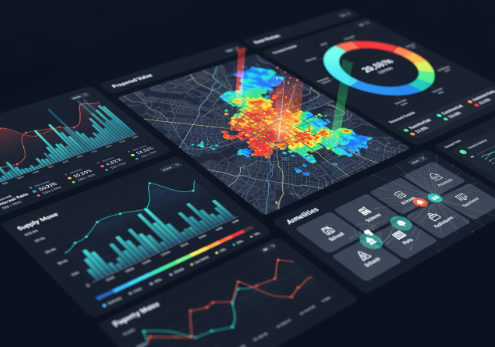
The digital age has ushered in an unprecedented era of data availability, and the real estate sector is using this power to make more informed decisions. At the core of this change is big data, which refers to the vast, complex datasets generated from myriad sources. In real estate, these databases can encompass everything from historical transaction records, property characteristics, and neighborhood demographics to economic indicators, local amenities, and even tenant preferences. By collecting and processing this wealth of information, real estate professionals can move beyond intuition, making smarter business decisions and gaining a competitive edge.
The application of predictive analytics to these large datasets allows us to forecast market trends with remarkable accuracy. This means anticipating shifts in demand, identifying undervalued properties, and understanding the potential for appreciation or depreciation in specific areas. For buyers, this translates into identifying optimal buying windows and understanding future market conditions.
For sellers, it helps with strategic pricing and timing their market entry. Real estate companies are increasingly leveraging these insights to optimize investment strategies, ensuring their portfolios are resilient and profitable. This data-driven approach is particularly impactful in dynamic markets, helping buyers understand the nuances of growing tech hubs and urban centers.
The Role of Artificial Intelligence in Real Estate Technology
Artificial intelligence (AI) and machine learning (ML) are the engines that transform raw big data into actionable insights. These technologies are rapidly improving real estate workflows and enhancing client services. AI-powered algorithms can analyze thousands of variables simultaneously, identifying patterns and correlations that would be impossible for humans to discern. This capability has revolutionized property valuations, with automated valuation models (AVMs) like Zillow’s Zestimate now providing estimates with impressive accuracy.
The Zestimate’s median error, for example, now hovers just above 3 percent, a significant improvement from its early days. As AI technology becomes more powerful, these models become more sophisticated, offering more precise property valuations and market predictions.
Beyond valuations, AI is streamlining numerous aspects of the real estate journey. Machine learning algorithms provide automatic, personalized client recommendations, matching buyers with properties that genuinely align with their preferences and lifestyles. For agents, AI assists in lead generation by identifying high-potential prospects and automating initial outreach.
Conversational AI, in the form of chatbots and virtual assistants, provides instant responses to client inquiries, handles basic support tasks, and even schedules showings, ensuring clients receive timely information around the clock. Generative AI is also emerging as a powerful tool, capable of drafting compelling property descriptions, marketing copy, and client communications, saving professionals valuable time. New research suggests that generative artificial intelligence (GenAI) could potentially generate between $110 and $180 billion for the real estate industry alone, underscoring its transformative potential.
Using Big Data for Smarter Business Decisions
The strategic utilization of big data is not limited to market analysis; it permeates every facet of real estate operations. For property managers, big data helps understand tenant preferences, optimize building systems, and predict maintenance needs. By analyzing data from smart building sensors, for instance, managers can implement predictive maintenance, addressing issues before they become costly problems. This leads to improved operational efficiency, reduced costs, and improved tenant satisfaction.
In commercial real estate, big data provides insights into everything from foot traffic patterns and demographic shifts to lease expiry dates and rental yield forecasts. This enables investors to make data-backed decisions on property acquisitions, development projects, and portfolio optimization. For example, analyzing consumer spending habits in a particular zip code can inform the viability of a new retail development.
The ability to collect and process more information empowers professionals to tailor their strategies, whether it’s optimizing property portfolios across diverse markets or understanding the specific needs of a local community.
Streamlining the Journey: How Technology Accelerates Transactions
One of the most significant impacts of real estate technology has been the acceleration and simplification of transactions. What once involved mountains of paperwork, numerous in-person meetings, and lengthy waiting periods can now be completed with unprecedented speed and efficiency. This shift is largely driven by workflow automation, digital document management, and innovative business models.
Workflow automation dramatically reduces administrative tasks, freeing up real estate professionals to focus on relationship-building and strategic activities. From initial property search to closing, technology streamlines every step. Digital document management systems allow contracts, disclosures, and other essential paperwork to be accessed, shared, and stored securely online. This eliminates the need for physical copies, reduces errors, and ensures all parties have access to the latest versions. E-signatures, now legally binding in most jurisdictions, further expedite the process, allowing documents to be signed remotely and instantly.
This entire ecosystem contributes to significantly faster closing times, benefiting both buyers eager to move into their new homes and sellers looking for a swift sale.
Emerging business models like iBuying (instant buying) exemplify this acceleration. Companies in this space use technology to make near-instant cash offers on homes, often closing within days or weeks. This provides sellers with unparalleled convenience and certainty, bypassing the traditional listing, showing, and negotiation process. While still a relatively small segment of the market, iBuying is growing rapidly. For example, in 2018, Zillow Offers bought fewer than 700 homes, but it expected to scale that up to 5,000 homes per month by 2024, according to the New York Times. For those seeking quick real estate offers, these tech-driven solutions represent a significant evolution in the transaction landscape.
Enhancing Efficiency with Workflow Automation
Workflow automation is a game-changer for real estate operations, enhancing efficiency and accuracy across the board. By automating repetitive, time-consuming tasks, professionals can redirect their energy toward more strategic, client-facing activities. This includes everything from automated client follow-ups and email campaigns to scheduling showings and generating reports.

Imagine a system that automatically sends personalized follow-up emails after a showing, reminds clients of upcoming deadlines, or generates comprehensive market analysis reports at the click of a button. Such automation minimizes the potential for human error, ensuring consistency and accuracy in all communications and documentation. For instance, studies show that scheduling tool users report up to 33 minutes saved per day on appointment coordination alone.
This reclaimed time can be invaluable, allowing agents to cultivate stronger client relationships, explore new market opportunities, or simply manage a higher volume of transactions without sacrificing service quality. Tools like DocuSign for e-signatures, TransactionDesk for streamlined workflows, and Paperless Pipeline for cloud-based document management are integral to this automated ecosystem.
Blockchain and the Future of Real Estate Technology Records
Blockchain technology, often associated with cryptocurrencies, offers significant benefits for real estate record management. Its decentralized, immutable ledger system provides a secure database where information can be easily updated and made available to multiple parties simultaneously, while maintaining an unchangeable historical record.
The primary advantage of Blockchain in real estate is improved security and transparency. Property titles, deeds, and transaction histories can be recorded on a blockchain, creating a permanent and tamper-proof record. This significantly reduces the risk of fraud, errors, and disputes over ownership. Smart contracts, self-executing agreements stored on the blockchain, can automate aspects of real estate transactions, such as releasing funds once specific conditions are met.
This increases trust, reduces the need for intermediaries, and further accelerates the closing process. Companies like Closinglock and CertifID are already leveraging blockchain-like principles and advanced security protocols to prevent wire fraud and ensure secure sharing of sensitive transaction information, while Endpoint facilitates digital closing processes, bringing all parties together on a transparent platform.
Creating a Superior Client Experience with New Tools
The modern real estate journey is increasingly defined by personalized, immersive, and convenient experiences. Technology is at the forefront of delivering this, changing how clients find, evaluate, and engage with properties. From virtual tours that transcend geographical boundaries to hyper-personalized marketing messages, these innovations are setting new standards for client satisfaction.
Virtual Reality (VR) and Augmented Reality (AR) are revolutionizing property showings, allowing clients to explore homes from anywhere in the world. This is particularly beneficial for remote buyers, investors, or those with busy schedules. Beyond immersive tours, the Internet of Things (IoT) is making homes smarter, with features that improve convenience, security, and energy efficiency.
Mobile accessibility is no longer a luxury but a necessity, given that most clients begin their property search on smartphones. Finally, hyper-personalization ensures that every client interaction is custom to their unique needs and preferences, fostering stronger relationships and more effective marketing. A modern real estate technology platform centralizes search and information for buyers, making the journey smoother and more customized to individual needs.
Immersive Showings with Virtual and Augmented Reality
The days of relying solely on static photos and open houses are rapidly fading. Virtual Reality (VR) and Augmented Reality (AR) are transforming property showings and client experiences by offering deeply immersive, interactive ways to explore properties.
With VR, prospective buyers can take 360-degree virtual tours of homes, walking through rooms, examining details, and getting a true sense of the layout and ambiance – all from the comfort of their couch. This is a game-changer for out-of-state buyers or those with limited time, allowing them to narrow down their choices before committing to in-person visits. AR takes this a step further, allowing clients to visualize furniture placement, see how renovations might look, or even explore neighborhood data overlaid onto their real-world view through a smartphone or tablet.
Tools like Matterport offer advanced features, including measurement tools, automated property descriptions generated from visual data, and social media-ready content, making it easier for agents to create comprehensive digital twins of properties. Other platforms, such as Ricoh Tours and iGuide, offer similar solutions for creating and sharing immersive tours. The impact is clear: properties marketed with professional visualization tools consistently outperform traditional listings, generating 87% more views, selling 31% faster, and achieving up to 9% higher prices than similar listings with standard photography alone.
The Importance of Mobile-First Design and Hyper-Personalization
In today’s mobile-first world, a seamless experience on smartphones and tablets is non-negotiable. With over 60% of all website traffic originating from mobile devices, real estate websites, forms, and communications must be optimized for on-the-go access. This means responsive designs, easy-to-fill mobile forms, and clear, concise digital communications that are readable on smaller screens. Mobile apps specifically designed for real estate also empower clients to search for properties, schedule showings, and communicate with agents anytime, anywhere.
Coupled with mobile accessibility is the rise of hyper-personalization. Unlike traditional personalization, which targets broad segments, hyper-personalization leverages vast amounts of data and AI to create custom materials and experiences for specific individuals. By analyzing client preferences, browsing history, and past interactions, real estate professionals can deliver custom property recommendations, customized marketing messages, and highly relevant content. CRM systems like Follow-Up Boss and Wise Agent play a crucial role here, acting as central hubs for client data.
This level of individualized engagement not only improves marketing strategies but also deepens client trust and satisfaction, making the home-buying or selling journey feel uniquely catered to their needs.
Navigating the Future: Security, Sustainability, and What’s Next
As real estate technology continues to advance rapidly, it brings both immense opportunities and critical challenges. Two areas that demand increasing attention are cybersecurity and sustainability. Protecting sensitive data and transactions is paramount, while integrating environmentally conscious practices into property development and management is becoming a global imperative. Looking ahead, the trajectory of real estate technology suggests a future where these elements are not just add-ons but fundamental components of a smarter, safer, and more responsible industry.
Addressing Cybersecurity in Real Estate Transactions
The digital change of real estate, while offering unparalleled convenience, also introduces significant cybersecurity threats. The financial nature of property transactions makes the industry a prime target for cybercriminals. Common threats include phishing scams, wire fraud, and seller impersonation fraud, which can result in significant financial losses. Indeed, the cost of cybercrime is rising dramatically; since 2017, extreme financial losses have more than quadrupled to $2.5 billion.
To improve data protection, real estate professionals must adopt robust cybersecurity strategies. This includes implementing multi-factor authentication for all accounts, using secure communication channels for sensitive information, and ensuring all data is encrypted both at rest and in transit.
Vetting technology vendors for their security compliance and framed certifications is also crucial. Furthermore, ongoing staff and client education on identifying and avoiding phishing attempts and other scams is essential. The real estate market is highly competitive, and maintaining client trust through stringent security measures is a key differentiator.
The Future Outlook for Real Estate Technology
The future of real estate technology is characterized by continued innovation and deeper integration across all aspects of the industry. We can anticipate even more sophisticated AI integration, leading to hyper-personalized experiences, predictive analytics that forecast market shifts with near-perfect accuracy, and fully automated transaction processes. The role of the real estate professional will evolve, shifting from transactional facilitators to highly skilled advisors who leverage technology to provide unparalleled insights and guidance.
Sustainability will also move to the forefront, with Green PropTech solutions becoming standard. This includes advanced energy management systems, smart building technologies that optimize resource consumption, and tools for tracking and reporting environmental, social, and governance (ESG) metrics. Investment in property technology continues to soar, reflecting confidence in its transformative power. For instance, investment in property technology grew to more than $1.7 billion across 190 deals in 2015. This trend accelerated, with $12.9 billion in venture capital invested in real estate technology startups in the first six months of 2019, surpassing the total for 2017.
This ongoing investment fuels the development of new solutions that will further improve efficiency, transparency, and client satisfaction, shaping a dynamic and exciting future for real estate.
Conclusion: Your Partner in the Digital Real Estate World
The real estate industry is in the midst of a profound digital change, driven by innovative technologies that are reshaping every aspect of buying, selling, and managing property. From the power of AI and big data in delivering predictive market insights and personalized experiences, to the efficiency gains from workflow automation and blockchain-secured transactions, the journey is becoming smarter, faster, and more transparent. Immersive VR/AR showings and mobile-first design are creating unparalleled client experiences, while robust cybersecurity measures are essential to protect the integrity of these digital interactions.
This technological evolution empowers both buyers and sellers by providing more information, greater convenience, and a streamlined path to achieving their real estate goals. While technology continues to advance, the enduring value of professional expertise remains paramount. Real estate professionals are evolving into trusted advisors, leveraging these powerful tools to improve their service, provide deeper insights, and navigate the complexities of the market on behalf of their clients.
By embracing the right technologies, we can collectively steer the home journey towards a more efficient, secure, and satisfying future for everyone involved.