











Tools That Can Streamline Your Business Operations in 2026
Modern businesses no longer run on a single system or a single department working in isolation. A typical company today has to manage marketing campaigns, sales pipelines, customer conversations, recruitment, and internal documentation at the same time, often across multiple locations, time zones, and teams.
As operations grow more complex, manual processes and disconnected spreadsheets quickly become a bottleneck, leading to missed leads, slower hiring, inconsistent customer communication, and wasted hours on repetitive administrative work.
This is why software adoption has become less of a convenience and more of a necessity for businesses that want to stay competitive. Over the past few years, the shift toward cloud-based platforms and AI-assisted automation has accelerated this trend even further, allowing teams to centralize data, automate routine tasks, and make faster, better-informed decisions.
Choosing the right combination of tools, rather than relying on scattered systems that don’t talk to each other, has become one of the clearest ways for a business to save time, reduce operational costs, and scale sustainably. With that context in mind, here is a closer look at five tools that address different, but equally important, areas of modern business operations.
1. Flipsnack
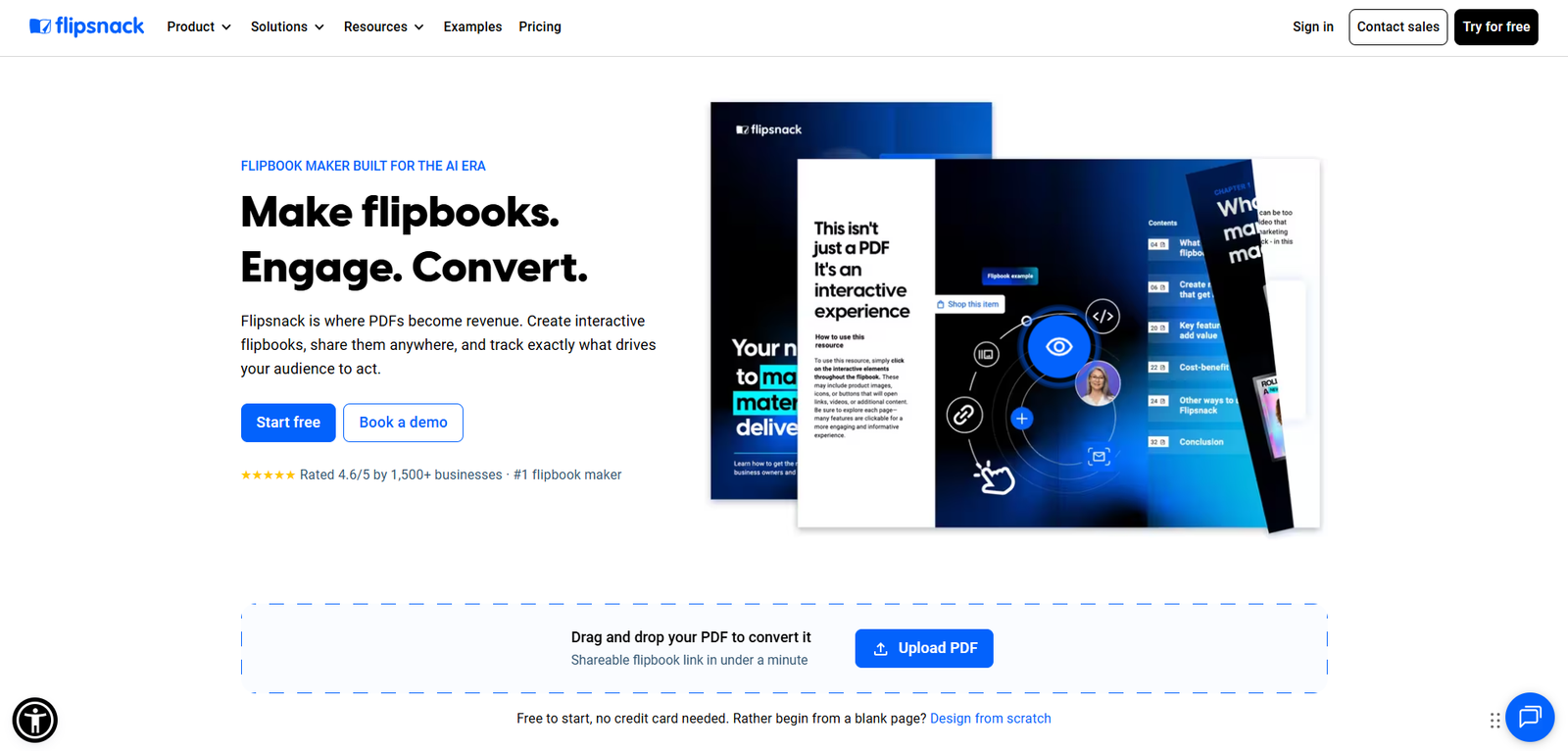
If your business still sends out plain PDF catalogs, brochures, or reports, Flipsnack can give them a serious upgrade. It turns any PDF into an interactive, page-flipping digital publication within minutes, complete with clickable links, embedded videos, and shoppable product hotspots.
What stands out is the level of control it gives marketing and sales teams. There are branded templates, a built-in Design Studio for building publications from scratch, and analytics that show exactly how readers engage with each page, including views, clicks, and time spent. Teams use it for everything from product catalogs and pitch decks to employee handbooks and training material, and it connects with tools like Zapier and Google Analytics to send leads straight into a CRM.
Best for: Marketing, sales, and HR teams that rely on catalogs, brochures, or handbooks and want to make them measurable and interactive instead of static.
2. Coupler
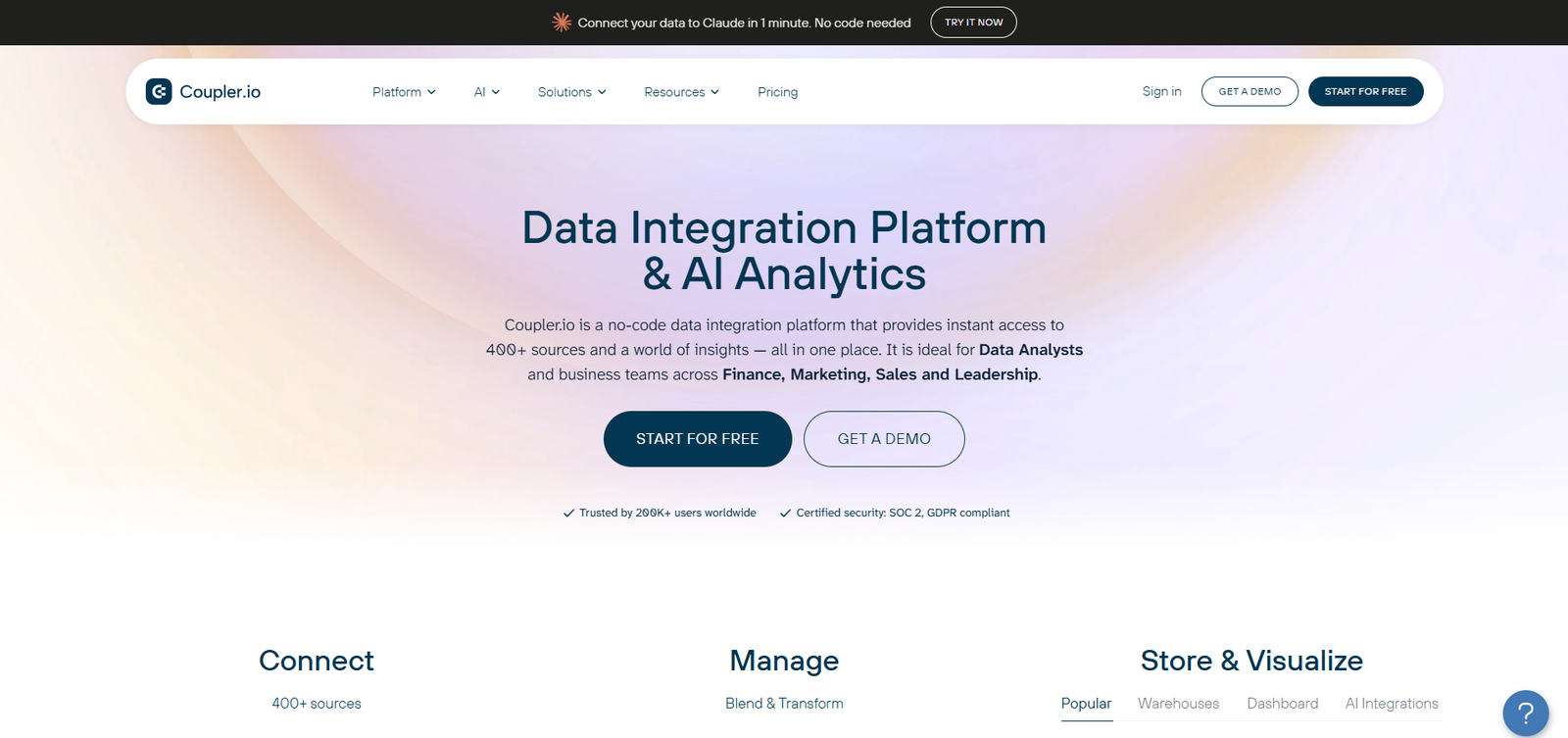
Most businesses now run on data spread across dozens of separate apps, ad platforms, CRMs, accounting software, and spreadsheets, and pulling it all together manually eats up hours every week. Coupler.io is built to solve exactly that. It’s a no-code data integration platform that connects to more than 400 sources, including Google Analytics, HubSpot, Shopify, QuickBooks, and major ad platforms, and automatically syncs that data into destinations like Google Sheets, Excel, Looker Studio, Power BI, or a data warehouse.
Beyond simple syncing, Coupler.io lets users blend and transform data using formulas, filters, joins, and aggregations, so reports stay clean and ready to use without manual spreadsheet cleanup. It also offers ready-made dashboard templates for marketing, sales, and finance reporting, along with AI integrations that let teams query their synced data directly through tools like ChatGPT or Claude. For agencies and data teams juggling multiple clients or departments, this removes a lot of the repetitive work involved in pulling and refreshing reports by hand.
Best for: Marketing, sales, and finance teams that pull data from multiple platforms and want it automatically synced and refreshed into spreadsheets, dashboards, or a data warehouse without manual exports.
3. CloudTalk
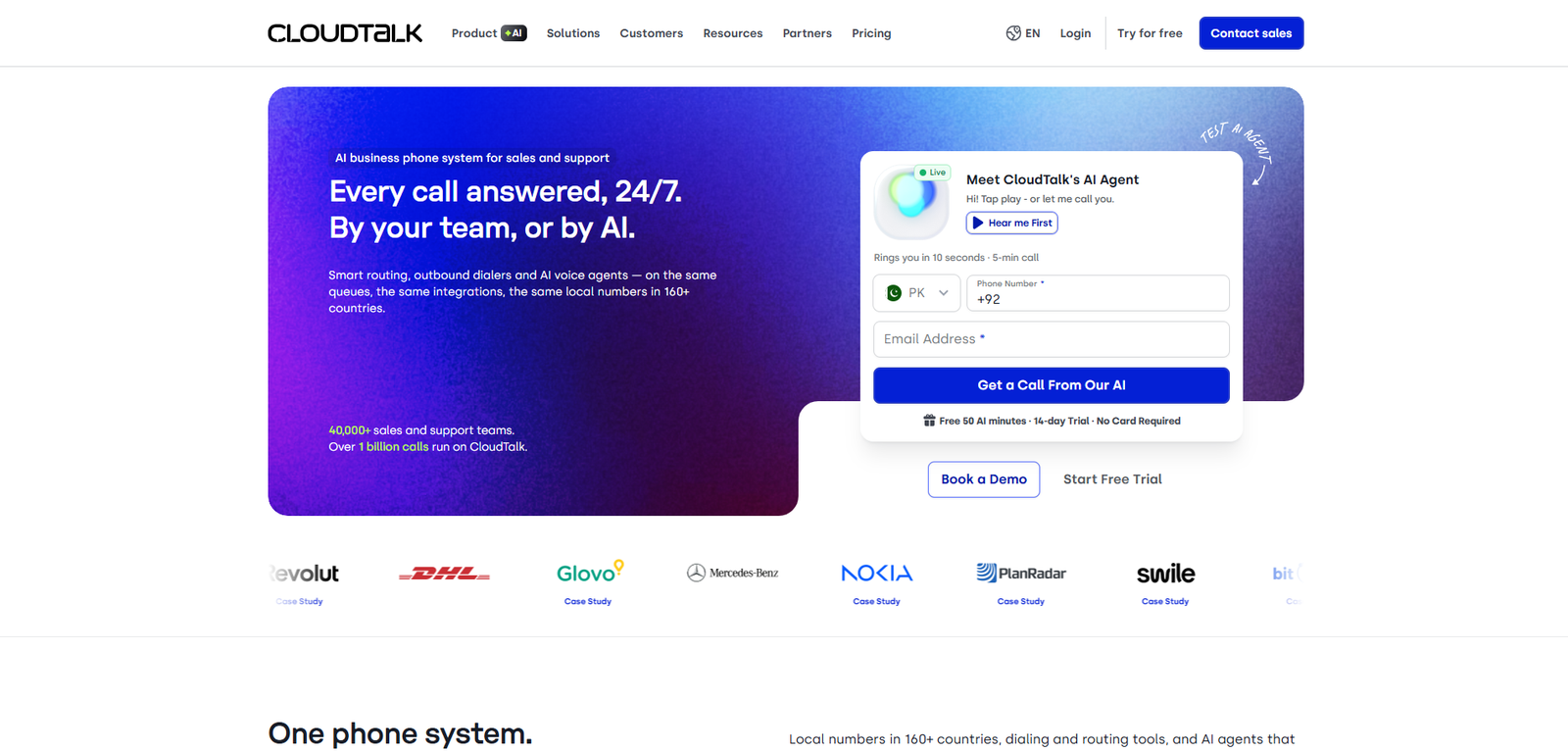
CloudTalk is a business phone system built for sales and support teams that live on the phone all day. It gives you local numbers in more than 160 countries, smart call routing, a power dialer for outbound reps, live call monitoring, and analytics that sync straight into HubSpot, Salesforce, Pipedrive, and 100+ other tools.
What sets CloudTalk apart is where AI sits: inside the same telephony system your team already uses, not bolted on as a separate app. The AI receptionist answers inbound calls, qualifies leads, and routes callers with context 24/7. The AI Specialist runs outbound workflows like lead qualification and reminders at a volume no human team can match, then hands off to a rep with full context the moment a call needs one. Every call, AI or human, lands in the same dashboard: transcribed, tagged by topic, and scored for sentiment, so managers know exactly which calls to review first.
Best for: Sales and support teams handling high call volumes across multiple countries that want CRM-synced calling plus AI coverage for after-hours or overflow calls.
4. Vendasta
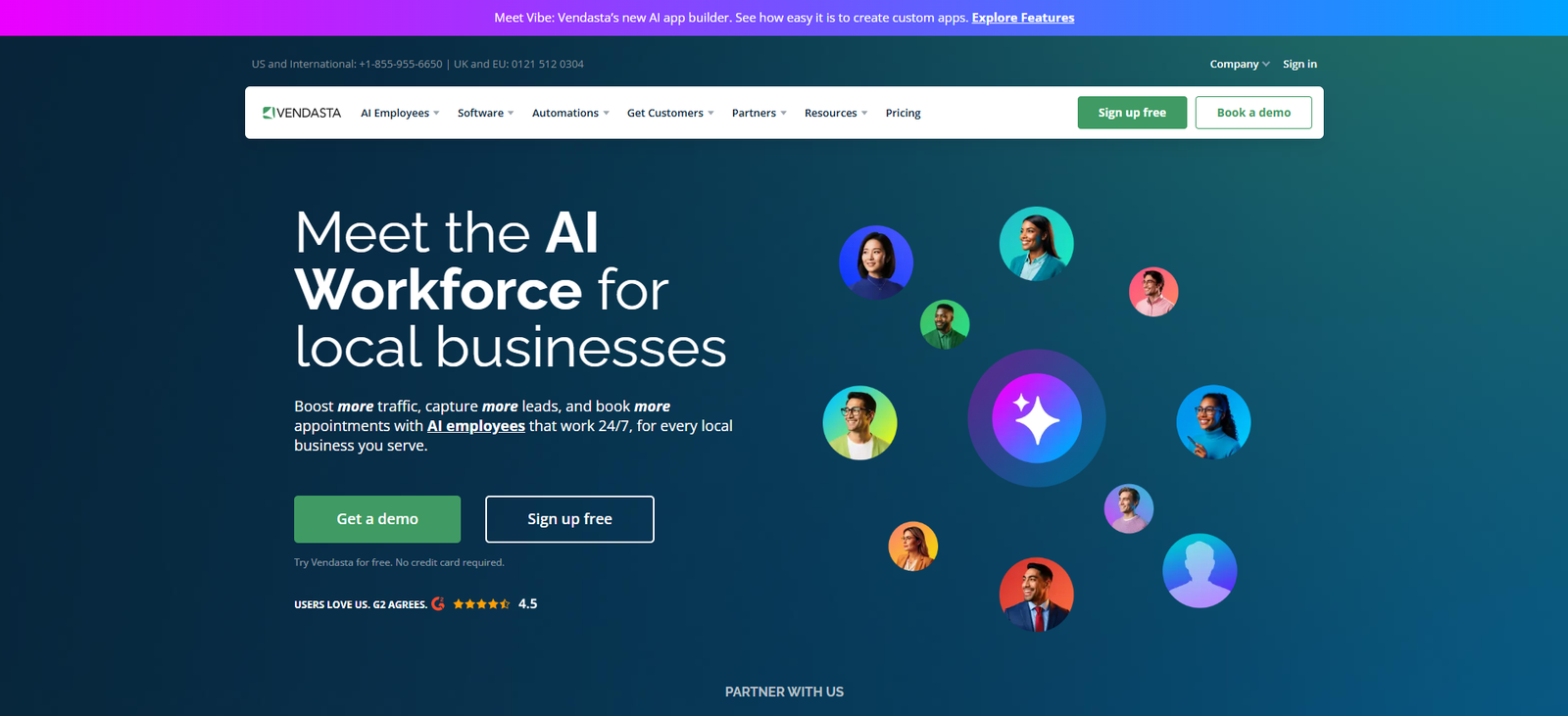
Vendasta is built for agencies, franchises, and software vendors that manage marketing and sales for local business clients. Instead of being a single-purpose tool, it functions as a full platform covering reputation management, local SEO, social posting, advertising, and CRM, along with a growing set of “AI employees,” such as an AI receptionist, AI sales assistant, and AI social media manager, that automate client work around the clock.
Agencies also get a white-label client portal, called the Business App, where clients can log in and see their own results, which helps with retention. Vendasta includes Snapshot Reports for prospecting new clients and a marketplace of rebrandable digital products, making it a popular choice for agencies that want to scale services without scaling headcount at the same rate.
Best for: Agencies and franchises managing marketing and sales for multiple local business clients that want white-labeled reporting and automation built in.
5. HubSpot
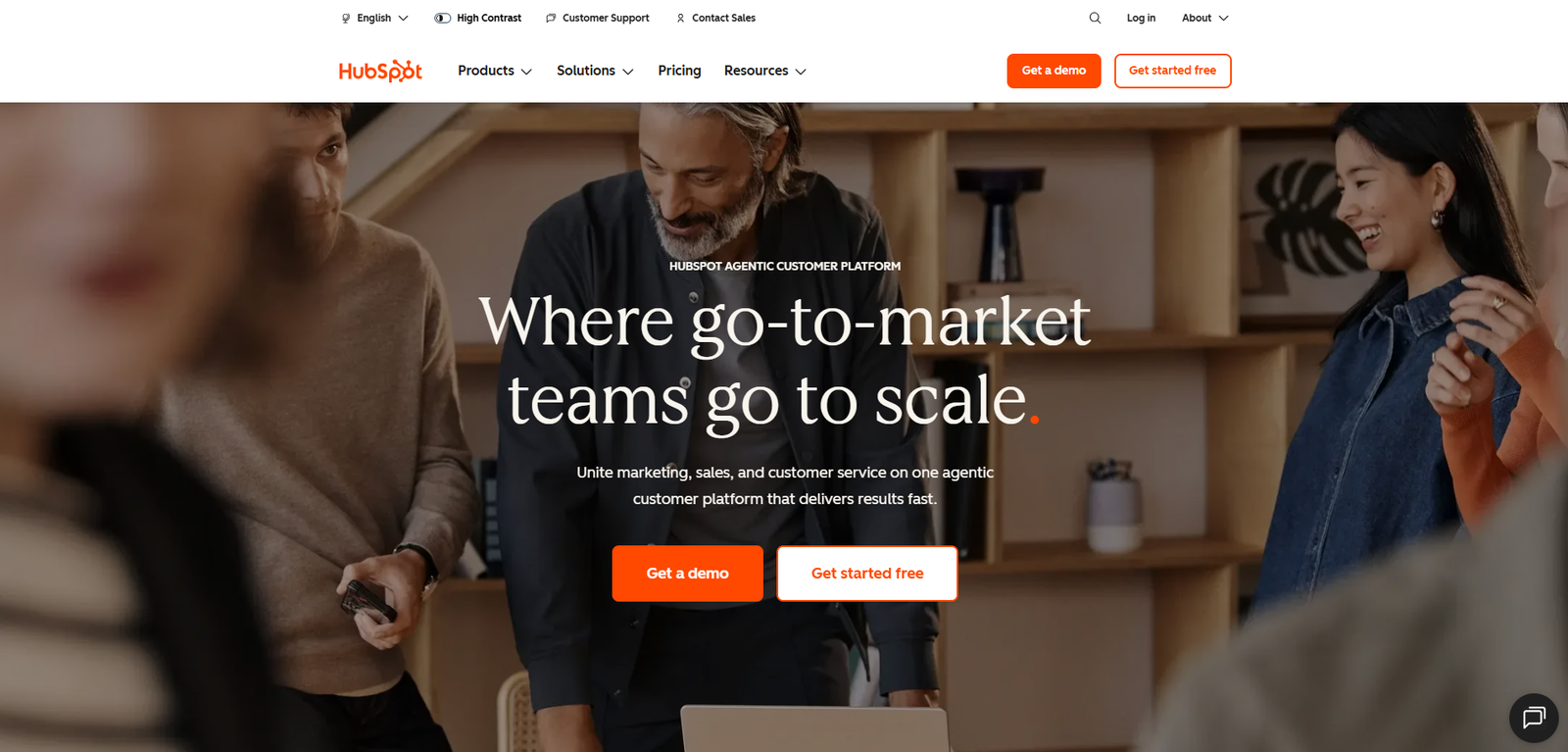
HubSpot is one of the most widely used CRM platforms for growing businesses, bringing marketing, sales, customer service, content, and operations tools together under one roof. Its free CRM tier makes it an easy starting point, while paid Hubs for marketing, sales, service, CMS, and operations let a business scale up as it grows.
HubSpot’s biggest strength is how tightly everything connects. Email campaigns, landing pages, live chat, deal pipelines, and support tickets all live on the same contact record, so teams don’t have to piece together data from five separate tools. Its reporting, automation workflows, and large app marketplace make it a solid foundation for businesses trying to unify marketing and sales rather than run them separately.
Best for: Growing businesses that want one connected system for marketing, sales, and customer service instead of a patchwork of disconnected tools.
Final Thoughts
Each of these five tools solves a distinct problem: content engagement, recruitment operations, business calling, CRM and marketing, and agency-client management. Depending on where your business feels the most friction, adopting even one of them can free up hours of manual work every week.