










How Businesses Can Build Winning Talent Pipelines
In the rapidly evolving landscape of workforce management, businesses face increasing challenges in attracting and retaining the best employees. Crafting a robust talent pipeline has become crucial for long-term organizational success amid intensifying competition for skilled professionals. By understanding the essentials of building a pipeline, companies can ensure they have a steady stream of qualified talent ready to step into critical roles when needed. For those seeking to define talent acquisition and differentiate it from traditional recruitment, a strategic approach is key to establishing a winning edge.
A talent pipeline is more than just a list of potential candidates; it represents an ongoing, proactive process that integrates technology, education, mentorship, and workplace culture. Employers who prioritize talent pipelines are better positioned to respond to market shifts and fill vacancies quickly with top-tier talent who are already familiar with their values and operations. Maintaining this competitive advantage requires intentional investment in candidate experience, inclusivity, and future-focused initiatives.
Understanding Talent Pipelines
A talent pipeline is a dynamic, ongoing process of identifying, attracting, and nurturing relationships with potential candidates well before a position becomes available. By staying engaged with passive talent, companies can significantly decrease time-to-hire and improve the overall quality of their hires. Companies that focus on pipeline development outperform their peers in both retention and responding to future skills needs.
Beyond simply collecting résumés, effective talent pipelines allow businesses to continuously assess organizational requirements and align talent acquisition strategies accordingly. This results in a clear understanding of both short-term recruitment activities and longer-term planning, which is essential for scaling a team sustainably.
Leveraging Technology and AI
Technology and AI are transforming the way organizations source, screen, and connect with potential employees. AI-driven platforms can automate time-consuming processes such as candidate matching, skills assessment, and personalized outreach, AI-driven platforms such as AI recruiting software, can automate time-consuming processes such as candidate matching, skills assessment, and personalized outreach, freeing up recruiters to focus on relationship-building and strategic planning. By leveraging predictive analytics, HR teams can identify workforce trends, forecast turnover, and more efficiently prepare for future hiring needs.
Digital engagement tools, including automated chatbots, assessment platforms, and talent relationship management systems, also enhance candidate experience and ensure a consistent communication flow. Adoption of these new technologies often leads to better candidate fits, improved retention rates, and a more detailed view of the available talent landscape.
Building Relationships with Educational Institutions
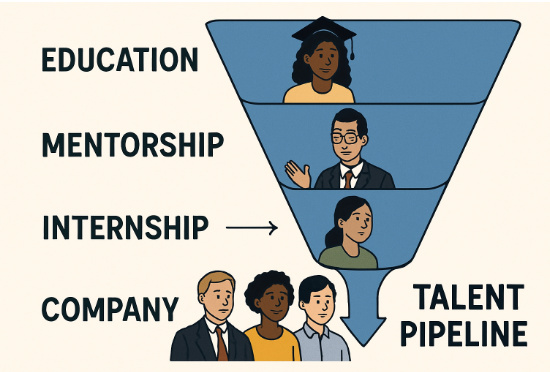
Strong partnerships with universities, colleges, and technical schools form the backbone of many talent pipelines. Through campus recruitment programs, guest lectures, and job fairs, businesses can engage with students early and introduce them to career opportunities in their field. These efforts help companies reach a younger, highly motivated candidate pool and foster brand recognition before graduation.
Collaborating on curriculum development, sponsoring projects, or offering real-world case studies enables organizations to shape educational pathways and ensure graduates’ skills align with industry needs. Such engagement serves as a proactive investment in tomorrow’s workforce, increasing the likelihood that top graduates will see the organization as an employer of choice.
Offering Meaningful Internship Opportunities
Internships are one of the most effective bridges between academic learning and professional careers. Well-structured programs provide students with hands-on experience in real business settings while allowing companies to evaluate potential hires before extending full-time offers. By designing internships that go beyond menial tasks and focus on impactful work, businesses instill loyalty, foster development, and gain valuable fresh perspectives.
Additionally, interns who complete rewarding placements are more likely to become enthusiastic advocates for the company both online and on campus. A strong internship program can thus be a powerful marketing tool, helping the company cultivate a robust, ongoing recruiting funnel.
Establishing Clear Career Pathways
Employees are drawn to organizations offering transparency around growth and mobility. By defining career trajectories, providing access to mentorship, reskilling, and leadership development opportunities, companies not only attract high-potential candidates but also bolster retention among current staff. When individuals see a pathway for advancement, their motivation and long-term engagement rise.
Communicating these opportunities clearly and consistently helps set expectations, align goals, and empower employees to take ownership of their career development. Companies that prioritize mobility within the organization benefit from an agile, future-ready workforce.
Creating an Inclusive Work Environment
A truly effective talent pipeline welcomes, values, and nurtures a diverse range of skills, backgrounds, and perspectives. Inclusive hiring practices—such as blind resume reviews, diverse interview panels, and flexible work arrangements break down barriers to entry for underrepresented groups and signal a commitment to equity and belonging.
Investments in inclusion help ensure a culture where all employees can thrive and contribute meaningfully, driving innovation and performance. Inclusive organizations are shown to be more resilient and better able to adapt to change.
Engaging in STEM Mentorship Programs
STEM mentorship initiatives link experienced professionals with students and early-career talent, providing them with industry exposure and support as they transition into the workforce. Companies participating in these programs help bridge critical skills gaps and inspire the next generation of innovators.
By nurturing these relationships, organizations not only strengthen their talent pipelines but also foster lasting connections that align emerging professionals with their values and future goals.
Conclusion
Building a winning talent pipeline demands strategic vision, ongoing investment, and a collaborative approach. By leveraging advanced technology, partnering with educational institutions, designing impactful internships, mapping clear career trajectories, promoting inclusivity, and participating in mentorship programs, businesses can set themselves apart in the race for top talent and drive sustained success.