












The Newcomer Money Map: Guide To Tax Residency, Savings, And Leaving Canada
Arriving in Canada involves more than finding housing and starting work or school. Your first financial choices can affect how easily you pay bills, file taxes, save, invest, and eventually move money when your plans change. A practical plan starts with knowing what must be handled now and what can wait until your situation is more stable.
Registered accounts deserve special attention because eligibility depends on more than a visa or permit. For a practical overview of TFSA for temporary residents, Questrade explains how tax residency, a valid Social Insurance Number, and contribution room can affect access to this account. Questrade is a Canadian registered investment dealer with educational resources covering registered accounts, self-directed investing, and portfolio services, making its guide a useful starting point for understanding the questions to verify before opening an account.
1. The First 90 Days: Build A Financial Base
In the first few months, prioritize cash flow over long-term investing. Setup costs can arrive quickly: rent deposits, furniture, transit, groceries, a phone plan, work clothing, and school expenses may all compete for the same funds. Open a Canadian bank account, arrange direct deposit if you are employed, and keep enough accessible cash for essential costs and unexpected bills.
Use a simple budget that separates fixed costs, such as rent and insurance, from variable costs, such as food and transportation. An international student who spends heavily during their first month may need accessible savings more than market exposure. Keep copies of immigration documents, employment agreements, pay statements, and tax slips in one secure location.
2. Tax Residency Is Different From Immigration Status
A work permit, study permit, or visitor record does not automatically determine income tax residency. The Canada Revenue Agency considers the overall facts, including residential ties, the length and purpose of a stay, and connections inside and outside Canada. Its guidance on determining your residency status can help you identify the factors that apply to your situation.
Important ties can include a home in Canada, a spouse or common-law partner here, dependents in Canada, and certain economic or social connections. Two people with the same type of permit can therefore have different tax outcomes. If you have strong ties to another country, or a tax treaty may apply, avoid assuming that your immigration category settles the question.
3. Set Up Banking And Recordkeeping Early
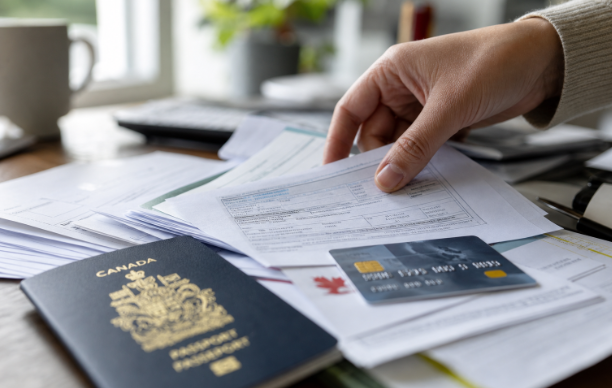
Clear records make tax filing and future moves easier, especially if you arrive or leave partway through a calendar year. Track arrival and departure dates, Canadian employment income, foreign income, account statements, receipts for potentially eligible expenses, and transfers between countries.
Consider using one account for regular spending and another for savings. Once a month, review account balances, bank fees, recurring subscriptions, automatic payments, and international transfer costs. This small routine can reveal problems before they become expensive or difficult to trace.
4. Review Registered Savings Accounts With Care
Registered savings accounts are different from ordinary savings or investment accounts because they operate under specific tax rules. Before contributing, confirm your eligibility, Social Insurance Number status, available contribution room, age requirements, and current residency position. Check the contribution room through your CRA account rather than relying only on memory, a banking app, or an old notice of assessment.
A TFSA is not automatically the right account for every newcomer, particularly when departure from Canada may be near. Account rules can change after residency ends, and the tax treatment in your next country of residence may not match the Canadian treatment.
5. Create An Investing Plan That Matches The Time Horizon
Match the investment choice to when you expect to use the money. A useful framework is:
- Keep money needed within one year in an accessible, lower-volatility savings option.
- For goals one to five years away, balance potential growth with the need to access funds.
- For longer-term goals, consider whether a diversified investment approach fits your risk tolerance and circumstances.
Temporary residents may need more flexibility than people who expect to remain in Canada indefinitely. Market declines, currency movements, foreign exchange spreads, and transfer fees can matter if you need to move funds across borders on short notice. Do not invest solely because a friend or online commentator recommends a particular product.
6. Watch For Cross-Border Tax Issues
Canadian wages are only one part of the financial picture. Depending on your tax residency, foreign bank accounts, shares, investment funds, employer plans, rental property, and investment income may also be relevant to Canadian reporting. The rules of your home country can matter at the same time.
For example, a worker may earn a salary in Canada while keeping investments in their home country. That person should keep records of income received, taxes paid, account values, and currency conversions. Cross-border tax advice is often worth considering when you have substantial investments, property, business income, or treaty questions.
7. What To Review Before Leaving Canada
Leaving Canada can change your residency status, tax obligations, benefits, and ability to contribute to certain accounts. Before departing, identify the date your Canadian residency may end, update financial institutions and employers when needed, cancel or adjust recurring payments, and retain Canadian tax records.
You may be able to keep an existing TFSA after becoming a non-resident, but contributions made while non-resident can have tax consequences. The CRA explains how non-residency affects a TFSA, including the rules for holding, withdrawing from, and contributing to the account after a move. Review how your new country taxes investment income before deciding whether to keep or close Canadian accounts.
8. A Simple Financial Checklist
- Month One: Open banking accounts, arrange direct deposit, build a basic budget, and organize documents.
- Month Two: Review tax residency factors and learn what information may be needed for filing.
- Month Three: Build an emergency reserve and review insurance needs.
- Before Investing: Confirm the goal, timeline, risk level, fees, and account rules.
- Before leaving Canada: Review residency, tax forms, transfers, account contributions, and obligations in your next country.
9. Frequently Asked Questions
Does A Work Permit Automatically Make Someone A Canadian Tax Resident?
No. Immigration status and tax residency are separate. Residential ties, time in Canada, the purpose of the stay, and connections to another country can all affect the outcome.
Can An International Student Be A Tax Resident?
Yes, some international students may be tax residents of Canada, while others may not. The answer depends on their complete personal circumstances.
Should Newcomers Invest As Soon As They Arrive?
Not necessarily. Cover urgent living costs and establish an emergency reserve first. Investing is easier to assess once you understand your timeline, risk tolerance, and account eligibility.
What Happens To Canadian Savings If Someone Moves Away?
The result depends on the account type, your new country of residence, and the tax rules in both countries. Review each account before moving.
When Is Professional Advice Worth The Cost?
Professional help can be particularly useful for foreign investments, rental property, business income, tax treaty issues, or a move that happens during the year.
Conclusion
A newcomer’s financial plan does not need to be complicated. Start with reliable records, enough cash for near-term needs, and a clear understanding of tax residency. Once those basics are in place, you can make more informed decisions about savings, investing, and cross-border money choices, both while you are in Canada and when it is time to leave.