












Future Scope of Cloud Computing
The future scope of cloud computing is vast and continuously expanding as new technologies emerge. Cloud computing is becoming more powerful, intelligent, and essential for businesses, developers, and everyday users.
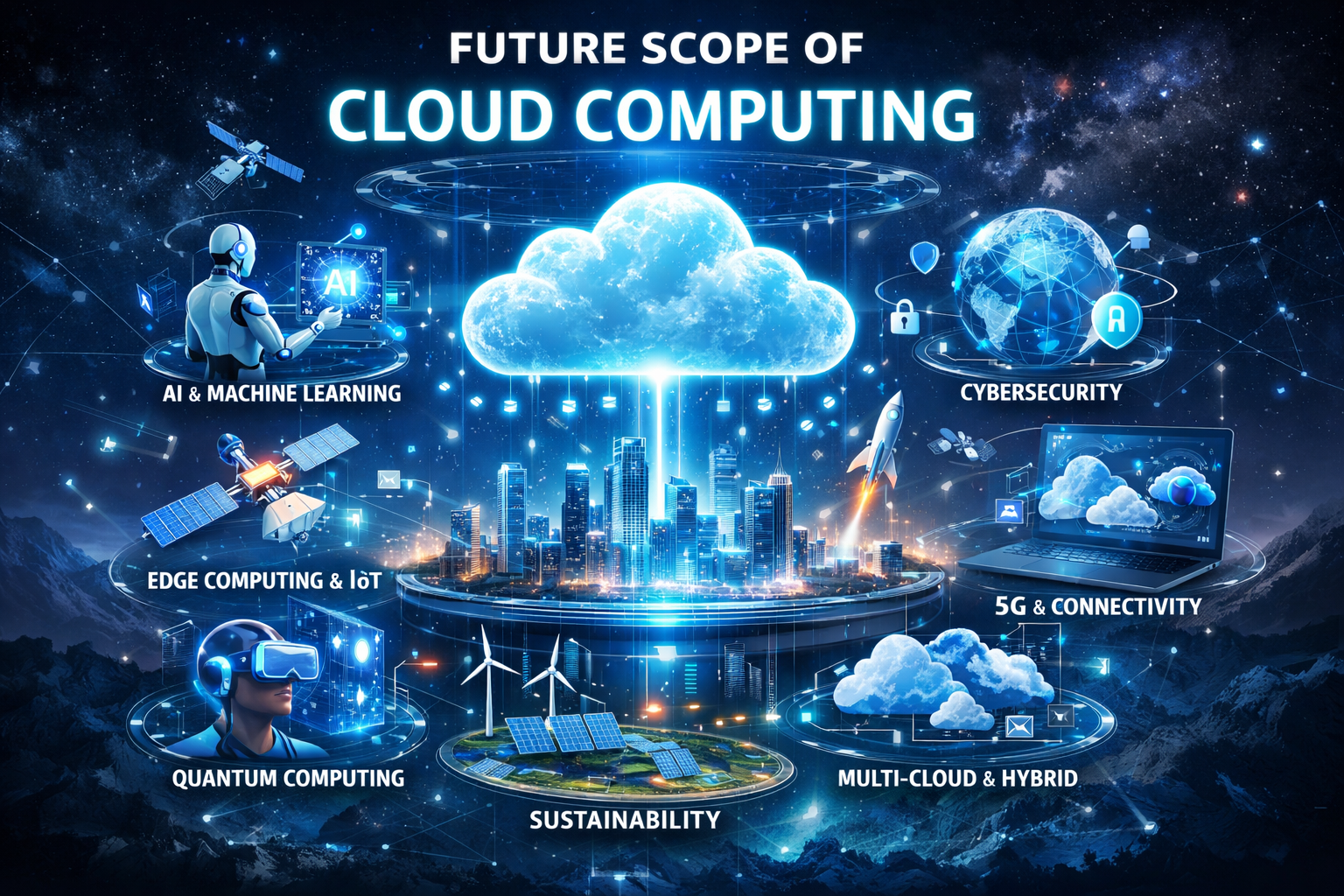
What is the Future Scope of Cloud Computing?
The future scope of cloud computing refers to how it will expand, evolve, and shape modern technology in the coming years.
- Rapid Growth: Cloud adoption is increasing across industries such as healthcare, finance, and education.
- Advanced Technologies: Integration with AI, IoT, automation, and big data will enhance capabilities.
- Global Expansion: More data centers and cloud services will be available worldwide for better access and performance.
Why Cloud Computing Has a Strong Future
Cloud computing is becoming a core foundation of modern IT infrastructure, driving innovation and efficiency.
- Digital Transformation: Businesses are shifting from traditional systems to cloud-based solutions.
- Remote Work Support: Enables users to access applications and data from anywhere.
- Scalability Needs: Supports growing data, users, and applications efficiently.
- Cost Efficiency: Reduces the need for expensive hardware and maintenance.
Cloud computing continues to grow as a key technology for future innovation, enabling smarter systems, global connectivity, and scalable digital solutions.
Key Future Trends in Cloud Computing
Cloud computing is continuously evolving with new technologies that improve performance, automation, security, and scalability.
1. Artificial Intelligence and Machine Learning
AI and ML are becoming an integral part of cloud platforms, making systems smarter and more efficient.
- Automation: Automates complex processes and decision-making.
- Advanced Analytics: Improves data analysis, insights, and predictions.
2. Serverless Computing Growth
Serverless computing is rapidly growing, allowing developers to build applications without managing infrastructure.
- Reduced Management: Eliminates the need to manage servers.
- Faster Development: Speeds up application deployment and updates.
3. Edge Computing Expansion
Edge computing processes data closer to users and devices, improving performance.
- Reduced Latency: Faster response times for applications.
- Real-Time Processing: Supports instant data processing and decision-making.
4. Multi-Cloud and Hybrid Cloud Adoption
Organizations are increasingly using multiple cloud environments for better flexibility.
- Vendor Independence: Avoid reliance on a single provider.
- Improved Reliability: Distributes workloads across platforms.
5. Automation and DevOps
Automation and DevOps practices are becoming standard in cloud operations.
- Faster Deployment: Enables continuous integration and delivery (CI/CD).
- Reduced Manual Work: Automates repetitive tasks and processes.
6. Cloud Security Advancements
Cloud security is evolving with advanced technologies to protect systems and data.
- AI-Based Threat Detection: Identifies and prevents cyber threats in real time.
- Zero Trust Models: Ensures strict access control and verification.
7. Big Data and Analytics Growth
Cloud computing plays a key role in managing and analyzing large volumes of data.
- Real-Time Analytics: Processes data instantly for quick insights.
- Data-Driven Decisions: Helps organizations make informed decisions.
These trends show how cloud computing is shaping the future by enabling smarter, faster, and more secure digital solutions across industries.
Future Job Opportunities in Cloud Computing
Cloud computing offers a wide range of career opportunities as organizations increasingly adopt cloud technologies for modern IT solutions.
1. Cloud Engineer
A Cloud Engineer is responsible for designing, deploying, and managing cloud infrastructure and services.
- Infrastructure Management: Handles setup and maintenance of cloud systems.
- Deployment: Deploys applications and services on cloud platforms.
- Monitoring: Ensures systems run smoothly and efficiently.
2. Cloud Architect
A Cloud Architect designs complete cloud solutions and system architectures based on business needs.
- System Design: Creates scalable and efficient cloud architectures.
- Performance Optimization: Ensures systems perform well under different workloads.
- Technology Selection: Chooses the right tools and services for solutions.
3. DevOps Engineer
A DevOps Engineer focuses on automation, deployment, and system integration in cloud environments.
- CI/CD Pipelines: Builds and manages continuous integration and deployment processes.
- Automation: Reduces manual work through scripting and tools.
- System Integration: Ensures smooth coordination between development and operations.
4. Cloud Security Specialist
A Cloud Security Specialist ensures data protection and system security in cloud environments.
- Risk Management: Identifies and mitigates security risks.
- Compliance: Ensures systems follow regulations and standards.
- Security Monitoring: Detects and prevents threats.
5. Data Engineer
A Data Engineer works with large-scale data systems in the cloud.
- Data Pipelines: Designs systems for data collection and processing.
- Big Data Handling: Manages large datasets efficiently.
- Analytics Support: Prepares data for analysis and decision-making.
These roles highlight the growing demand for cloud professionals, making cloud computing one of the most promising career fields in modern technology.
Industries Benefiting from Cloud Computing
Cloud computing is transforming multiple industries by providing scalable, efficient, and accessible digital solutions.
- Healthcare: Enables secure data storage, telemedicine, and remote patient monitoring.
- Education: Supports online learning platforms, virtual classrooms, and digital collaboration.
- Finance: Powers secure transactions, fraud detection, and real-time analytics.
- E-commerce: Provides scalable platforms to handle large customer traffic and transactions.
- Entertainment: Delivers streaming services, gaming, and global content distribution.
Challenges in Future Cloud Computing
As cloud adoption grows, certain challenges must be addressed for smooth operation.
- Security Risks: Increasing cyber threats require advanced protection mechanisms.
- Skill Gap: Demand for skilled cloud professionals continues to rise.
- Cost Management: Managing and optimizing cloud expenses becomes more complex.
- Data Privacy: Ensuring proper handling of sensitive and personal information.
Benefits of Future Cloud Computing
Cloud computing will continue to offer strong advantages in the future.
- Faster Innovation: Enables rapid development of new technologies and solutions.
- Global Access: Services are accessible worldwide with internet connectivity.
- Scalability: Easily handles growth and changing workloads.
- Efficiency: Improves system performance and resource utilization.
Real-World Example
This example shows how cloud computing will power future smart systems.
- Cloud Storage: Stores large volumes of city data efficiently.
- AI Integration: Manages traffic and optimizes city operations.
- Edge Computing: Processes data in real time for quick decisions.
- Cloud Analytics: Supports planning and decision-making using data insights.
This demonstrates how cloud technologies enable smart, connected, and efficient systems.
Conclusion
The future scope of cloud computing is highly promising, with continuous innovation and adoption across industries. It will play a crucial role in shaping modern technology by enabling scalable solutions, global connectivity, and new career opportunities, transforming the way businesses and societies operate.